
NC House, Senate Republicans differ on tax cuts. What taxpayers need to know
It’s shaping up to be a summer battle over taxes at the North Carolina General Assembly. And a wrench tossed in this week: an updated revenue forecast that isn’t quite as sunny.
The Senate passed its budget in April, and when the House passed its own version last week, it drew a majority of House Democrats to vote for it, including their leader. One of the reasons, beyond raises for teachers and state employees, was taxes. From slowing future tax cuts to reinstating a sales tax holiday, the Republican-written House budget eased off on some of the changes from 15 years of GOP control of the state. Yet it still drew support from every Republican.
Democratic Rep. Terry Brown Jr. said the House proposal to restore the back-to-school sales tax holiday was one of the reasons it got his support.
At the same time, Senate Republicans were quick to criticize the House’s plan to slow future individual income tax cut triggers, calling it a tax hike. And in turn the House volleyed back that the Senate is the chamber that wants tax hikes, given the Senate proposal to increase sports betting taxes.
Here’s more about the difference between the tax plans, the latest revenue forecast and where Democratic Gov. Josh Stein fits in.
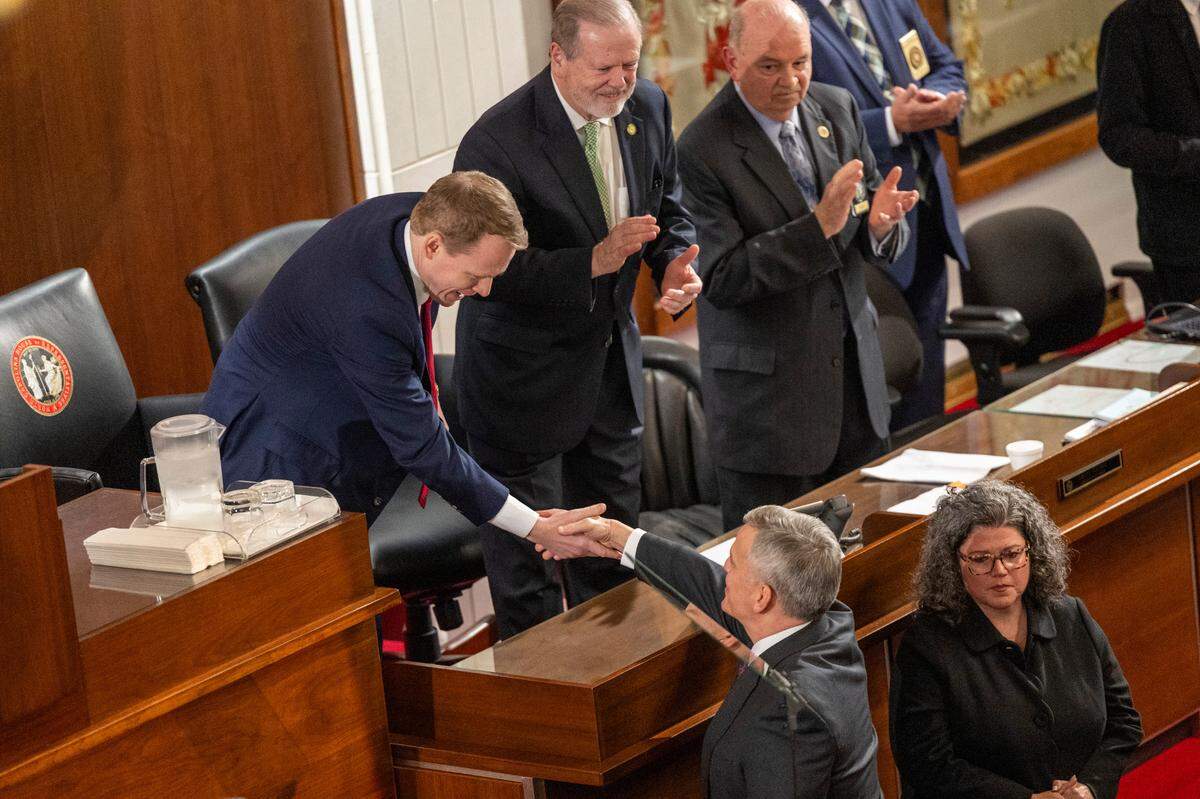
House tax plan
▪ The House budget proposal increases the standard income tax deduction by $500 for taxpayers filing as single, or by $1,000 for couples filing jointly.
▪ The House budget would restore the sales tax holiday for back-to-school season, starting in August 2026. South Carolina, Virginia and Tennessee all have sales tax holidays.
▪ It would also make the first $5,000 in wages from tips tax-free.
The bill keeps planned individual income tax reductions, which would lower the rate to 3.99% next year. What House budget writers want after that is different from the Senate.
House Rules Chair John Bell told The News & Observer last week that “just because we didn’t aggressively lower taxes, as their budget did, doesn’t mean we raised taxes.”
Budget documents say that the House’s change “increases net General Fund revenue” by keeping the projected tax rate at 3.99% in the 2027 tax year, rather than dropping the rate further as would happen under existing triggers based on general fund revenue.
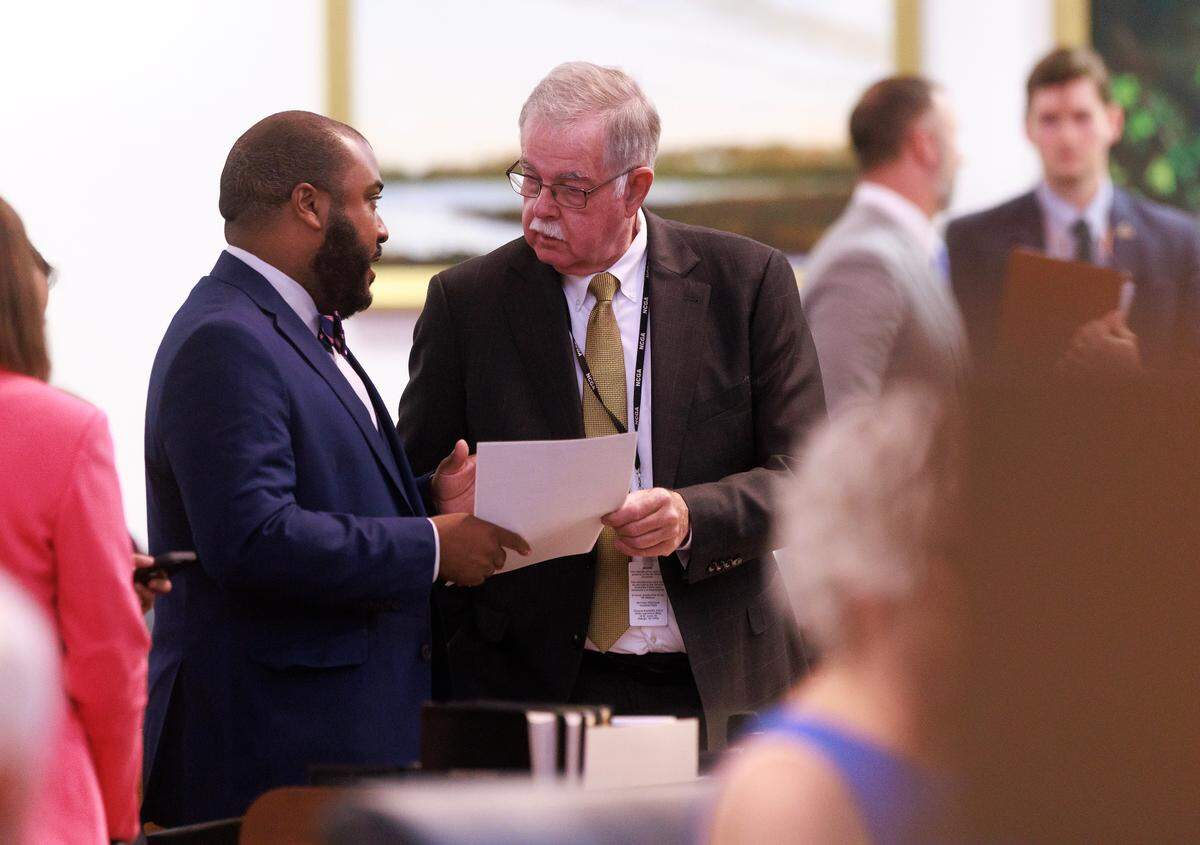
Senate tax plan
▪ Senate Republicans want to keep existing triggers for future individual income tax cuts beyond the reduction next year to 3.99%.
Under current projections, leaving those unchanged would bring tax rates down to 3.49% in 2027 and 2.99% in 2028.
“As long as the economy continues to grow, it is our belief, and my belief, that is backed by our experience over the last decade and a half, that revenue to the state will be more than adequate to address the funding requirements that we have,” Senate leader Phil Berger said in April when the Senate released its budget.
“We still have adequate reserves, and it is our belief that these tax reductions will continue to grow North Carolina and continue to grow the economy in North Carolina,” he said.
Berger said last week that Republicans in both chambers agreed in 2023 about tax cuts, and said that the House is going in a different direction now, with what he considers a tax increase.
▪ The Senate budget also doubles a gambling tax by increasing the tax on sports wagering operators from 18% to 36%.
Four Democratic senators voted for the Republican-written budget.
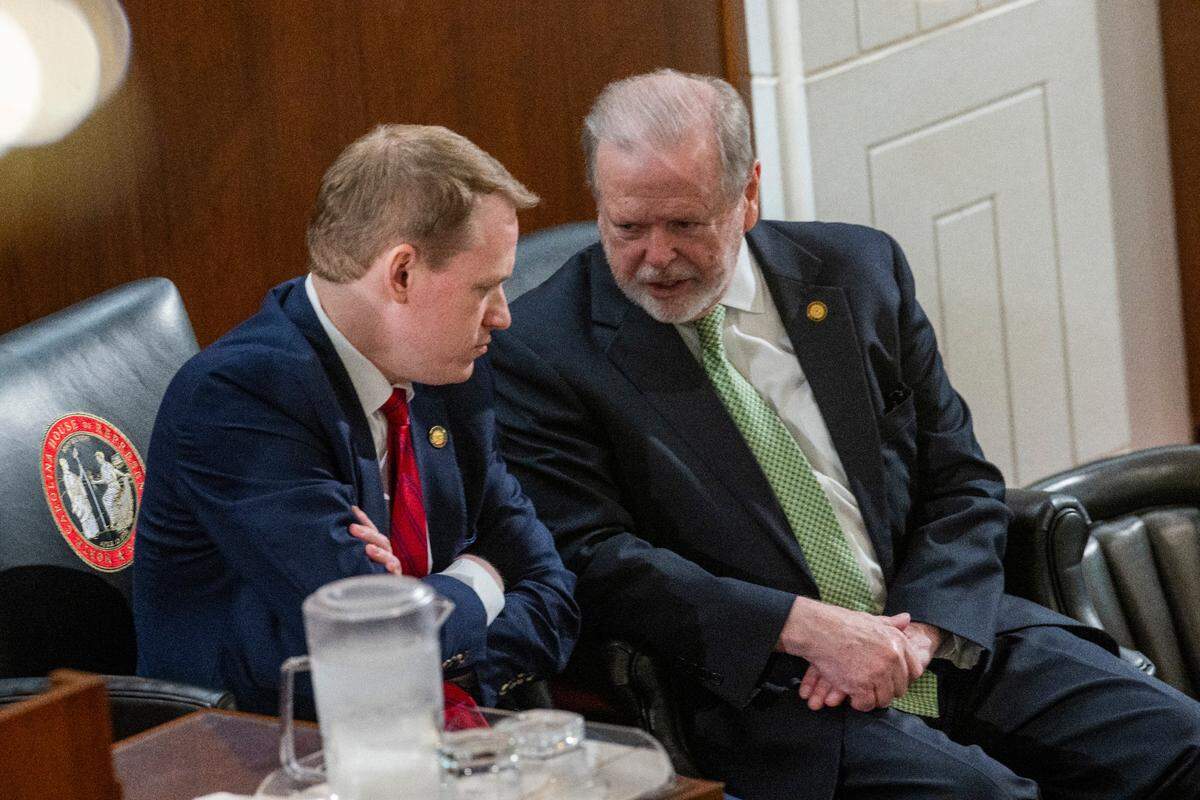
Revenue forecast impacted by Trump tariffs
An updated revenue forecast released this week, with more information from April tax collections, cited “modest downward revisions.”
The state has a surplus for the current 2024-2025 fiscal year, but smaller than forecasters predicted in February. The overcollections are $364 million, which is $180 million less than previously expected. And that’s far less than recent boom years with billions of dollars in surplus funds.
The forecast cites the Trump administration’s tariffs as a major reason.
Economists say the “downward revision is due primarily to lower-than-expected corporate income tax collections in April, particularly related to reduced estimated tax payments from businesses, likely due to anticipating higher input costs and lower profits from recently implemented tariffs.”
The consensus revenue forecast is from the nonpartisan Fiscal Research Division at the General Assembly and the Office of State Budget and Management, which is a Cabinet agency of the Stein administration.
Also related to Trump’s tariffs was a rebound in sales tax collections, the forecast says, “due to a temporary surge in consumer spending on durable goods in March and early April, likely related to consumers shifting purchases forward in advance of expected tariffs.”
The forecast expects lower sales tax revenues to come because of consumers choosing to spend money on goods not affected by tariffs, as well as slowing wage growth.
Additionally, forecasters said the outlook shows “heightened uncertainty” about the economy, and unless that changes, “there is also elevated risk of a national and global recession that could push revenues much lower.”
House Democratic Leader Robert Reives, who voted for the House budget, said the revised forecast troubled him, “because it confirms our worst fears about the direction these aggressive tax cuts are taking our state.”
“The House budget, for all its faults, acknowledged the reality our state is in: We cannot afford to lose more revenue while we have billions of dollars in needs, both in Western North Carolina and across the state. I am prepared to work with anyone who is ready to help arrest this slide toward austerity,” Reives said in a statement Thursday.
Where Gov. Stein stands on tax cuts, budget
House Republicans supported one part of Stein’s budget proposal — bringing back the sales tax holiday. But Stein also wants to freeze the tax cuts where they are now, which is a nonstarter for both Republican-controlled chambers.
“The key is to make sure that we have enough money to support the critical services of the state. Do we have enough law enforcement? Do we have enough teachers? Are we paying our teachers well enough? Are our roads working? Do we have money to help people in Western North Carolina recover? We can’t go down to zero on everything,” Stein told reporters on Wednesday at an unrelated event.
“So the House budget is not what I would have wanted. It doesn’t freeze the taxes. It lowers them and allows them to continue to lower in the future. I think we should just freeze them where they are,” Stein said.
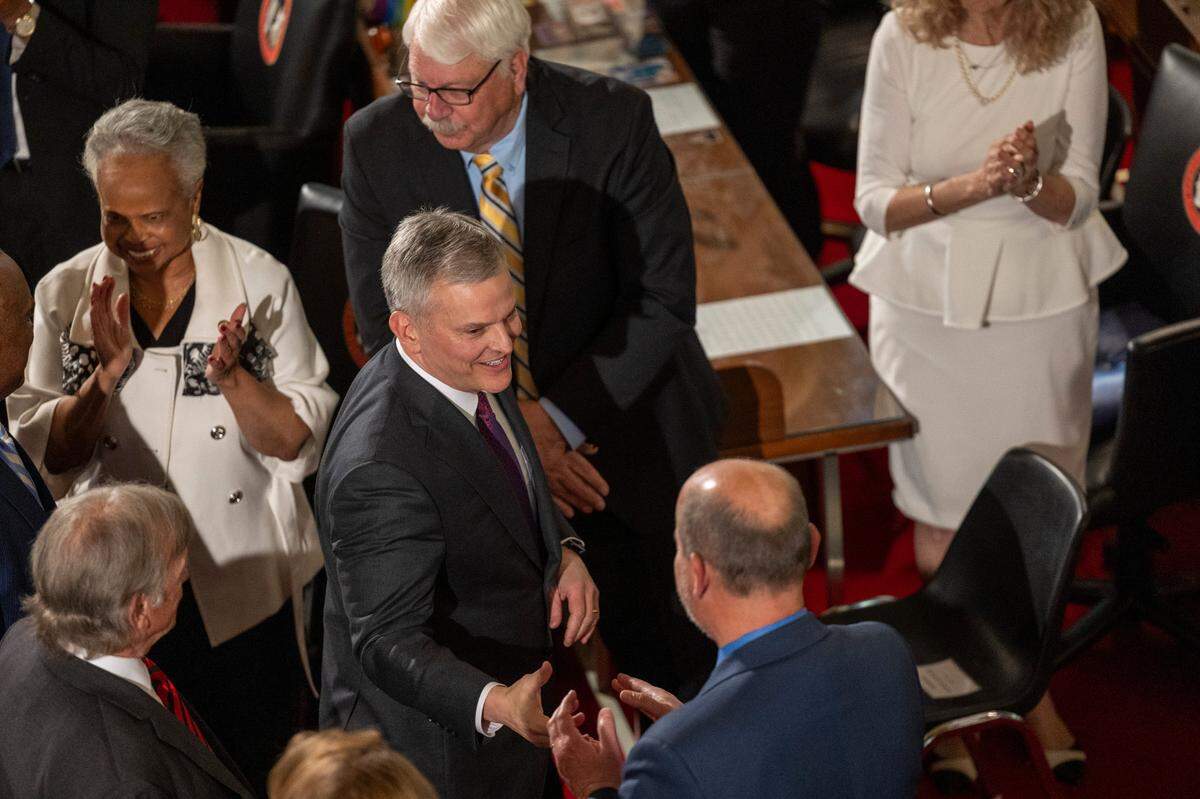
“I’m not talking about raising anybody’s taxes. I just want to freeze them. So I wasn’t thrilled with where the House position is, but it is much more fiscally prudent than the Senate position, which is to just further erode our revenue sources, which is going to create real problems for us, our ability to invest in our people and invest in our future,” he said.
After a weeklong break, lawmakers return to Raleigh next week. At the top of their to-do list is negotiating a final budget bill to send to Stein. Berger said last week that staff and budget committee chairs will meet in the coming weeks before final negotiations take place between Berger and House Speaker Destin Hall.
Then, once the final budget bill is passed by both the House and Senate, the bill goes to Stein’s desk. He’ll have 10 days to sign it, veto it or let it become law without his signature. If he vetoes the budget, Republican lawmakers only need one Democrat to vote to overturn the veto and make the budget become law.
A continuing resolution in state law means that even if there is no budget at the July 1 start of the new fiscal year, there is no shutdown as there is with the federal government. Instead, spending levels would remain the same as this year.
This story was originally published May 30, 2025 at 6:00 AM.
.jpg)