
NC Gov. Josh Stein’s pen to be tested with potential vetoes, override votes
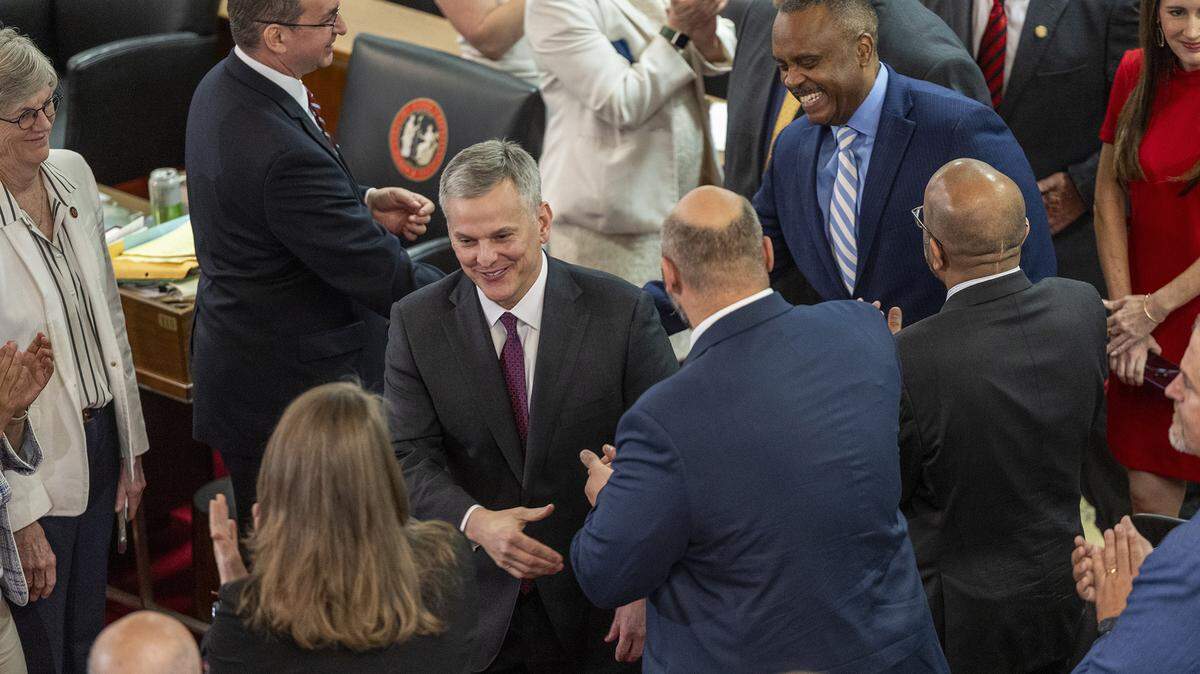
The time has arrived.
Democratic Gov. Josh Stein has a series of controversial bills on his desk to sign or veto. It’s the first test of the new balance of power between the governor and the legislature, even though we’re already five months into the General Assembly’s session.
Members of the legislature could go home to their districts at the end of June for a break as the House and Senate, both controlled by Republicans, haggle over a state budget deal.
More on the budget haggling later.
In the meantime, if Stein vetoes any bills on his desk, the legislature may be able to overturn them.
Good morning and welcome to our Sunday Under the Dome newsletter, which focuses on the governor. I’m Dawn Vaughan, The News & Observer’s Capitol bureau chief.
Divided government isn’t just about who is in office; it’s also the voters themselves. And for the third election in a row, North Carolina voters have chosen a Democratic governor and a majority-Republican legislature. Unaffiliated voters are the largest voting group, and most elections are nearly evenly divided when it comes to statewide votes for Democrats and Republicans.
Three bills signed in law on Friday
Stein signed three noncontroversial bills on Friday, including a bill to create an investment authority to manage the state pension plan, which Republican State Treasurer Brad Briner supports and my colleague Luciana Perez Uribe Guinassi has covered extensively.
Another bill signed into law allows law enforcement officers, including police chiefs, sheriffs and top command staff, to stay in their jobs longer without forfeiting a retirement benefit known as the “special separation allowance.” You can read more about that one from my colleague Virginia Bridges.
The third bill, House Bill 231, is about social work licenses.
“Complex licensure transfer requirements create barriers to social workers who are wanting to move here and take care of our people. If people want to help our children and families who are in need, we should make it easier for them to do so, not harder,” Stein said at the bill signing.
“This law will enable our state to create an interstate licensure agreement with neighboring states, including Tennessee, Georgia and Virginia, to expand care to more people,” he said.
Valerie Arendt, executive director of the National Association of Social Workers, said the bill’s unanimous passage by the House and Senate is “a clear demonstration of our state’s strong support for the social work profession and recognition of the urgent need for clinically licensed behavioral health providers.”
She said that allowing clinically licensed social workers to practice in other participating states would improve “access to care, especially through telehealth and strengthening our behavioral health workforce.”
Now back to the upcoming battles with, and within, the legislature.
Vetoes and budget to come
As of Friday evening, Stein had two immigration bills and a gun bill on his desk, which could include his first vetoes. Republicans do not have the votes to overturn a Stein veto of Senate Bill 50, which would get rid of the law requiring a permit to carry a concealed gun. Right now, as the law stands, to carry a concealed handgun you must obtain a permit, be at least 21, pass a background check and take a firearms safety course. If the law is changed, anyone age 18 and older could carry a concealed gun.
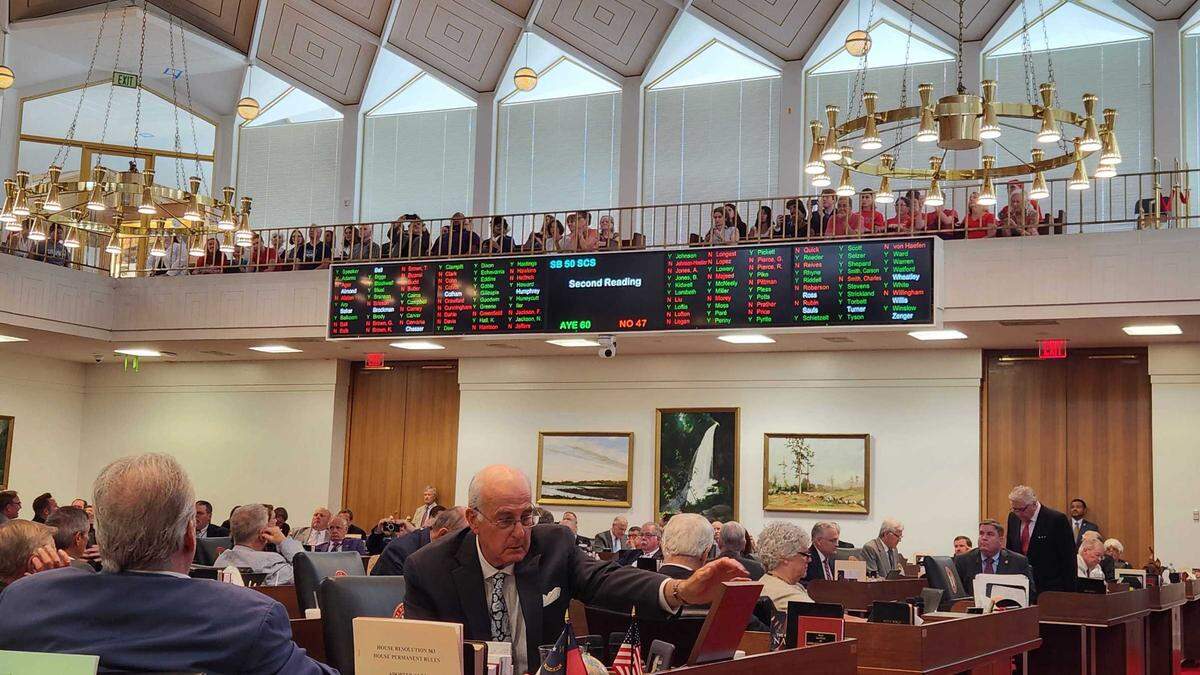
Two Republican House members, as well as all Democrats, voted against it. And because the House is one vote short of a veto-proof supermajority, they do not have the votes to overturn a veto.
Another potential controversy on the horizon this summer is the state budget. Stein strongly opposes the Senate version of the budget, but was quite complimentary of the House version, and even a majority of House Democrats voted for it.
But the final budget bill has to be a deal made between the House and Senate.
The key sticking point among Republicans is over the extent and pace of tax cuts. But Senate leader Phil Berger told reporters on Wednesday that taxes aren’t the only item they disagree on.
Both Berger and House Speaker Destin Hall said that same day that while they would work to come to a budget agreement by the end of June, a more likely scenario is what I mentioned at the top of this newsletter. With a flurry of bills likely to be passed over the next two weeks, lawmakers will then take a break. How long of a break, and what happens when they come back, is still to be determined.
Thanks for reading. Contact me at dvaughan@newsobserver.com. Be sure to listen to our Under the Dome podcast, which posts every Tuesday.
Not a newsletter subscriber? Sign up on our website to receive Under the Dome in your inbox daily.
This story was originally published June 15, 2025 at 5:00 AM.
.jpg)