A new law will allow NC private schools to arm teachers. Here’s how it works.
AI-generated summary reviewed by our newsroom.
- NC private schools may arm staff with concealed guns under HB 193 starting Dec. 1.
- Eligible staff & volunteers must hold permits, complete training, and get school approval.
- Law mandates written policies and annual rule distribution to all parents.
Beginning on Dec. 1, private schools in North Carolina will be able to give their teachers, employees and volunteers permission to carry concealed handguns on school grounds.
That’s because of a major change in state law that will go into effect after Republican lawmakers successfully overrode Democratic Gov. Josh Stein’s veto of a controversial gun bill last week.
House Bill 193 contains a few changes to existing firearm and criminal laws, including a provision that increases penalties for assaulting or threatening executive, legislative, court, or local elected officials, but the most debated and scrutinized proposal in the now-enacted bill deals with access to handguns in private schools.
State law generally forbids carrying firearms on school property. But under the new law, private schools in North Carolina will be able to allow teachers and other employees, as well as volunteers, to carry concealed handguns or stun guns on school grounds if they have a concealed handgun permit and complete an approved training course.
Republican lawmakers said the new law would be an important tool for private schools to have the option of using to protect themselves in situations like a school shooting, pointing to schools located in rural and remote parts of the state, where they said law enforcement response times could be too long in the event of an emergency.
Multiple GOP lawmakers said during committee hearings over the bill earlier this year that they had heard from private schools wanting to arm their staff as a precaution. Some cited the mass shooting at a Christian elementary school in Nashville, Tennessee, in March 2023 as the motivation for schools to ask for the option to arm teachers and staff.
Stein vetoed the bill last month, arguing as many other Democrats and advocates for gun safety did that allowing teachers and volunteers to carry concealed guns in schools was reckless and would make them less safe.
“We cannot substitute the protection offered by well-trained law enforcement officers by asking teachers and school volunteers to step in and respond to crises while armed,” Stein said.
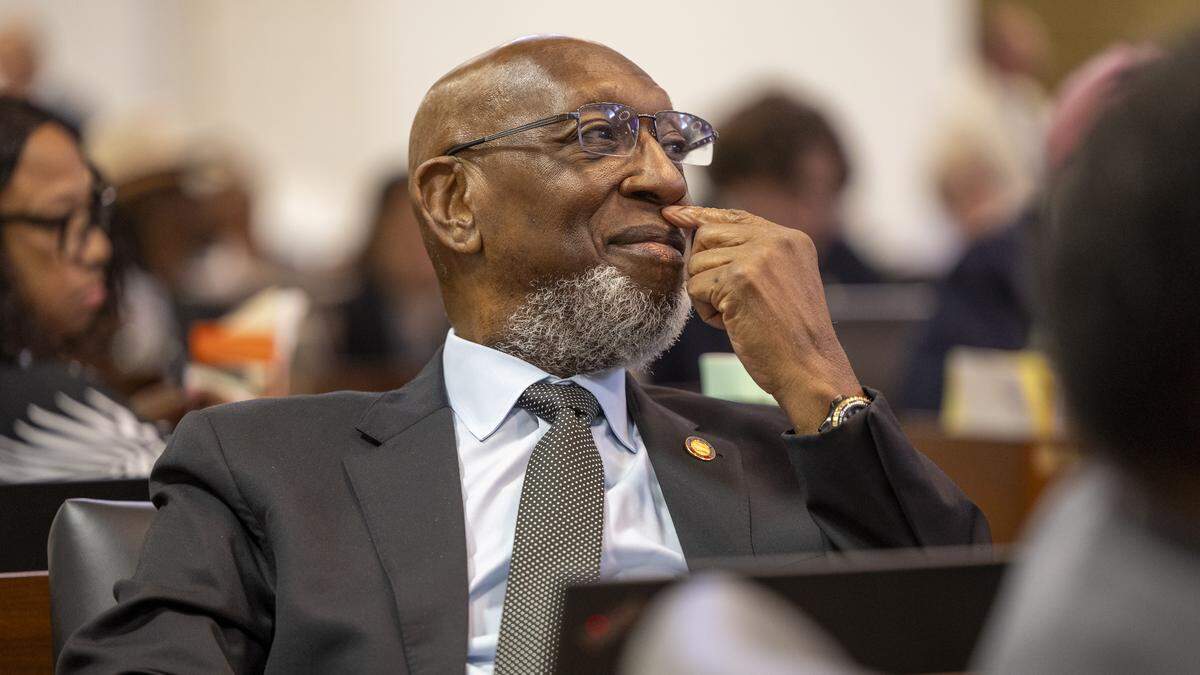
One Democrat, Rep. Shelly Willingham of Rocky Mount, didn’t agree and said he supported giving private schools the option if they wanted to take advantage of it. He cast the deciding vote last week that allowed Republicans to defeat Stein’s veto, ensuring the bill would become law.
Rules private schools would need to follow to arm teachers and staff
Under existing law, it is generally illegal to carry or possess any kind of firearm on the grounds or properties of the state’s public schools, private schools, community colleges, colleges, and universities (punishable as a Class I felony).
HB 193 creates a major exception to that prohibition for private schools.
The relevant provisions of the new law, which go into effect Dec. 1, 2025, give private schools the ability to grant permission to certain people on campus to carry concealed handguns or stun guns.
A teacher, employee, or volunteer will only be able to legally carry a concealed gun on school grounds if they:
- Have written authorization from the school’s board of trustees or administrative director to carry the weapon,
- Have a concealed handgun permit issued by their local sheriff’s office, or issued in another state (since out-of-state permits and licenses are valid under North Carolina law),
- Complete eight hours of training courses on “gun safety and the appropriate use of firearms” every year, in addition to the firearms training and safety course that is currently required to obtain a concealed handgun permit.
The law also requires private schools that want to allow teachers and staff to carry concealed guns on campus to adopt and maintain written standard operating procedures “regarding the possession and carrying of the weapons,” and distribute those rules to parents on an annual basis.
Another controversial gun bill Republicans are trying to enact over Stein’s veto, Senate Bill 50, would remove the permit requirement for carrying a concealed handgun.
Stein’s veto of that bill was overridden by the Senate last week, but wasn’t taken up in the House, where two Republicans voted against the bill in June, complicating the math for GOP leaders, who need every member of their caucus to support a veto override and even then are one vote short of the necessary threshold.
Update to 2023 law concerning places of worship that are also schools
Another provision of the law adds a second, narrower exception related to carrying handguns in places of religious worship that also serve as schools, or have attached schools. That exception was created in a law Republican lawmakers enacted in March 2023 after they overturned a veto from former Democratic Gov. Roy Cooper.
The earlier law allowed people with concealed handgun permits to carry handguns in these places of worship that also serve as schools — but they could only be armed outside of school hours.
Under HB 193, there’s a carve-out to that rule to allow carrying a gun “at any time, in a building that is a place of religious worship while the person is attending worship services, funeral services, wedding ceremonies, Christenings, religious fellowships, and any other sacerdotal functions in the building.”
Other restrictions put in place under the earlier law remain in place, including one that forbids carrying a handgun if the property owner has posted a sign prohibiting weapons on the premises.
This story was originally published August 4, 2025 at 10:46 AM.