First-time candidate Michael Whatley has years of political experience
AI-generated summary reviewed by our newsroom.
- Michael Whatley enters Senate race with Trump endorsement and party backing.
- Whatley led NC GOP from 2019-2024, helping Republicans secure key victories.
- Democrats back Roy Cooper, eyeing Senate seat to narrow GOP’s 53-seat edge.
Editor’s note: With the 2026 U.S. Senate race in North Carolina taking shape, The News & Observer spoke with longtime supporters and allies of Roy Cooper and Michael Whatley to understand what kind of political experience both candidates bring to their campaigns and the case for how each of them could win. This story, about Whatley, is one of two The N&O is publishing looking at each major candidate. Find our story about Cooper here.
Michael Whatley has worked at the highest level of politics in North Carolina and nationally, but he’s never been on the ballot as a candidate himself.
Now, armed with the crucial endorsement of President Donald Trump, Whatley is running for the Republican nomination in next year’s high-stakes U.S. Senate race and the opportunity to take on likely Democratic nominee Roy Cooper, the former two-term governor who has spent nearly four decades in elected office in North Carolina, and never lost an election.
Democrats are overjoyed that Cooper, who they’ve tried to recruit to run for Senate in the past and view as their strongest choice to flip a seat they last won in 2008, is jumping into a race in a battleground state where a victory could help them close the gap in the upper chamber of Congress. The GOP currently has a 53-seat majority.
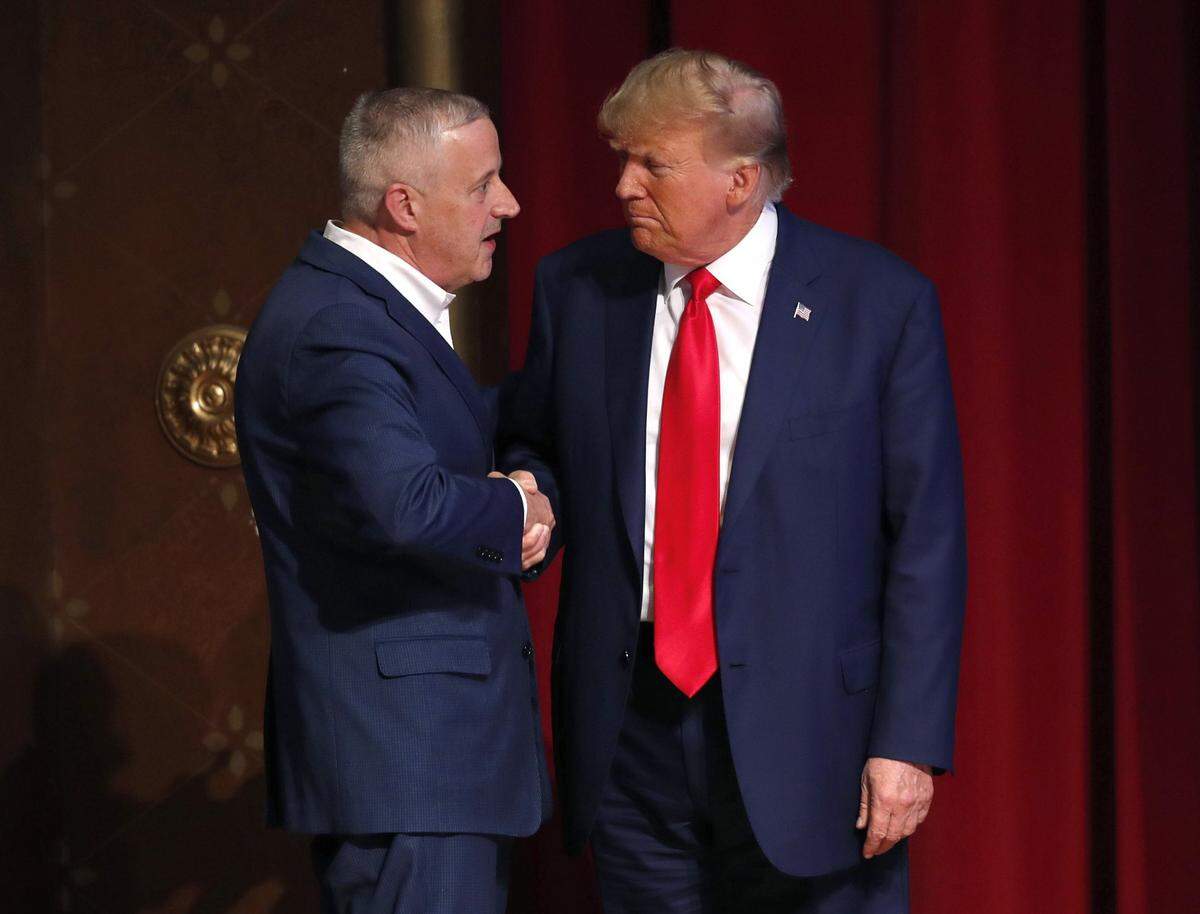
But Republican leaders are equally confident that in Whatley, Trump and other party chiefs are backing a strong candidate who is a North Carolina native, knows the state very well and knows what it takes to run winning GOP campaigns here.
During Whatley’s five years in charge of the N.C. Republican Party, from 2019 to 2024, Trump won the state twice, while Republicans at the state level regained legislative supermajorities in both chambers of the General Assembly that enabled them to override 29 vetoes issued by Cooper in his last term as governor. In 2022, Republicans also won a majority on the N.C. Supreme Court.

In February 2024, Trump tapped Whatley to chair the Republican National Committee, and Whatley spent the next eight months directing the party’s national efforts that saw Trump win a second term and return to Washington with Republicans retaining control of both the U.S. Senate and House.
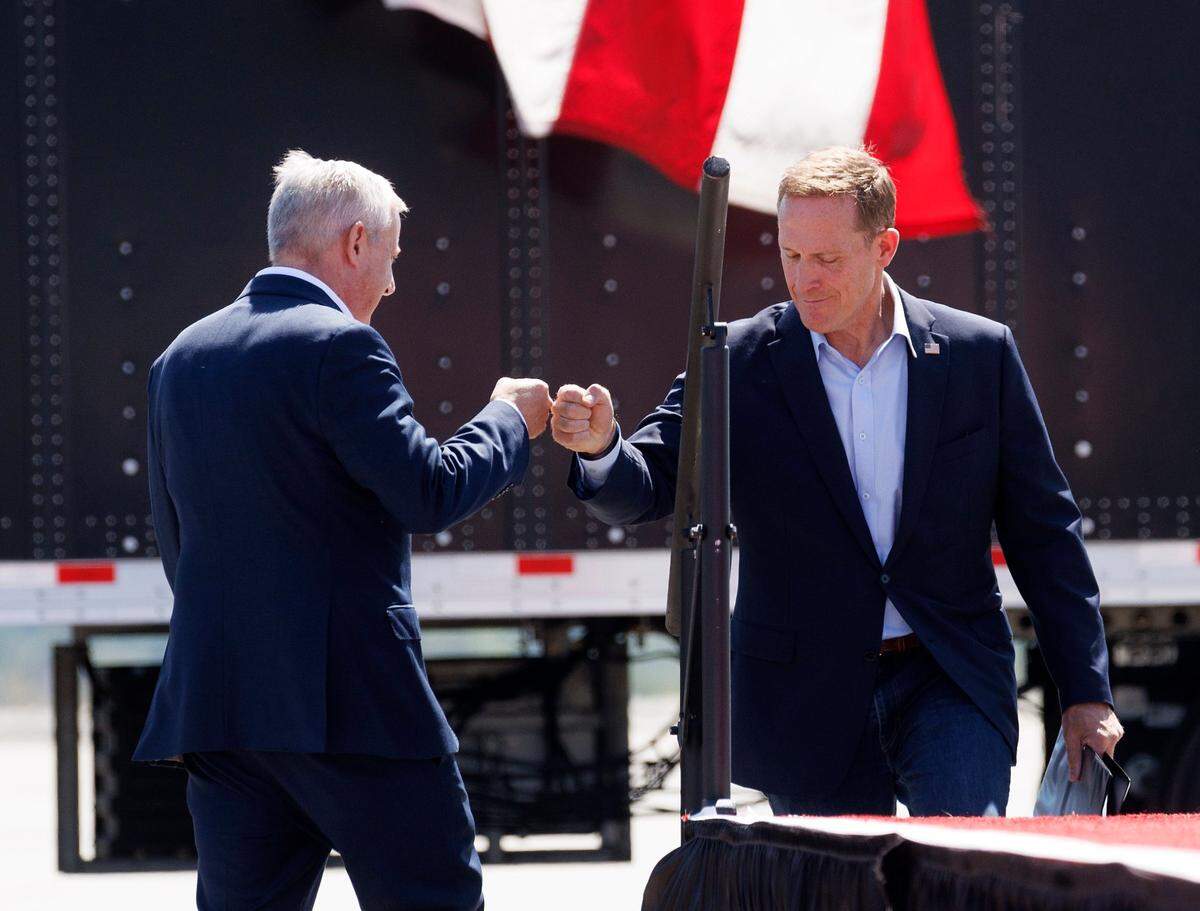
House Speaker Destin Hall, who worked closely with Whatley during his tenure as state party chair, said Whatley’s position and the responsibilities it came with made it a “difficult job” that prepared him well for his high-profile entrance into elective politics as a candidate.
“In some respects, it’s probably similar to being a chamber leader in the General Assembly, but it’s different in the respect of, I have 119 other House members, I’ve got 70 other members of my caucus, and as the party chair, he’s dealing with hundreds of people, thousands really, who were involved in local parties and the state party all across North Carolina,” Hall told The News & Observer in September.
GOP touts Whatley’s experience in NC and on national stage
Hall said that Whatley’s work ethic and responsiveness made him an effective state party chair, as did his understanding of the importance of unity within the Republican Party.
He also said that while Cooper brings decades of experience at the highest level of politics and government in North Carolina to the race, he thinks Democrats “are very overconfident” in his ability to win what are essentially national races.
“You have groups from out of state on both sides who are going to get involved, there’s more national media attention than what you may have in a race for governor, and the reality is Whatley has much more experience in national politics than Roy Cooper does,” Hall said.
Hall said that in his view, Cooper has yet to face a “very tough statewide race.”
Cooper easily won each of his four races for attorney general between 2000 and 2012, and won reelection as governor by 4.5 percentage points in 2020.
Even with the exceedingly close governor’s race in 2016, when Cooper ousted incumbent GOP Gov. Pat McCrory in an election that was decided by 10,277 votes, Hall noted that the Democrat “outspent him by a long shot.”
“For the first time ever, I think Cooper is running in a race where his opponent is going to have a similar, substantial fundraising ability,” Hall said.
McCrory also identified fundraising as a strength Whatley will bring to the race, telling The N&O that he’ll be able to tap national and statewide networks of donors from his time as head of the RNC and NCGOP.
Trump’s support for Whatley will be a strength as well, especially in the primary in which he’ll face former JAG officer Don Brown. But it could also be a liability in the general election, McCrory said, depending on “what the economy is doing next year.”
Heading into next year, Republicans can be encouraged that in addition to their successes at the state level, North Carolinians have voted for Trump each of the three times he’s been on the ballot here, and Democrats haven’t won a Senate race in this state since Kay Hagan defeated Elizabeth Dole in 2008.
Dole’s victory in 2002 is also an example of another nationally known GOP figure whose first political campaign as a candidate was for a Senate seat. Whatley, who served as Dole’s chief of staff on Capitol Hill from 2004 to 2007, is now following in her footsteps.
“He’s been around a long time on various levels of government, from the party side as well as from the policy side,” said N.C. Rep. Erin Paré, a Holly Springs Republican and high-ranking member of House GOP leadership.
Paré added: “He’s not a novice by any stretch of the imagination.”
How Whatley’s campaign will attack Cooper in 2026
Republicans also feel good about their chances in the race because of their view that Cooper has “a record of doing things that today certainly, are, frankly, politically, extremely unpopular,” as Hall put it.
Hall sees particular vulnerabilities in Cooper’s vetoes of bills that required sheriffs in North Carolina to cooperate with U.S. Immigration and Customs Enforcement and honor the agency’s temporary detention requests, and that prohibited transgender athletes from participating in women’s sports in schools
Republicans, after obtaining supermajorities in 2023, enacted those and several other bills over Cooper’s vetoes. And the continuing contrast between the legislative agendas of the two parties is sure to feature prominently in the race.
So far, this year, while Republicans have failed to reach an agreement on a state budget, they have overridden eight of Democratic Gov. Josh Stein’s vetoes, even as they narrowly lost their supermajority in the House.
A handful of swing-voting Democrats have bridged that gap, allowing the GOP to enact bills mandating further local cooperation with immigration enforcement and allowing private schools to arm designated teachers and volunteers who have concealed carry permits and take an approved training course.
Paré also mentioned the state’s slow home rebuilding efforts in Eastern North Carolina after Hurricanes Florence and Matthew, and long-running troubles at the Division of Motor Vehicles, as issues Republicans will highlight when it comes to Cooper’s time as governor.
Another issue that continues to be debated politically is the state’s handling of the COVID-19 pandemic.
The N&O recently reported on how two lawsuits brought by bar owners who claimed they were treated unfairly when it came time for businesses to gradually begin reopening are moving forward after recent rulings by the Republican majority on the N.C. Supreme Court, and could become an issue in the Senate race.
Republicans have also been keen to attack Democrats on the issues of fairness in women’s sports and gender-affirming surgeries and treatment for children.
McCrory, who lost his 2016 bid for reelection to Cooper during the flare-up over House Bill 2, which became nationally known as the “bathroom bill,” said the politics on the issue have changed dramatically in the ensuing years.
In 2016, North Carolina faced national backlash to the legislation drafted by GOP lawmakers that required transgender people in schools and government buildings to use public restrooms matching the gender on their birth certificate.
Less than a decade later, Republican lawmakers have successfully enacted laws that ban transgender athletes from playing in women’s sports and prohibit gender transition surgery and puberty blockers or hormones for minors. In last year’s presidential election, Trump’s winning campaign promoted similar efforts by the GOP across the country.
Another major bill N.C. Republicans enacted in July over Stein’s veto, with the help of a House Democrat from Charlotte who cast the deciding vote, blocks state funds to be used for gender transition procedures for inmates in state prisons and allows patients who underwent such procedures to sue for malpractice up to 10 years after their operations.
That law also requires school districts to create infrastructure for parents to make lists of books they don’t want their children to read, and provide a searchable database for library books at each school.
And while Stein vetoed that bill, he did sign another bill into law at the time that included a provision shielding parents from claims of abuse or neglect if they don’t recognize their child’s gender identity, The N&O previously reported.
“The transgender issue, which helped elect (Cooper), may defeat him in the Senate race 10 years later,” McCrory said.
This story was originally published September 25, 2025 at 5:00 AM.