Is your voter registration complete? How to comply with NC’s new election plan
AI-generated summary reviewed by our newsroom.
- State board contacts 100K voters with missing ID data to update registration.
- Voters lacking HAVA info must update records or risk losing ballot eligibility.
- Federal votes counted regardless, but state and local ballots may be disqualified.
Municipal elections tend to draw far less turnout and attention than their state and national counterparts. But this year’s local elections bring a notable change for North Carolina voters — or at least about 100,000 of them.
This year, the State Board of Elections is requiring these registered voters — whose legitimacy has been challenged in several high-profile lawsuits — to provide additional identifying information to complete their records. If they fail to do so, their ballots could be thrown out.
Here’s everything you need to know about the new initiative and how to ensure your vote counts this year and in future elections.
How did this start?
For years, the State Board of Elections used a voter registration form that critics now contend did not make it clear that new voters were required to provide either a driver’s license number or the last four digits of their Social Security number.
As a result, several hundred thousand voters remained on the state’s rolls without those identification numbers, which are required by the national Help America Vote Act.
While the elections board eventually corrected the registration form, the Republican National Committee sued over the issue last year, asking a federal court to remove 225,000 voters from the rolls.
The court declined to do so, but the issue persisted.
After Democratic incumbent Allison Riggs won the 2024 state Supreme Court election by 734 votes, her opponent, Republican Court of Appeals Judge Jefferson Griffin, attempted to overturn the results by targeting the voters with missing information.
He argued that over 60,000 ballots should be thrown out because the voters lacked the information required by HAVA in the state’s registration database.
A six-month legal battle ensued, which Griffin ultimately lost.
In the aftermath, however, President Donald Trump’s Department of Justice sued the elections board over the HAVA information.
The board, which had recently flipped to a Republican majority, quickly began working with the DOJ on a settlement to address the issue.
From there, the bipartisan board unanimously approved the “Registration Repair” plan, which seeks to retrieve the missing HAVA information from over 100,000 voters.
What is the Registration Repair plan?
As part of the Registration Repair plan, the State Board of Elections is contacting North Carolinians with incomplete voter registrations and asking them to provide the missing information.
Per the plan, voters on the list who don’t update their registration by the next election will have to cast a provisional ballot. That ballot can be thrown out if the required identifying information is not eventually provided.
However, the board’s settlement with the DOJ specifies that any vote in a federal contest (such as North Carolina’s 2026 U.S. Senate race) must be counted even if the voter does not fix their registration.
What voters are affected?
The original list of affected voters included roughly 100,000 North Carolinians who never provided HAVA information when they registered to vote, according to the elections board.
In the last few months, about 20,000 of those voters have already fixed their registration issues.
As of Wednesday, the Registration Repair list included roughly 79,000 voters — all of whom should have received a mailing from the board with instructions on how to complete their registration.
Voters can find out if they are on the Registration Repair list by using the board’s online search tool.
What do I need to do to complete my registration?
Voters on the Registration Repair list can address the issue in one of three ways.
Voters with a driver’s license can make changes to their registration online by visiting payments.ncdot.gov and updating their voter registration.
Registrations can also be fixed in person by visiting your local county board of elections office. There, you can present your driver’s license or Social Security number to staff.
Lastly, voters can update their registration by mail. Anyone on the list should have gotten a letter from the elections board last month, which includes a form and pre-addressed return envelope that can be used to complete their registration.
If I have to cast a provisional ballot, how do I make sure it counts?
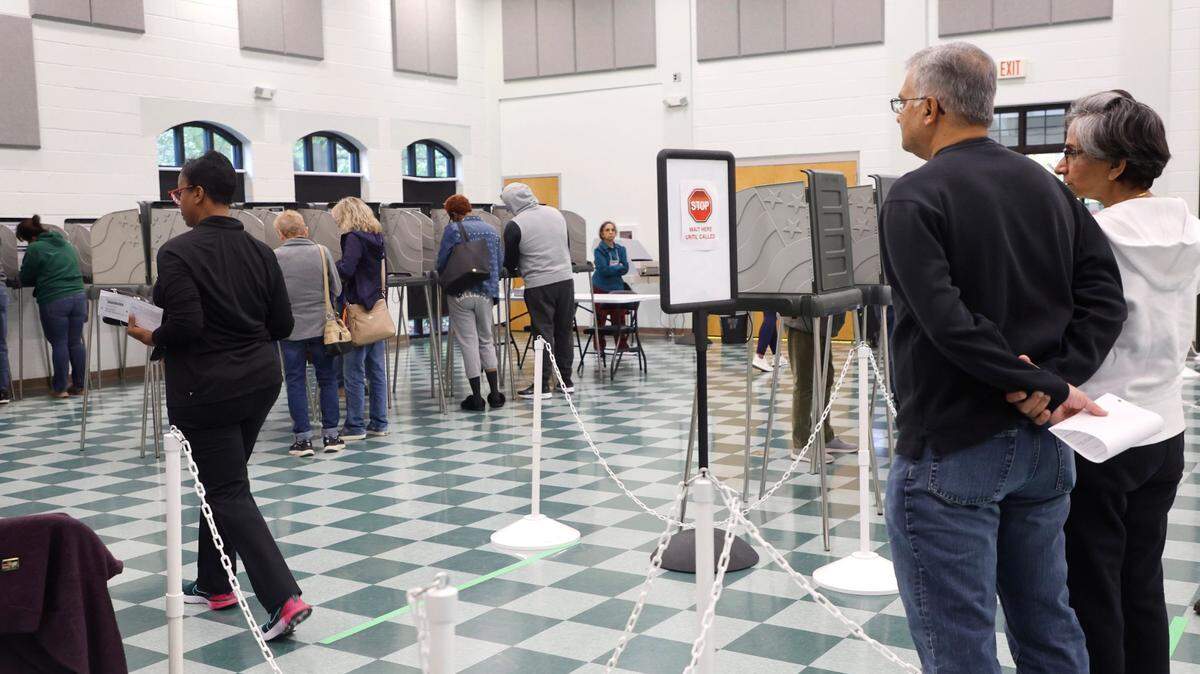
Voters who don’t fix their registration before the election will be asked to cast a provisional ballot at the polls.
Election workers will ask these voters to fill out a form with either their driver’s license number or the last four digits of their Social Security number alongside their provisional ballot.
After votes are cast, county election boards will review provisional ballots to ensure the provided information is accurate.
Voters can check the status of their provisional ballot on the State Board of Elections’ website or by calling (919) 814-0700.
What if I don’t have a driver’s license or Social Security number?
Voters who don’t have either of those numbers will be asked to check a box indicating as such. They will then be asked to show an alternative ID that complies with HAVA rules, such as a passport or recent bill.
If the voter is unable to do so at the polls, they can still cast a provisional ballot, but will need to show a HAVA-compliant ID to election officials before noon on the third business day after the election to have their vote counted.
When could my vote be thrown out?
According to the settlement reached between the elections board and the DOJ, all ballots will be counted for federal elections — even if voters don’t fix their registrations.
However, votes in state and local elections could be disqualified under a few narrow circumstances.
If a voter casts a provisional ballot and provides a driver’s license or Social Security number that doesn’t validate when checked against state or national databases, that ballot could be disqualified if the voter has never shown a HAVA-compliant ID since the time they first registered as a voter.
Likewise, if a voter indicates that they lack a driver’s license or Social Security number and has never shown a HAVA ID since registering, their ballot could also be disqualified.
In either of these scenarios, elections staff will contact the affected voters asking them to supply the missing information before the deadline, which is noon on the third business day after Election Day.
This story was originally published September 23, 2025 at 6:00 AM.