At Duke, Pete Buttigieg says he’s alarmed we’re in a ‘season of political violence’
AI-generated summary reviewed by our newsroom.
- Buttigieg urged Americans to disconnect from social media to counter polarization.
- He cited military service as a model for unity through shared belonging and trust.
- He warned of Trump's reshaping of institutions and called for thoughtful reform.
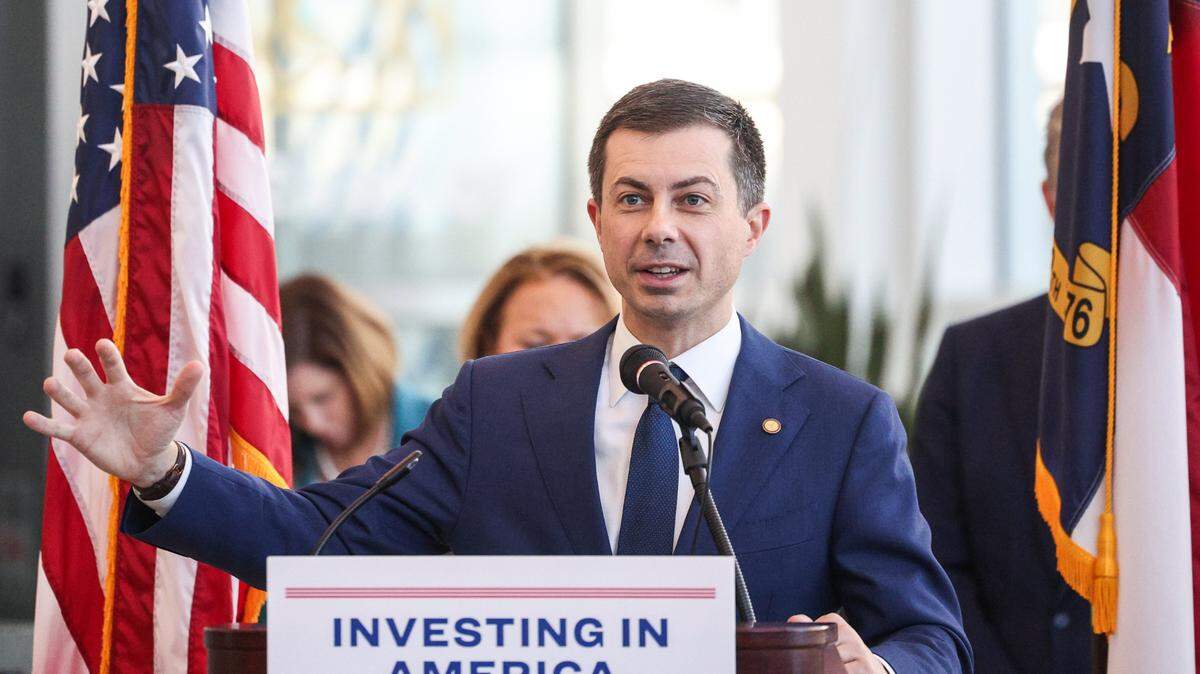
Warning of the danger of accelerating political polarization, former U.S. Transportation Secretary Pete Buttigieg said the current moment requires two things: “getting offline” and “engaging outside of our bubbles.”
During a lecture and question and answer session at Duke University on Thursday, Buttigieg acknowledged that polarization has always existed in the United States in “some form or another.” But he said he is alarmed that in today’s political culture, “it no longer feels like we have access to the same reality.”
He also expressed concern that “a season of political violence is upon us,” pointing to the assassinations of Minnesota state lawmaker Melissa Hortman at her home in June, and conservative activist Charlie Kirk, who was fatally shot while speaking to students at Utah Valley University on Sept. 10.
Buttigieg, who sought the Democratic nomination for president in 2020 and has been mentioned as a contender in 2028, said the biggest cause of polarization right now “that’s punching us in the face is the rise of social media.”
When major social media platforms first became available in the early aughts, Buttigieg recalled, there was excitement that the technology would bring people closer and “democratize everything.” Two decades later, he said, “we got into a situation where everybody can be a reporter and everyone can be a columnist, but no one’s an editor.”
Buttigieg said that instead of editors who “work out whether things are actually true before you circulate them around the world,” information exchange and political discourse are facilitated by algorithms that are “taking instructions from the lowest instincts we have” and creating silos that reinforce what people want to hear.
Now, he said, Americans are “coming to terms with how totally social media has reshaped how we relate to each other and to our country.”
Finding ‘overlapping circles’ of belonging
One solution to this problem, in Buttigieg’s view, is for people to find “circles of belonging that are overlapping, rather than concentric.”
Buttigieg cited his own example of being a prominent Democrat and wanting to do more interviews on Fox News.
But beyond politicians setting the tone from the top, he said, everyday people can help improve today’s politics by “reaching and connecting on the things we care about, among friends, among family, among colleagues, who aren’t always inclined to agree with us, but who we can reach because we know each other on a human basis.”
“This urgently requires getting offline,” Buttigieg said. “We’ve got to be connecting and relating to each other in ways that the algorithm simply will not support.”
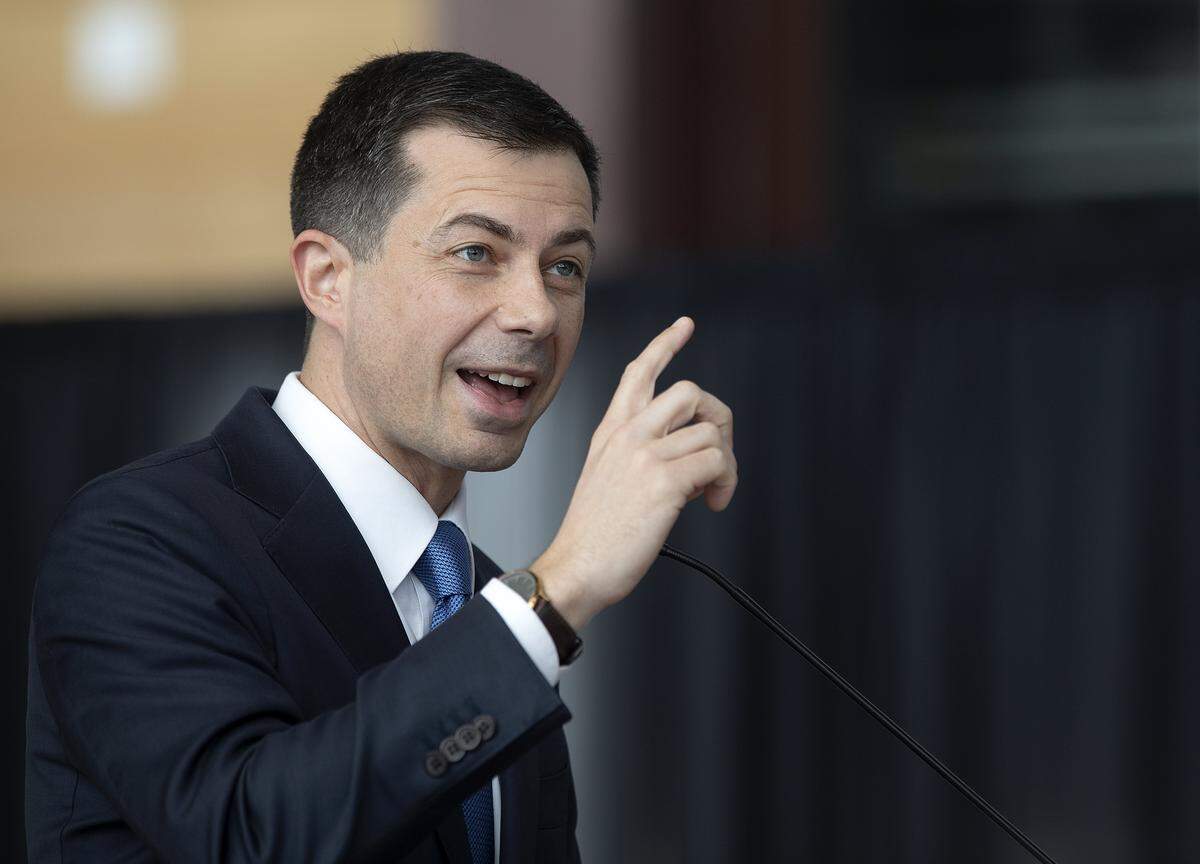
Buttigieg described his experience serving in the U.S. Navy Reserve, which included a seven-month deployment to Afghanistan in 2014 while he was serving his first term as mayor of South Bend, Indiana, and said the military was a “great example” of an institution that fosters “overlapping circles.”
“When I was getting into my vehicle to go outside ... with a couple of people from my unit, I guarantee you, they did not care at all whether I was going home to a girlfriend or a boyfriend, or what party I belonged to, or what country my dad immigrated from,” Buttigieg said. “All they wanted to know is, did I read the intel briefs to try to know where the explosive devices were likely to be.
“I know for a fact we had very different politics, very different backgrounds, very different stories, sometimes not much in common besides the flag on our shoulder. But we trusted each other with our lives, because we had this circle that we all belonged to,” he said.
What is Buttigieg’s future in politics?
Buttigieg also shared his assessment of the first nine months since President Donald Trump returned to Washington, describing his administration as moving quickly to exert power in new and different ways.
“We are in the middle of witnessing an energetic and largely successful attempt by people running our government, not only to take full control of the levers of the official policy power in this country, but also to wield unprecedented levels of government control over the pillars of our civil society, including law, science, technology, medicine, entertainment, press and academia,” Buttigieg said.
As the opposition to Trump’s sweeping actions takes hold, Buttigieg said a guiding principle in his mind is that “we cannot be wedded to the status quo that we inherited.”
Buttigieg said that even as “I hate watching” the Trump administration’s dismantling and remaking of institutions like the U.S. Agency for International Development and the U.S. Department of Education, or the country’s public health infrastructure, it’s important to “admit none of those things as we found them were the way we would have designed them if we’d been given the chance to do so from scratch.”
“Good things are being destroyed right now,” Buttigieg said. “Useless things are also being destroyed alongside them, and it is time to be rigorous and thoughtful about which is which, and to think more creatively about what to put in their place.”
Asked about his own political future and whether he will run again for president in 2028, Buttigieg said: “I don’t know.”
When deciding whether to run for a particular office, Buttigieg said he considers: “What does this office call for in this moment, and what do I bring, and do they fit?”
Earlier this year, Buttigieg mulled possible campaigns for governor and U.S. Senate in Michigan in 2026, but decided against running.
Kamala Harris’ book
Buttigieg’s visit to Duke came days after former Vice President Kamala Harris released her memoir “107 Days” that looks back at her unsuccessful bid for the presidency last year.
The book has generated headlines for revelations about the campaign and the potential running mates Harris was considering, including Buttigieg. She wrote he was her first choice in an initial list of candidates, but was later dropped from the running due to her belief that “it was too big of a risk” to have a ticket consisting of a Black woman and a gay man.
Buttigieg responded to the comments by telling Politico last week that he was “surprised” to read the passage and believes in “giving Americans more credit” than assuming they wouldn’t vote for such a ticket.
This story was originally published September 25, 2025 at 10:19 PM.