600 days later, still no NC Supreme Court ruling on Leandro school funding case
AI-generated summary reviewed by our newsroom.
- North Carolina Supreme Court delays Leandro ruling 20 months after oral arguments
- Republican majority paused the 2022 funding order and accepted GOP legislative appeal
- Advocates warn delay denies students constitutionally guaranteed access to education
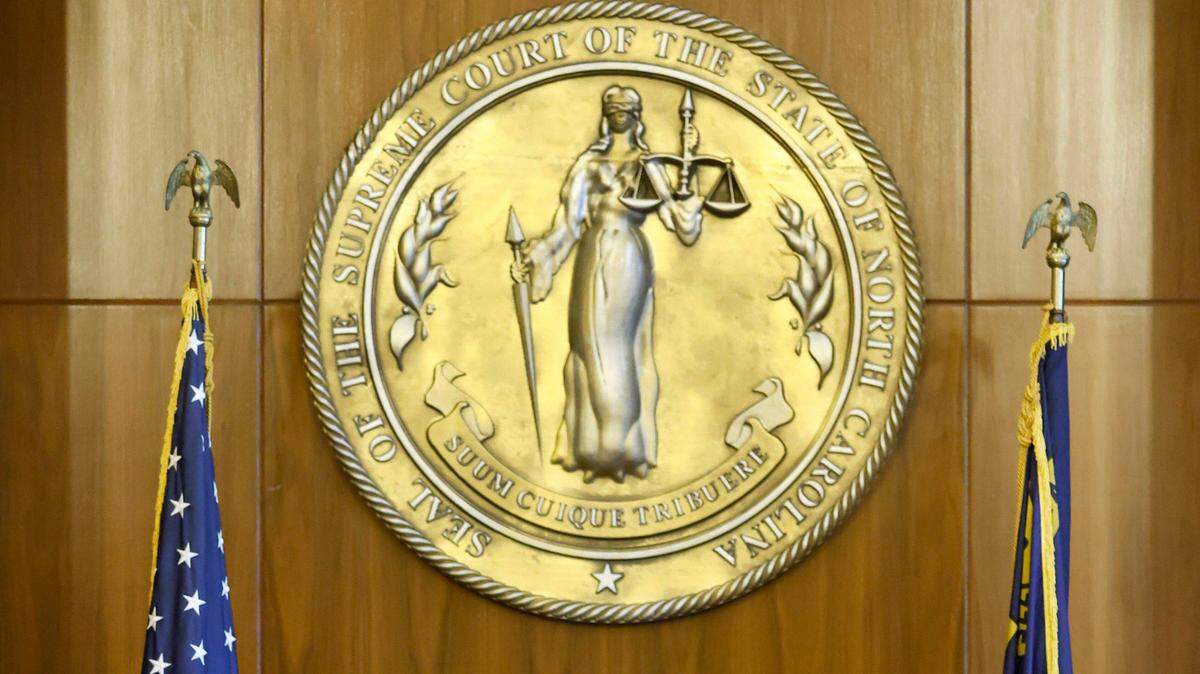
North Carolina’s highest court still hasn’t issued a ruling nearly 20 months after justices heard oral arguments in the long-running Leandro school funding lawsuit.
The fate of a landmark 2022 state Supreme Court ruling that the courts can order the state to transfer hundreds of millions of dollars for public schools remains uncertain. The court’s Republican justices put the money transfer on hold after becoming the court majority. The court heard an appeal on Feb. 22, 2024 filed by GOP legislative leaders.
More than 600 days since those oral arguments, the Leandro case was not among the 13 new opinions released on Friday Dec. 12 is the next date the court could release rulings.
“There’s no requirement that opinions be issued in any particular time frame,” former NC Supreme Court Justice Bob Orr said in an interview Friday. “They obviously know everybody’s waiting. But for whatever reason, it’s not out there.”
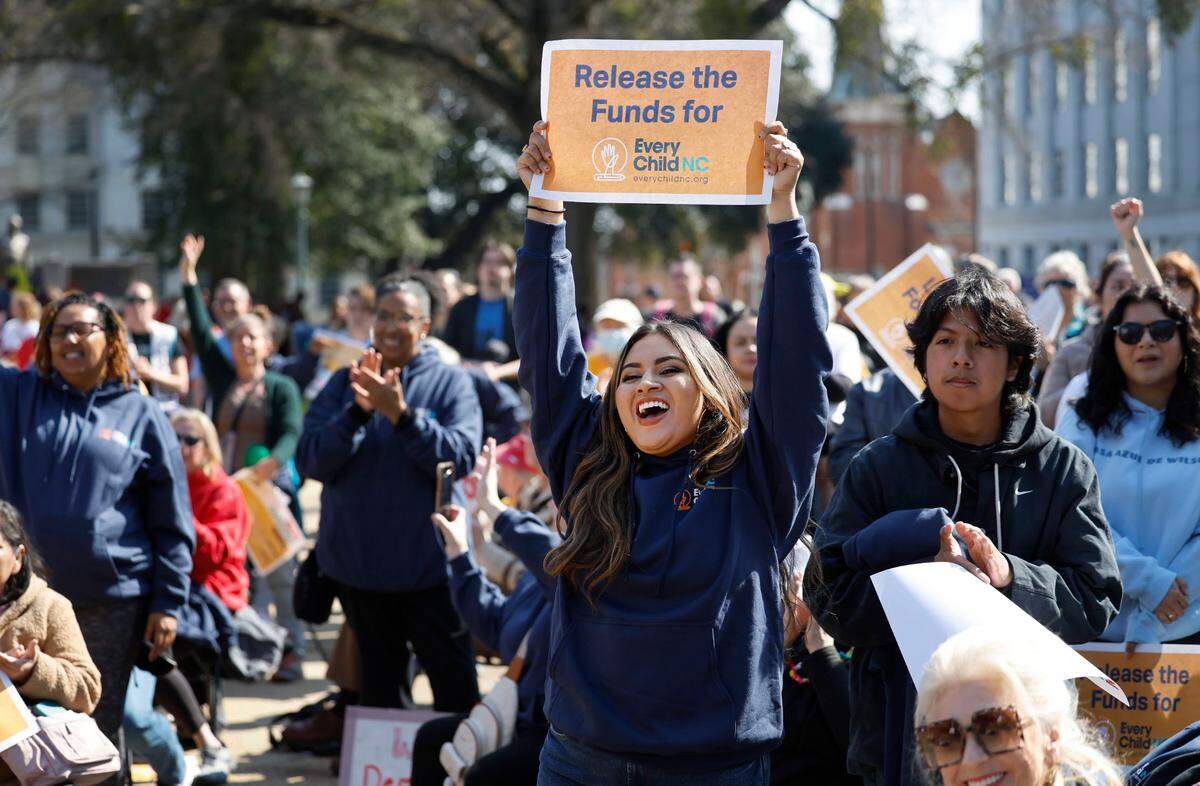
Public school supporters are growing frustrated by the delay.
“The decision to not fund our public schools is not without consequence,” Rebecca Trammel, the organizer of the group “I Am Leandro” said in an interview. “How long will we allow our children to pay the high price of inaction? Justice delayed is justice denied.”
School funding lawsuit now 31 years old
The Leandro case was initially filed in 1994 by five low-wealth school districts to get more state funding.
Over the years, the state Supreme Court has ruled that the state constitution guarantees every child “an opportunity to receive a sound basic education” and that the state was failing to meet that obligation.
In November 2021, Superior Court Judge David Lee ordered the state treasurer, controller and budget director to transfer $1.75 billion to fund years two and three of an eight-year plan developed by a consultant. The amount has since been revised to $677.8 million for those two years.
The plan is meant to try to provide every student with high-quality teachers and principals. The eight-year plan is estimated to cost at least $5.6 billion.
Just days before the 2022 midterm elections, the Supreme Court upheld Lee’s order along party lines. The Democratic justices said the courts had deferred long enough for the state to implement a plan to provide a sound basic education.
Republicans gained the court’s majority after the 2022 election and blocked enforcement of Lee’s order.
The Republican majority, over the objections of Democratic justices, also agreed to hear an appeal filed by GOP legislative leaders. The lawmakers questioned both the constitutionality of judges ordering the expenditure of taxpayer money and whether a statewide solution could be imposed.
“The Leandro case has been pending before the North Carolina Supreme Court for over a year since oral arguments, which is unusually long for the Court,” state Superintendent Mo Green, a Democrat, said in a statement. “While we await their decision on whether courts can require legislative funding for educational programs, it’s crucial to remember that Leandro isn’t just about money — it’s about ensuring every North Carolina student has access to the systems and support necessary for a sound, basic education, as guaranteed by our state constitution.”
What could delay in releasing opinion mean?
The average time for an appellate decision is six months, but there’s no time limit. The court has issued a decision for every other case it heard on Feb. 22, 2024
“The fact that it’s taken so long suggests to me that there has been some internal discussion about what this ruling means,” said Mitch Kokai, a senior political analyst for the John Locke Foundation, which disagreed with the 2022 decision. “What the long term implication is for this case, whether it’s going to continue or if this is going to be the end of the case.”
If the majority wanted to simply forget the 2022 decision, Kokai said, the court could have quickly issued a new ruling. He said the ruling that will come will likely be more complex as the justices decide what future the Leandro case should take.
“You have that initial Leandro ruling that said that students have the right to the access to a sound basic education,” Kokai said. “I don’t think anyone on the court was signaling they wanted to get rid of that. But I think there is some concern about all of the additional steps that have taken place since then, and how they’ve led us to where we are today.”
Orr, the former Supreme Court justice, said the delay could indicate difficulty getting a majority opinion for a complex case.
“A complete reversal of the original Leandro concept of a constitutional right to a sound basic education would be very dramatic,” Orr said. “I would be surprised if there was anywhere near that kind of unanimity on the court.”
Not funding Leandro a violation of constitutional rights?
Supporters of the 2022 ruling say the facts haven’t changed for the court to overturn the decision.
“I believe a principled bench could see the long tenure of Leandro and see that the court has already said that they can no longer wait,” said Trammel of I Am Leandro. “They must take action, because to not take action would be complicity in the continual violation of our children’s constitutional rights.”
Both Trammel and Heather Koons, a spokesperson for Public Schools First NC, said the state has the money to fund the Leandro plan. Koons pointed to how the cost of the Leandro plan is similar to the $5.3 billion that lawmakers plan to spend on private school vouchers through the 2029-30 school year.
“It’s not that the money isn’t there,” Koons said. “The legislature is choosing to spend the money differently than what the Constitution requires. And you know what the Constitution requires? You know, a uniform system of free public education.”
This story was originally published October 17, 2025 at 2:47 PM.