
Developer agreed to $15 million road for NC town, but lawmakers paid the bill
At a Mooresville town board meeting three years ago, a developer pitched a large planned community — a combination of 560 single-family homes and apartments across 125 acres two miles southwest of downtown.
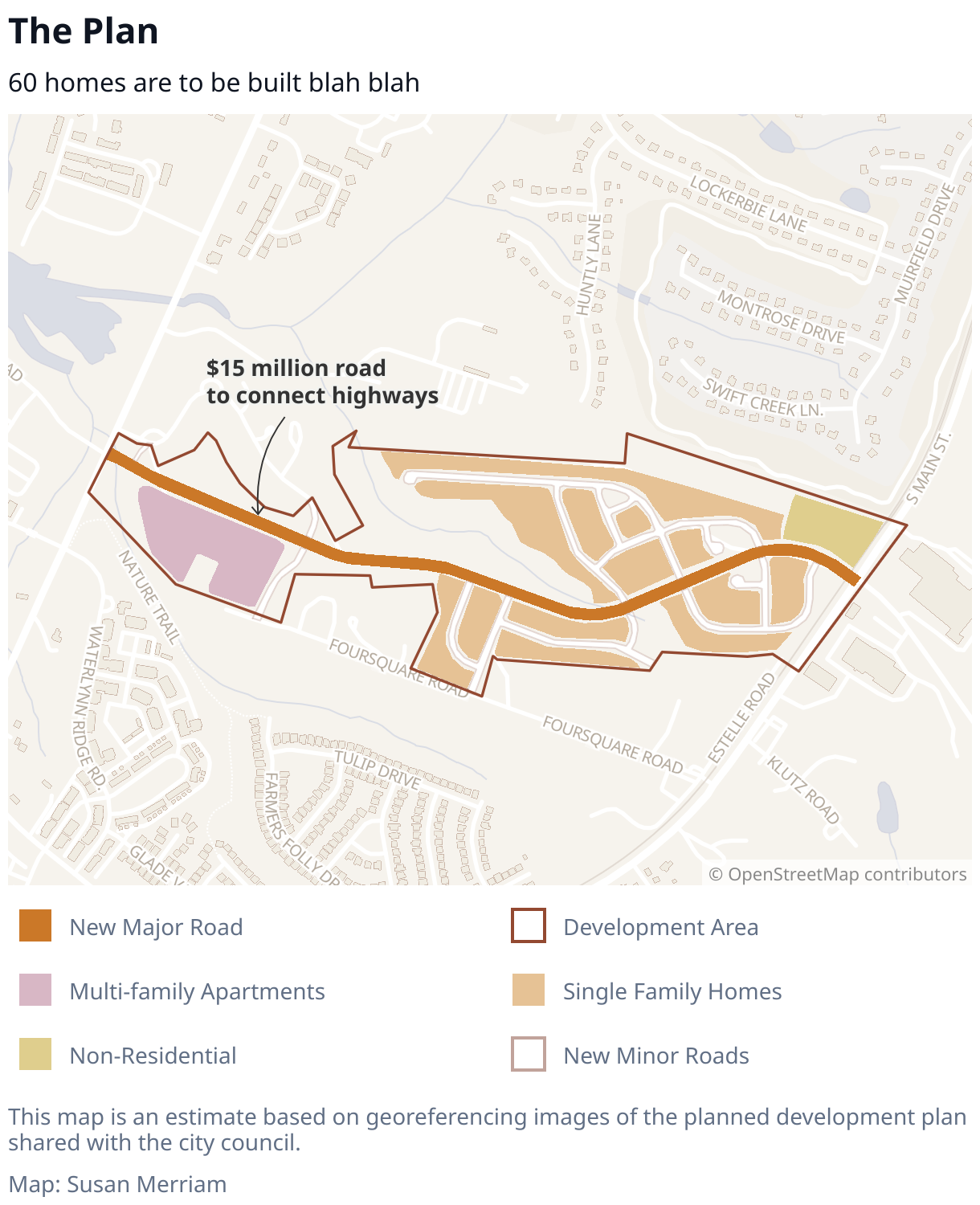
To gain the board’s support, the developers promised a $15 million road through the middle of its development that would also connect two highways and help alleviate traffic congestion in the fast-growing town 30 miles north of Charlotte.
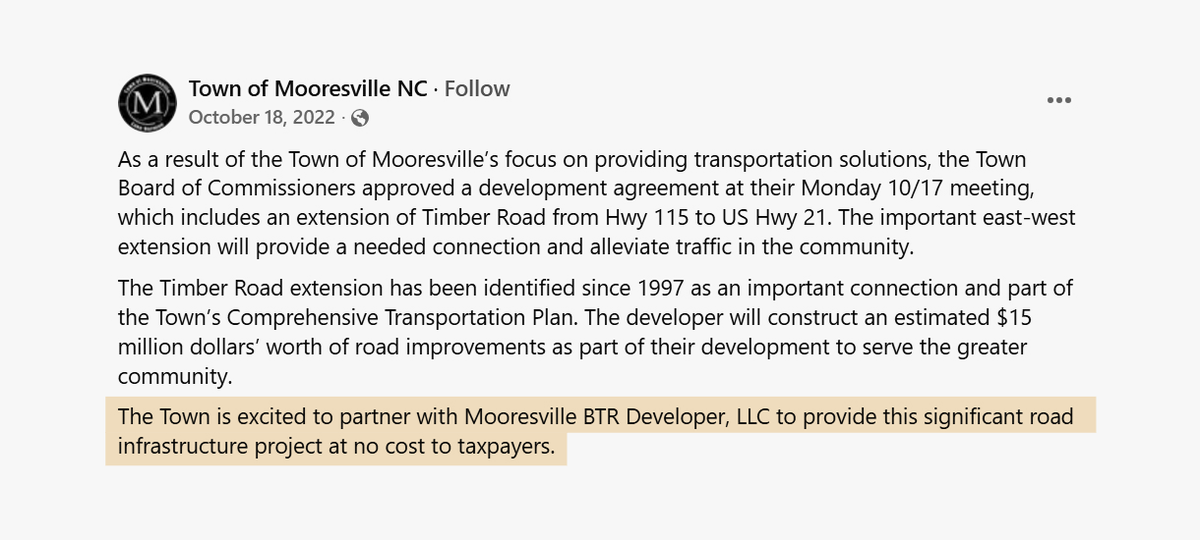
“It’s a win, right?” Commissioner Lisa Qualls said with a smile. A day later, a post on the town’s Facebook page celebrated that this “significant road infrastructure project” would bring “no cost to taxpayers.”
But that’s not how it played out. A year later, state legislative leaders released their final version of the $30 billion state budget bill, one that lawmakers had just one day to read and approve. Deep within its 786-page spending report was a $15 million appropriation of state funds for the roughly mile-long, two-lane road.
A News & Observer investigation into how lawmakers passed off a developer’s $15 million commitment onto the public shows how an interconnected group of lawmakers, lobbyists and insiders worked behind closed doors with little public notice:
- The developer hired Mooresville businessman David Coble as the project consultant. Coble is a close ally of former state legislator Jason Saine, a Lincolnton Republican who chaired the House budget committee at the time of the appropriation.
- In the months leading up to the town’s approval in 2022, Coble had dramatically stepped up his donations to state Republican legislative campaigns. By the next year, hundreds of thousands of dollars from people with links to the developers began flowing into the campaign coffers of state Republican lawmakers, campaign expense reports show.
- In a highly unusual move, lawmakers routed the money through a regional agency, rather than giving it to the town of Mooresville directly. At a meeting where board members voiced confusion over that move, Chris Carney, a former state senator who is now Mooresville’s mayor, advocated for its approval. But he did not disclose that he and Coble were in business with the developer on another project.
- One of the people the developer hired to lobby state lawmakers at the time of the $15 million appropriation also represented the regional agency that received the money on behalf of the developer without requesting it.
Bob Hall, the retired executive director of Democracy North Carolina, first spotted connections between the developers, lawmakers and town officials when he noticed a surge in campaign contributions to state legislators from donors in Florida and Texas. The M Group Companies, which is developing the Mooresville planned community, has offices in both states.
“It smells terrible,” said Hall, a veteran campaign watchdog who has unearthed significant corruption in state government over the years.
The $15 million gift is similar to several state appropriations that The N&O has exposed in its Power & Secrecy series on ways that the legislature’s expanded power and increased secrecy have financially benefited people with political ties, often at taxpayers’ expense.
Growing pains in Mooresville
For much of its 152-year history, Mooresville was a small textile town with a rail line running through its quaint downtown of mostly two-story brick buildings. Norfolk Southern continues to use the rail for freight, but Mooresville’s affordability and proximity to both Charlotte and Lake Norman is spurring big growth.
Over the past 25 years, Mooresville has more than doubled to roughly 55,000 residents, with traffic clogging roads many times during the work day. Orange construction barrels are seemingly everywhere.
That dynamic presented a challenge and an opportunity for the M Group Companies, a developer based in South Florida and suburban Dallas. It wanted to build a planned community with single family homes and apartments, but the developer was facing concerns about seemingly relentless growth.
The developer’s plan included turning the spine of the development — a westward extension of Timber Road — into an east-west connector that would link heavily traveled US 21 and NC 115. That road will also provide access into the development’s subdivisions, a map obtained from Mooresville shows.
M Group officials formed a subsidiary — Mooresville BTR — to lead the development, and hired Coble, a former town commissioner, as a local representative. Coble was at two community meetings in mid-2022 explaining the proposed development, town documents show. He is working with town officials to make sure deadlines are met and standards are maintained, the developer’s real estate team said.
Coble has his own developer consulting business, LandMark Solutions, and is known for his political connections to Saine, the former legislator who became the House’s lead budget chairman in 2019 and had that role when the 2023 state budget was constructed.
Since at least 2021, Coble has led Greater Carolina, one of many 501(c)(4) nonprofits. They are viewed as dark-money groups because they can engage in some political activity without disclosing their donors. It was founded by a former aide to Saine, whose WSIC radio talk show “from the heart of the Lake Norman area” Coble occasionally co-hosts.
In a brief telephone interview, Coble said he played no role in lawmakers awarding $15 million to the Timber Road extension. Mooresville BTR “worked directly with Chris Wall,” a lobbyist with the Raleigh firm EQV Strategic, to win the $15 million appropriation, he said.
Lobbyist with a dual role
State lobbying records show Mooresville BTR registered Wall and another EQV lobbyist, Kevin Wilkinson, to represent it at the legislature and other state government agencies in 2023.
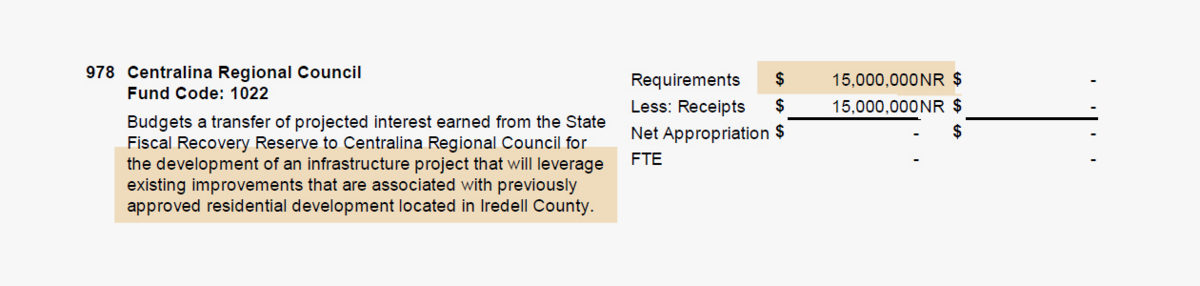
Wall at that time was also a paid lobbyist for the Centralina Regional Council, which ended up playing a leading role in moving the $15 million to the developers. The Charlotte-area group led by local governmental officials is one of 16 regional councils in the state that mostly focus on economic development, planning and social services that extend beyond single communities.
Centralina operates out of a research park near the University of North Carolina at Charlotte. In its meeting room there on March 13, 2024, several members of its executive board said they were surprised to learn they were expected to accept and manage a $15 million state appropriation on behalf of a developer building a road in Mooresville.
“Why is the COG even getting involved in this?” asked Martha Sue Hall, a longtime Albemarle city councilor and Stanly County commissioner. She added: “It doesn’t look right, it doesn’t smell right and it’s scary for me as someone who has been around for so long.”
Geraldine Gardner, Centralina’s executive director, quickly pointed out that the group knew nothing about the appropriation until it appeared in the state budget. But she said she knew of two examples where lawmakers had routed similar “directed grants” through regional councils. Neither involved road construction.
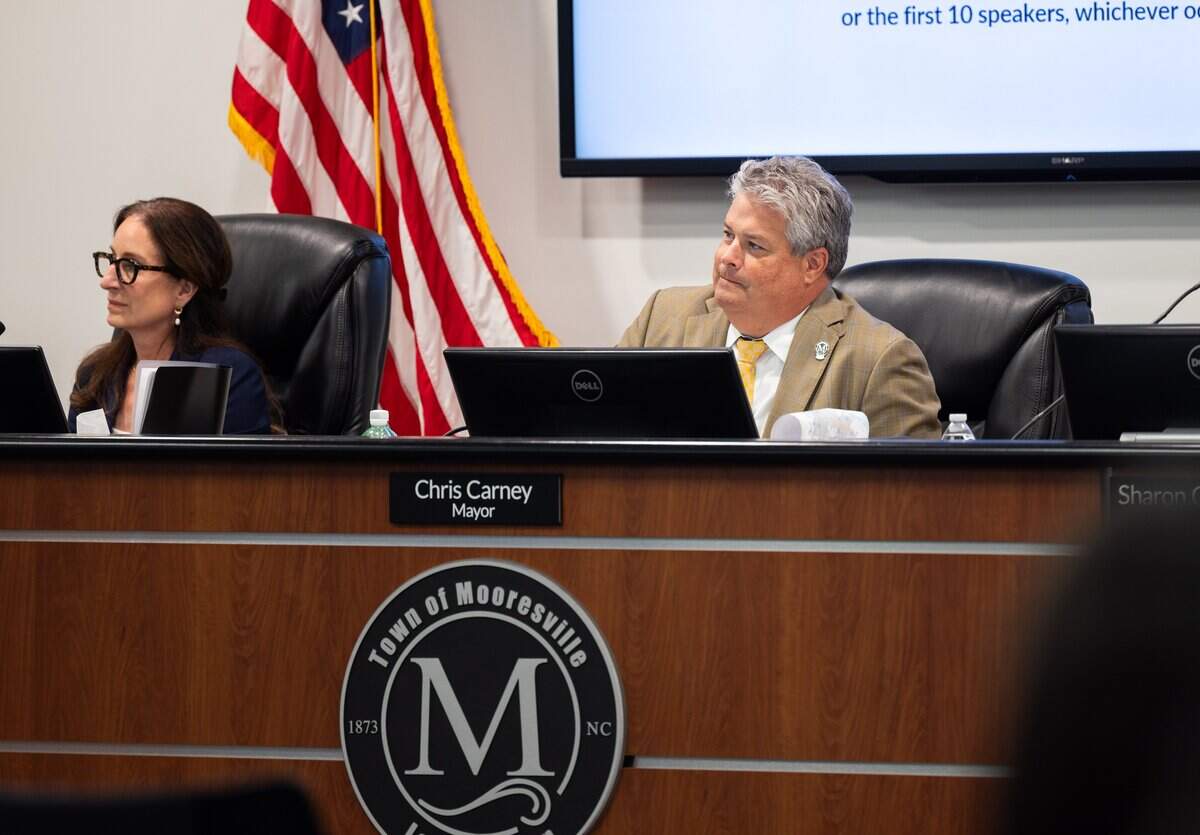
Speaking on behalf of Mooresville was Chris Carney, the former state senator and businessman who had been elected the town’s mayor the previous year.
He told the council that the town and the developer asked state lawmakers for the money, and he supported the appropriation. It’s cheaper, he said, for the developer to build the road rather than the town.
“Occasionally we ask for too much,” he said of the town board placing the road’s cost on the developer. “In this case, we asked for a connection, trunkline, between two of our highways, because it’s greatly needed and it makes a massive difference. The General Assembly also saw that as greatly needed and wanted to find a way to make that project move along.”
Carney did not mention that he was in business with Coble and the M Group on another project.
In November 2022, a month after the Mooresville town board approved the Timber Road project, Carney and Coble formed CWC Land Acquisitions. By early 2024, that company had begun working with another M Group subsidiary that was purchasing land and pursuing zoning and annexation approvals for a planned distribution center in Statesville, its city council records show.
When asked why he did not disclose that link, Carney said that he knew little about the Mooresville project and did not know that the M Group was also developing the Mooresville planned community when he spoke to the Centralina board.
“I was newly elected and had no contact with anyone related to that project about that project,” he said in a text message.
Miles Atkins, Mooresville’s mayor at the time of the state appropriation, told The N&O that he was not aware of what Carney said had occurred: that town officials had asked state lawmakers for money to build the road. Randy Hemann, who was town manager until October 2023, a month after the state appropriation was made, said he also did not know of that.
“My understanding is the developer was paying for it,” said Hemann, who now manages the city of Oak Ridge in Tennessee.
Officials with the M Group did not return phone calls requesting comment.
A close vote on accepting grant
At the Centralina board meeting, Gardner advocated accepting the money, noting the community’s traffic congestion. The board agreed, but in a 7-to-5 vote, after three members besides Hall also stated concerns about the unusual appropriation.
Wall attended the meeting virtually, but a video of the session shows that he did not speak about the $15 million appropriation or volunteer that Mooresville BTR had hired him to lobby on its behalf. Wall this month declined to respond to Coble’s claim that he had lobbied state lawmakers for the $15 million.
“EQV Strategic was successful for multiple clients on this project and Centralina has been a great steward of the funds entrusted to them by the North Carolina General Assembly,” he said in an emailed statement.
After learning about the unstated business links, Gardner, Centralina’s executive director, and Hall, one of the board members skeptical of the unusual grant, said there should have been more disclosure.
Wall should have told the Centralina board he had Mooresville BTR as a client and Carney should have disclosed his business connections, they said.
“It really does all come down to transparency,” Hall said.
Wall resigned from lobbying for Mooresville BTR a month after the Centralina vote accepting the grant. Among the lobbyists Mooresville BTR has hired since then is Saine.
Campaign money flows to state legislators
According to research by Bob Hall that The N&O confirmed, Coble’s campaign contributions to Republican state legislative candidates climbed from the hundreds of dollars to the thousands as Mooresville BTR began seeking town zoning and annexation approvals for its development in early 2022. Since then, he and his wife Amanda have given $132,000, including $17,100 to Senate leader Phil Berger, $12,900 for state Sen. David Craven and $7,900 to state Sen. Danny Britt.
At about the time Coble ramped up his campaign donations, he was also seeking lawmakers’ attention for gambling expansion as Greater Carolina’s director. That organization last year took lawmakers on a distillery tour in Louisville, Ky., that included lobbyists for gambling and alcoholic beverage companies. That trip drew a complaint to the Secretary of State alleging lobbying, ethics and charitable solicitation violations.
Two weeks before the 2023 budget’s passage, M Group employees and investors had begun making campaign contributions to many of the same elected officials, support that has continued into this year, research by Hall and The N&O shows.
All told, the M Group-linked contributions total more than $329,000, campaign records show. Berger alone has received $92,900, followed by Craven with $84,800, state Sen. Todd Johnson with $53,600, and Britt with $27,200. On the House side, Rep. Destin Hall, who became speaker this year, received $25,600 in donations in 2024.
In December, the company also gave $18,200 to the Republican State Leadership Committee, ProPublica’s database of dark money groups shows. The committee is a national political group that works to elect Republicans in state offices.
Craven, a Randolph County Republican who received $92,700 from the Coble and M Group-linked contributions, said “I’m really not sure” when asked in a phone interview if he had helped the developers win the $15 million appropriation.
Berger has not responded to an interview request through his staff. Lauren Horsch, a spokeswoman, said in an email the appropriation was “primarily driven by the House,” but provided no other details.
Locals frustrated with growth
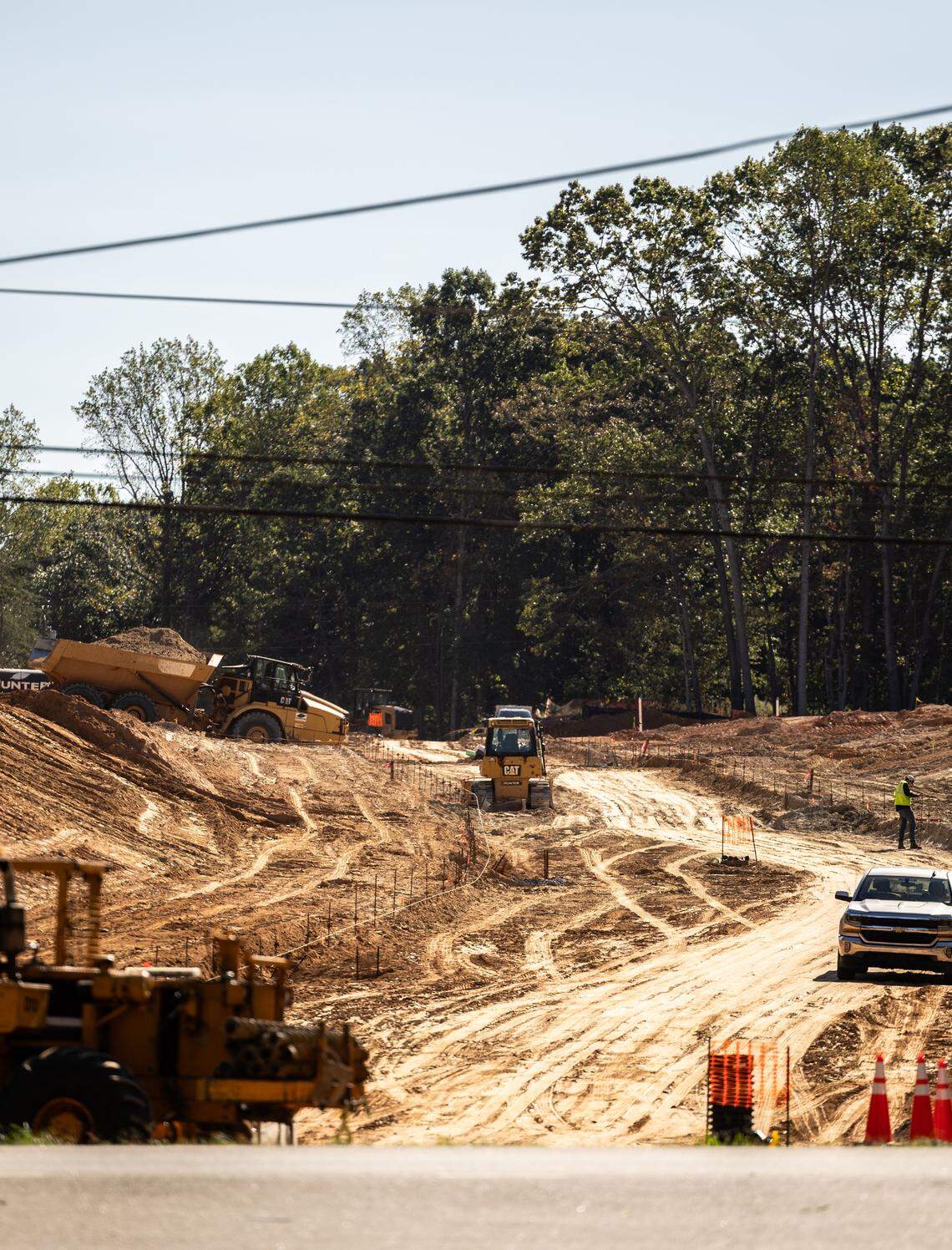
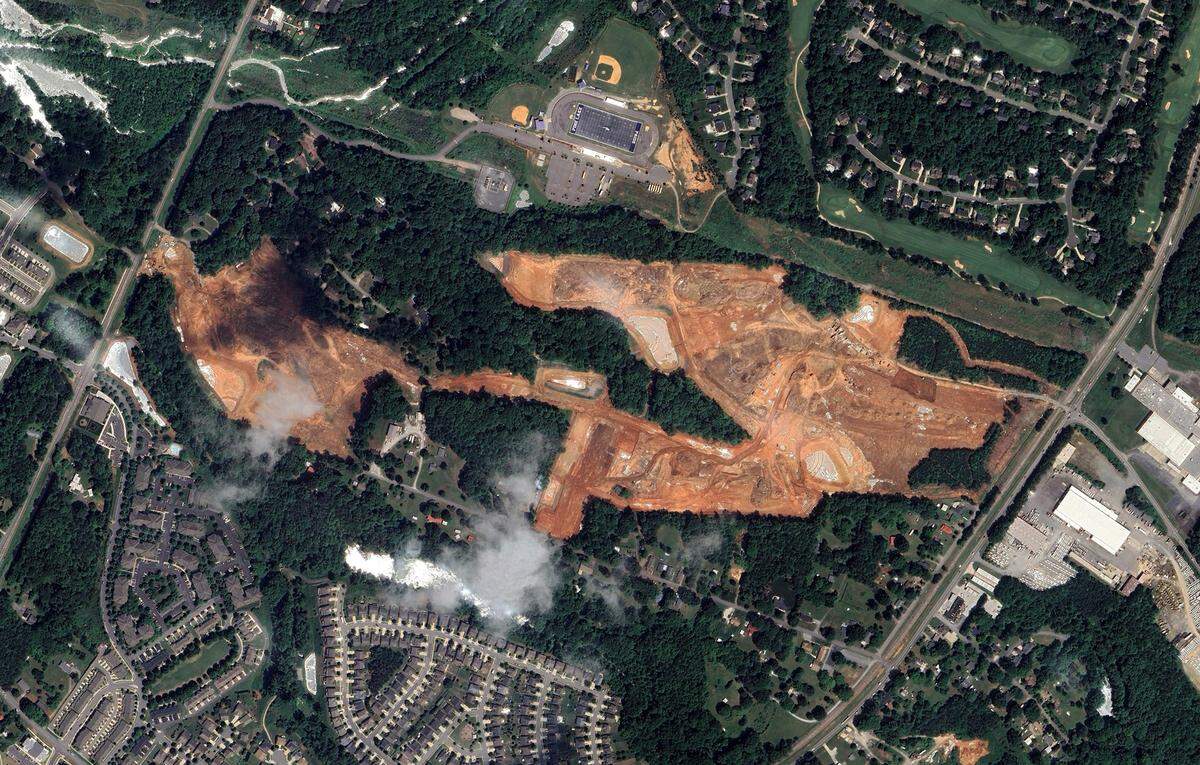
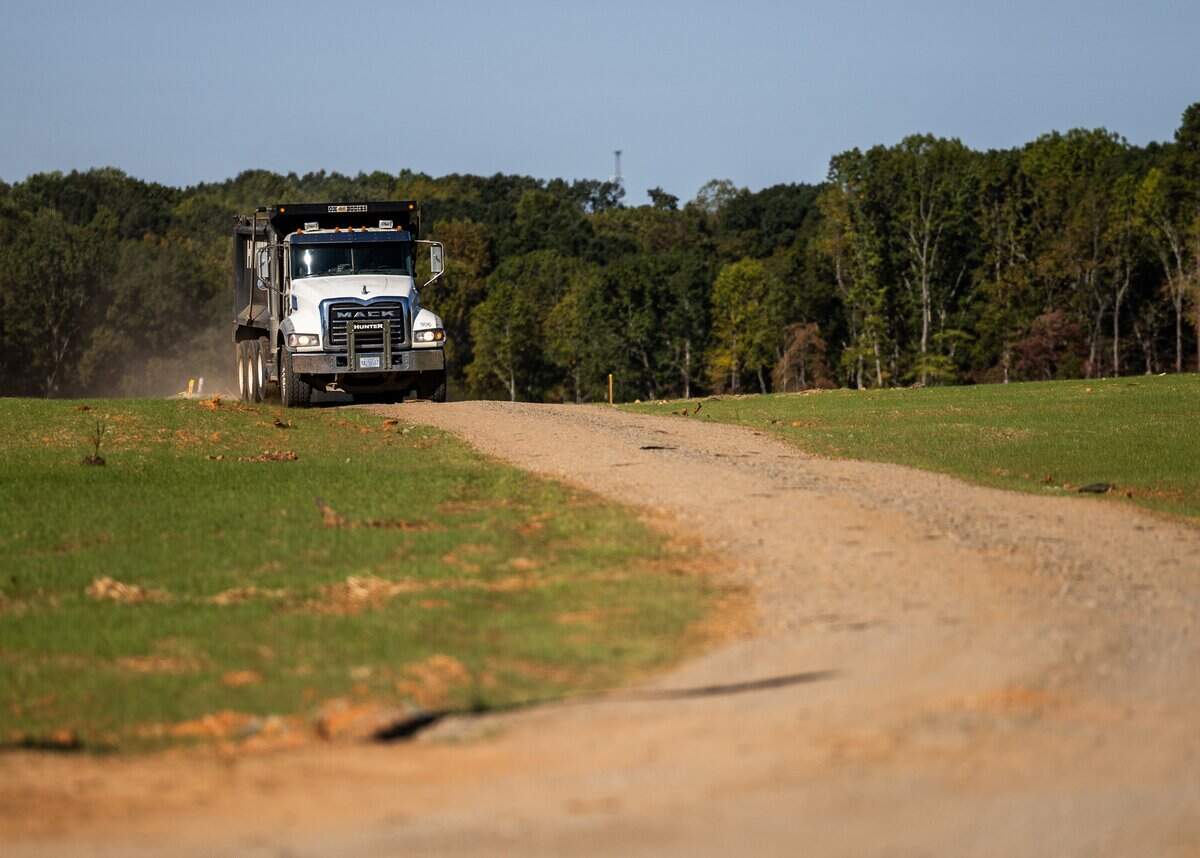
Two years after M Group won the $15 million, the development site was largely cleared, a Google Earth photo from May shows. Coble, who remains the company’s local representative, recently said the road is expected to be completed in February. The estimated cost has gone up to $18 million, with the developer having to cover the excess, according to the agreement with Centralina.
While it will connect two main north-south arteries, it will also provide access to the planned community development, which will bring more residents and vehicles to the rapidly growing town.
Even when Mooresville residents were told that the developer, not state dollars, would cover the cost of building the road, some made clear they weren’t wowed by the tradeoff M Group offered.
Jan and Kevin Parson are among them. They moved to Mooresville 30 years ago, and live near where Mackwood Road dead ends, about a half-mile south of the planned development. Their home had backed up to a 300-acre farm that’s now been sliced into subdivisions. They’ve given up going to their favorite local restaurant along NC 150 on Friday nights because it’s clogged with traffic.
They and dozens of other residents responded with cynicism to the town’s Facebook post in 2022 about the approval of the new development. Hearing recently that they and others are paying for the road with state money angered them.
“That’s not right,” Kevin Parson said. “Our government doesn’t just all of a sudden decide to pay that much money so the developer doesn’t have to pay for it.”
“There’s definitely a snake in the grass somewhere,” Jan Parson said.
McClatchy data and graphics journalist Susan Merriam and Charlotte Observer reporter Joe Marusak contributed to this report.
This story was originally published October 22, 2025 at 7:00 AM.