Why Berger is entrenched on taxes as standoff continues between NC Republicans
AI-generated summary reviewed by our newsroom.
- Berger defends 2023 tax cuts and rejects altering revenue triggers.
- House wants trigger changes over inflation; Senate refuses, calling it a tax hike.
- Berger defends 2023 tax cuts and vows to keep scheduled reductions for 2027.
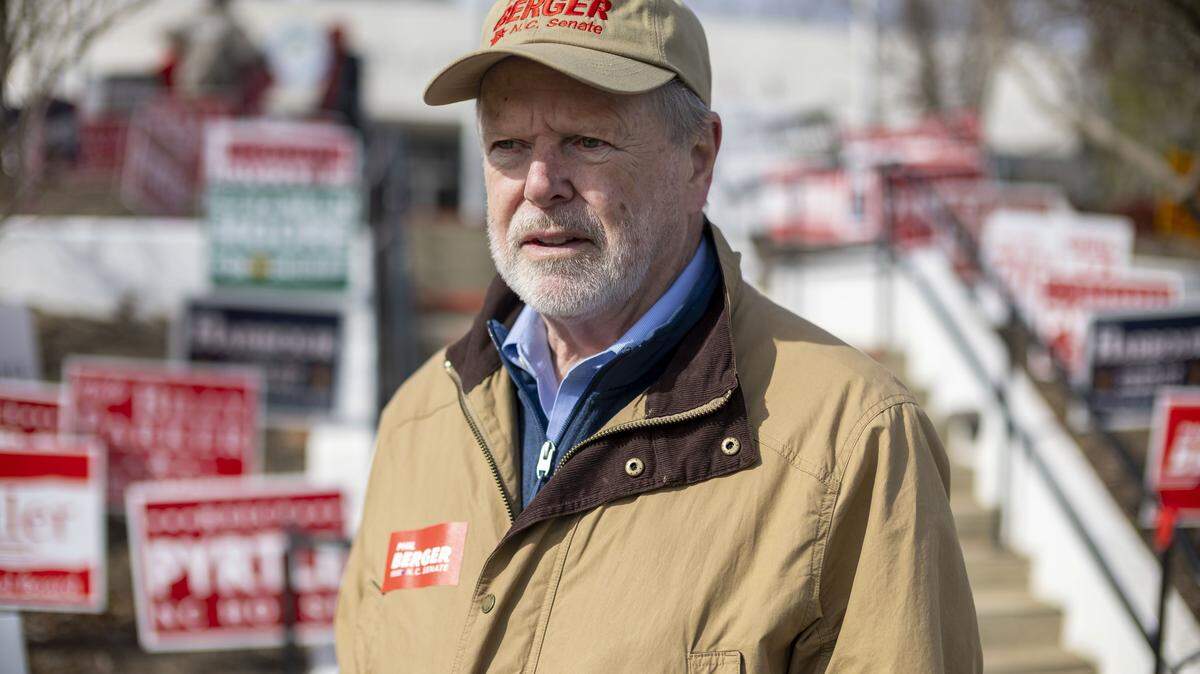
One of Republican Senate leader Phil Berger’s arguments for why voters should choose him over Sam Page — in their still-undecided primary — was that Page supported the House’s budget position.
“We made a promise,” Berger told The News & Observer in an interview ahead of the primary election, explaining his position on taxes.
The House and Senate, both led by Republicans, are at a stalemate over tax policy. They have been since last summer, after each chamber passed its own tax plan in its budget proposal. The heart of the difference is about future tax cuts, and how the individual income tax rate drops depending on how much revenue the state receives.
Berger is president pro tempore of the Senate, and even if he loses his primary, plans to finish out the rest of his term this year. So the tax fight is far from over. House Speaker Destin Hall is dug in on his side of the debate, and despite frustrations about the gridlock from his fellow Republicans — and Democrats who voted for the House budget — is holding the line, The N&O previously reported.
A ‘mistake’ to lose tax cut momentum
To change the tax cuts planned and agreed upon by Republicans more than two years ago — before Hall was speaker — is a nonstarter for Berger.
“I understand that some people may disagree, but it’s my view, but it’s also the Senate Republican caucus view, and it is that we have created in the state of North Carolina certain momentum that has never existed in North Carolina before,” Berger said days before the election. “We are one of the most popular destination states for people to move to and for businesses to move to. It has created all sorts of opportunities around the state.”
 "031125-STATE-OF-THE-STATE-TEL-19.jpg (duplicate)")
“The key component, policy-wise, that has resulted in that, has been our willingness to reduce the tax burden on the private sector, whether it’s individuals or whether it’s businesses,” he said, referring to reductions in both the individual income tax rate and corporate income tax rate.
The individual income tax rate just dropped to 3.99% for 2026, so the debate is over tax cuts for 2027 and beyond. The corporate income tax rate for 2026 is 2.25%, which dropped from 2.5%.
The battle over future income tax cuts
Changing revenue triggers for future tax cuts — which is what Hall and House Republicans want — amounts to a tax increase, Berger contends. If the Senate agreed to changing the revenue triggers, taxes would still be cut, but at a slower rate than Republicans agreed to in a 2023 budget deal.
Under the current triggers, if revenue in this current 2025-26 fiscal year exceeds $33 billion, according to the legislature’s Fiscal Research Division, the tax rate would drop to 3.49% in 2027.
“We made a promise to those people just two and a half years ago, that we were going to continue to reduce the tax burden — and for us to go back on that promise, is not just a mistake. It is something that will result in the state losing the momentum that we currently have. And I don’t want to see that happen, and my members don’t want to see that happen,” Berger said.
In a November interview, Hall said because of inflation the past few years, he thinks tax triggers agreed on in 2023 “no longer make any sense. You know, $1 today is not worth what it was in 2023, and so we think we need to adjust those triggers” based on inflation and population growth.
Senate vs. House budget impasse remains
Asked if the tax impasse could mean that North Carolina could go another year without a spending plan, Berger said:
“The House has taken a position that they will not talk about anything else unless we agree to change the triggers. That doesn’t mean we can’t talk about doing a pay increase for teachers. We can talk about that. We can talk about pay increases for state employees,” Berger said before the primary.
“The House has refused to engage in those discussions until we agree to raise taxes. We’re not going to do it,” he said.
On Tuesday, a spokesperson for Hall said that “Sen. Berger can continue to falsely claim the House has proposed a tax increase, but the reality is that the House position is to adjust the triggers for inflation, and no one outside of the Senate corner office believes that constitutes a tax increase.”
“Separate from the full budget discussion, House budget writers and the Speaker repeatedly sought to include raises for state employees, law enforcement and teachers in our negotiated mini-budgets, but we were rejected at every turn by the Senate. Now that we’re past the primary, we hope the Senate will be open to real negotiations on how to ensure teachers and state employees receive the raises they deserve.”
A mini budget negotiation document viewed by The N&O shows the most recent formal offer from the House to the Senate was on July 25, 2025. The document sent from the House speaker’s chief of staff to his counterpart in the Senate show House Republicans offered to spend $719 million on raises each year of the two-year budget period. The same document listed a Senate counter-offer on raises with a question mark, then a second House offer of $528 million in raises each year. The same mini budget document also shows a 1% bonus for retirees.
Those summer negotiations came as the chambers tried to pass smaller spending bills as the season turned to autumn. The Senate sent the House a law enforcement raises bill in September that was not taken up by the House.
In October, the House passed a bill with raises that the Senate did not take up, either, because senators had already left Raleigh. A Democratic lawmaker called the legislation “literally just posturing.” The impasse has remained since then.
Stein says planned tax cuts ‘reckless’
This all comes as the Fiscal Research Division and the Office of State Budget and Management are expected to release their joint revenue forecast later this month. OSBM is part of Democratic Gov. Josh Stein’s administration. Stein proposed in 2025 that the state freeze tax cuts.
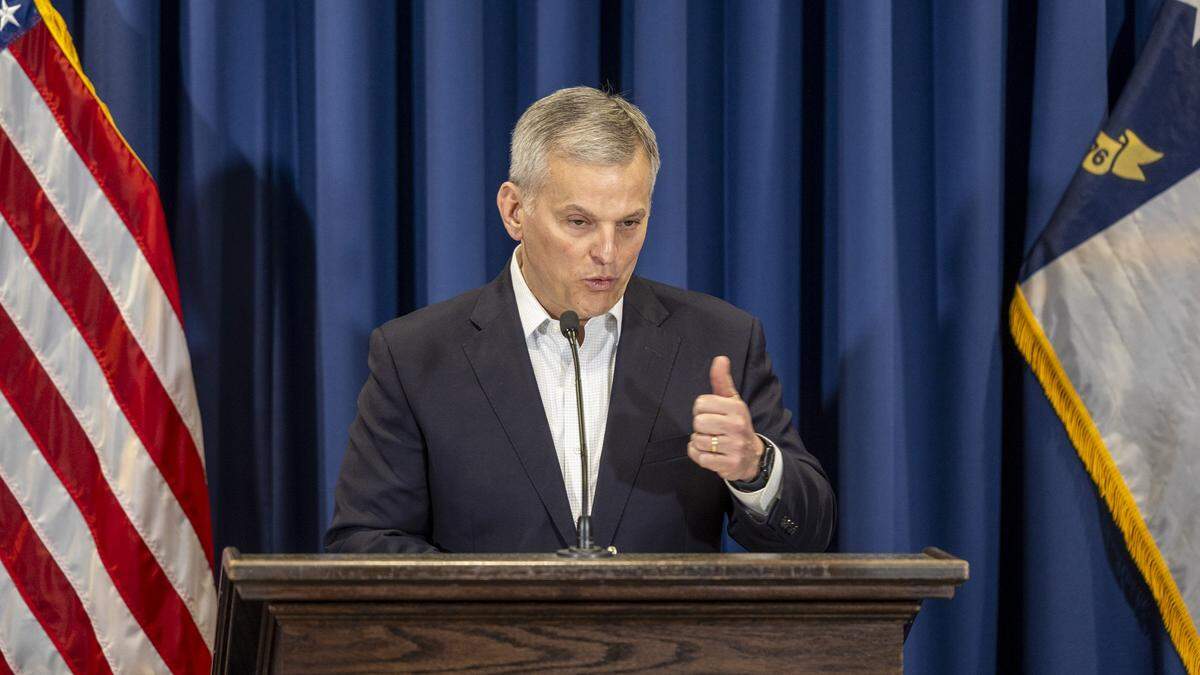
On Monday, Stein presented the first of three budget proposals he’ll make leading up to the start of the General Assembly’s short session, on April 21. He’s primarily asking for raises for the thousands of state employees and teachers who have not received one during the budget impasse, as well as Medicaid funding. He said he’d like raises even higher.
“We are not a poor state, but we are making ourselves a poor state by reckless, pre-programmed tax cuts,” Stein told reporters, referring to the current revenue triggers. “We are looking at $900 million less, in the coming year, if the tax cuts go forward for next year, and then three- and a half- billion dollars the year after.”
Stein said those tax cuts are “absolutely reckless in terms of our ability to continue to meet the basic expectations of what a North Carolina resident expects from the state.”
The state government does not shut down like the federal government, because of state law. Rather, spending levels remain at the same amount unless a new budget becomes law. That’s the situation North Carolina is currently in, as the two sides’ entrenched positions remain about where they were in September, before optimism waned acutely.
During the campaign, Page answered a question in The N&O’s candidate questionnaire about reducing the individual income tax rate beyond 3.99% by saying that “If projected revenue targets are met, then I could support a tax reduction, however with no budget being set currently we don’t know our expenses or if the revenue is meeting those expenses.”
Berger is in a very close race with Page as county elections boards prepare to finish their canvasses on Friday. Page currently leads by 23 votes — within the threshold for Berger to call for a recount, which could extend the race a few more weeks.
This story was originally published March 10, 2026 at 3:46 PM.