Purple politics: A ‘cross-partisan’ health care group bets on North Carolina

AI-generated summary reviewed by our newsroom.
- Disagree Healthier aims to advance cross-partisan health policy in NC.
- Group backs aligned candidates and campaigns, funded by foundations and small donors.
- Focus: affordability, care outside clinics, youth mental health (includes AI concerns).
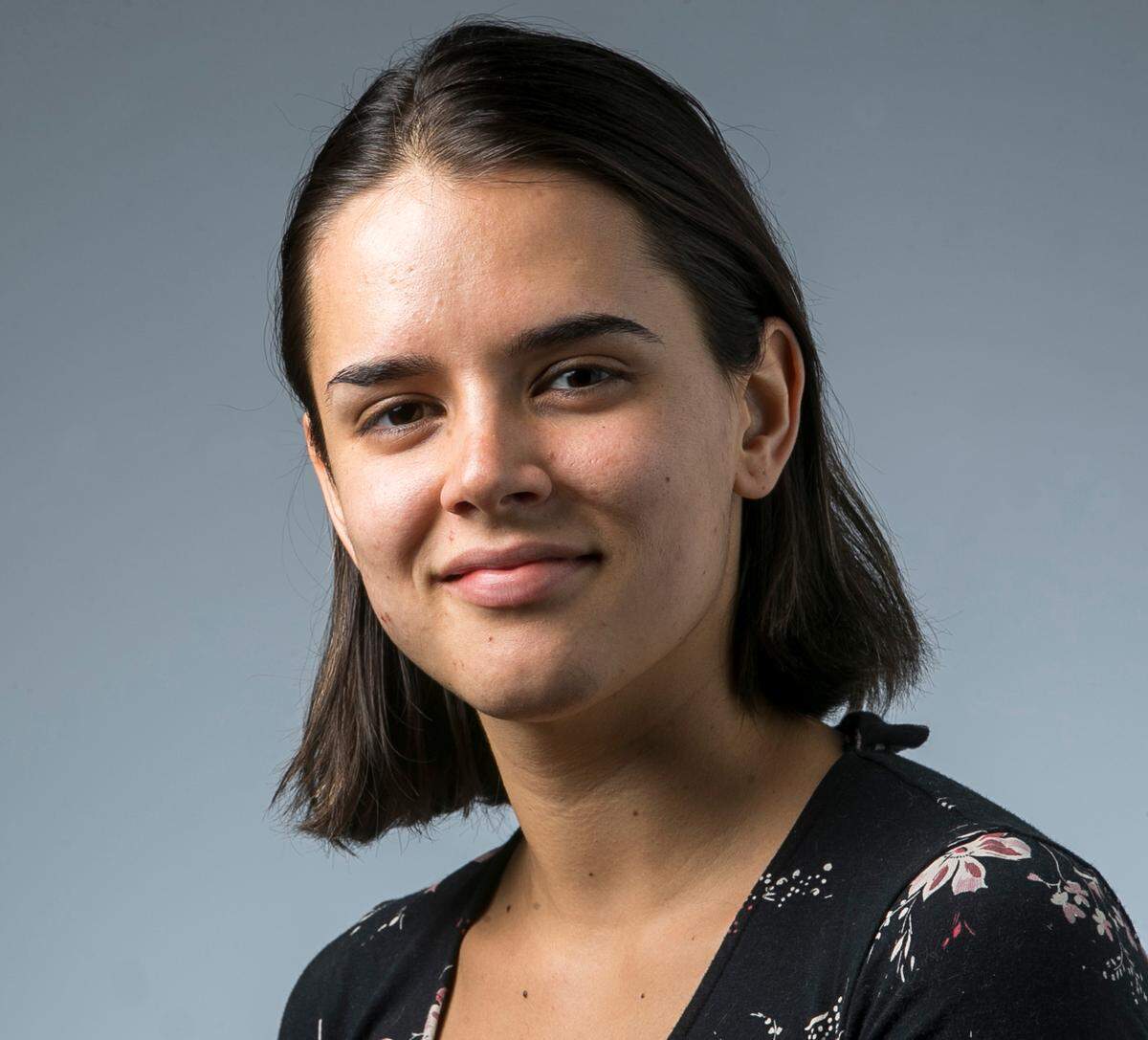
Good morning and welcome to today’s edition of Under the Dome. I’m politics reporter Luciana Perez Uribe Guinassi.
One thing most people can agree on is that politics is deeply divided.
A group that started in Colorado wants to do something about that in North Carolina — at least when it comes to health policy.
Jake Williams, CEO of Healthier United, which operates nationally and has existed for about a dozen years, told reporters on Thursday that the organization works on a cross-partisan basis to improve public health by changing laws, including through lobbying and campaigns. They give money to Republicans or Democrats who align with their agenda.
As part of its work, Healthier United is launching a project called Disagree Healthier. The project will operate in Colorado and other states, with North Carolina first on the list of states for expansion.
Their cross-partisan aim — and their willingness to put money behind public interest causes and candidates — is what will make them stand out from other groups working within the state, he said.
“Regular North Carolinians deserve the same resources that corporate interests have to influence the process for their own health interest,” he said.
Funding for the initiative comes from several institutional funders and nonprofit organizations, with no “one dominant one,” he said, adding that they have no institutional political funders. Examples include the Robert Wood Johnson Foundation. They also have a “large network” of small donors, which they would like to grow in North Carolina, he said.
As for why North Carolina? Williams said it’s because the organization has grown as a series of groups that already work within the state and because “North Carolina is a perfect state. We like purple states. Our model, as described, tends to work best in purple states.”
“We think that this initiative is what we need at this particular time for our democracy. It’s all about embracing debates, but doing it in a way that’s not contemptuous and more productive,” he said.
“We’re not into long-term plans that may or may not come to fruition. We’re all about, informed by communities, what is possible right now to make people healthier,” he said.
They conducted interviews with North Carolinians this week in Asheville, Charlotte, Wilmington, Dudley and Rocky Mount.
“It’s interesting to see the common thread that people are frustrated with the discourse and want to see something better and more fruitful,” said Healthier United Chief of Staff Kate Stigberg.
They are also hosting an event March 24 in Raleigh at the Merrimon-Wynne House, where Republican Rep. Grant Campbell and Democratic Sen. Mujtaba Mohammed will sit down for a debate on health topics.
During that event, they plan to release a poll they commissioned from two political consultants in the state: Paul Shumaker, a Republican political consultant and president of Capitol Communications Inc., and Morgan Jackson, a Democratic consultant and co-founder and partner of Nexus Strategies. The poll will ask North Carolinians about the nature of political discourse in the state and about key health policy topics. Fieldwork will begin three days after the March 3 primary.
Youth mental health and chatbots
As for legislation they would like to influence or focus on in North Carolina, top issues include affordability, health care provided outside doctors’ offices and youth mental health. Youth mental health includes concerns about social media and artificial intelligence, Williams said. While “no serious and concrete plans on (AI) in North Carolina, it’s definitely something we’re working on,” he said.
They worked on a bipartisan bill introduced this week in Colorado to regulate AI chatbot interactions with youth, he said. A separate Republican-drafted AI bill introduced in Utah that included child safety rules has led to pressure from the White House to nix it, Axios reported. President Donald Trump signed an executive order last year directing the Justice Department to sue states that passed AI-related laws deemed incompatible with priorities.
North Carolina’s legislative session is slated to begin in April.
Primary coverage
But first, we need to get through the primary. We’ll be covering it extensively on Tuesday, so be sure to tune into our coverage.
In a recent newsletter, I looked at year-end fundraising for the five candidates in the Republican primary for North Carolina’s 1st Congressional District. New reports covering Jan. 1 through Feb. 11 show contributions for Laurie Buckhout, a former Army colonel, picking up.
She ended last year with more than $2.02 million in cash on hand, including from a hefty loan and $9,000 from individual donors. Her latest filing shows more than $129,000 in contributions (excluding loans) during the reporting period. She reported over $1.5 million in cash on hand at the end of the period.
In second place in contributions this cycle is Asa Buck, the Carteret County sheriff, who previously reported more than $233,000 in cash on hand, including more than $189,000 from individual donors. His latest filing shows over $66,000 in contributions. He ended the period with over $115,000 in cash on hand.
Check out The News & Observer and Charlotte Observer’s voter guide to read answers from candidates on questions on health care, taxes, teacher raises and more.
Headlines you won’t want to miss
- Did new Foushee ad in heated NC-4 primary make false claims about Allam?
- Arrested at an NC job site, asylum seeker’s month in custody still weighs on her
- Fact check: Ukrainian refugee’s death in Charlotte wasn’t caused by open borders
- Mother of refugee killed in Charlotte was a guest at Trump’s State of the Union
- NC State wants Poe Hall lawsuit thrown out and handled through workers’ comp
- Roy Cooper challenges Michael Whatley to sell stocks now if he believes in ban
Thanks for reading Under the Dome
That’s all for today, but we hope to see you right back here on Sunday.
Ideas or feedback about our Under the Dome newsletter? Email our politics team at dome@newsobserver.com. Not a newsletter subscriber? Sign up here.
This story was originally published February 27, 2026 at 5:00 AM.
CORRECTION: An earlier version of this story misspelled the name of Paul Shumaker. The story has been updated.