NC governor calls on lawmakers to provide $792M more for Helene recovery efforts
AI-generated summary reviewed by our newsroom.
- NC Gov. Stein asks lawmakers for $792M to unlock federal disaster aid and fund repairs.
- Request includes $230M for private roads, debris, grants, and wider infrastructure fixes.
- About 29% of ~$60B needs funded; federal aid has been slow and partly unreleased.
Gov. Josh Stein called on the General Assembly to spend $792 million more in Western North Carolina for recovery needs from Helene, which struck the state in September 2024, leading to over a hundred deaths and tremendous damage to homes, businesses and infrastructure.
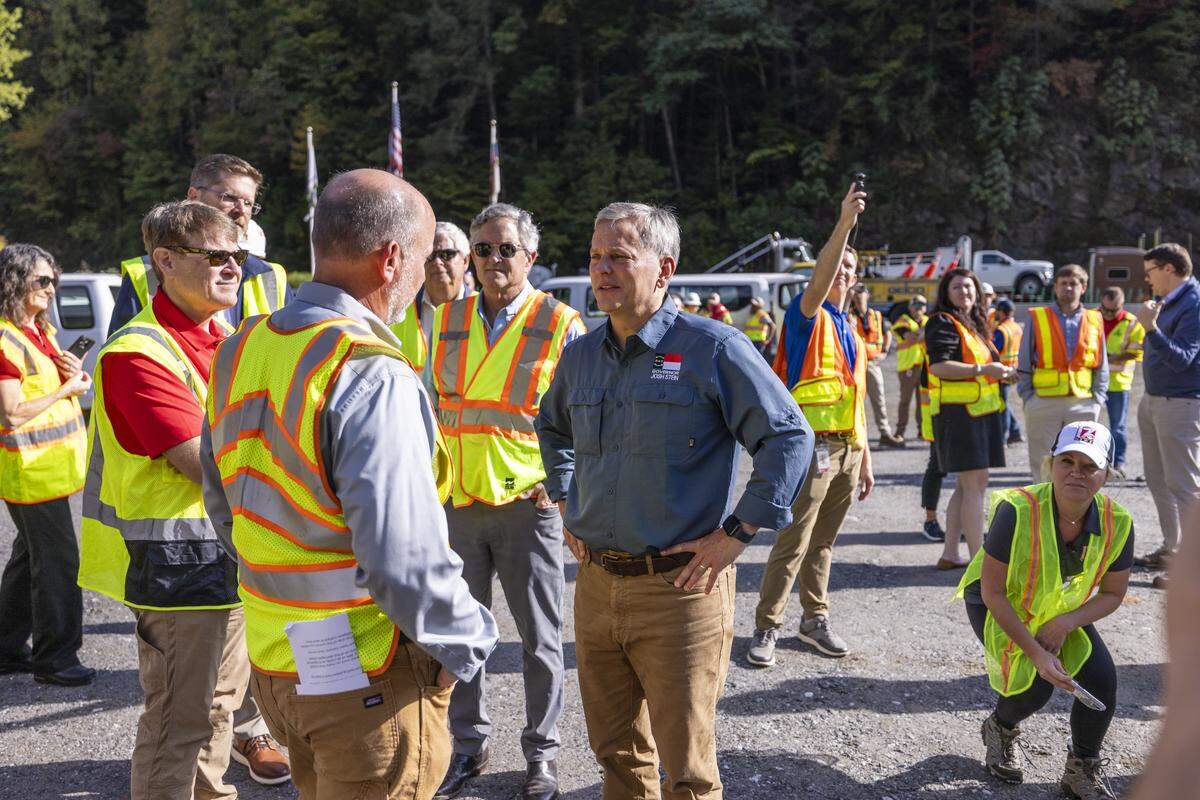
“Tomorrow, it will have been 18 months to the day since the storm hit,” said Stein, a Democrat, during a press conference announcing his third request for Helene funding in Bakersville at a home being reconstructed by Appalachia Service Project. This nonprofit received a grant from the state to help with rebuilding efforts.
“We’ve come a long way by working together, federal, state, and local governments, public, private, and nonprofit organizations, but none have worked harder than the people of Western North Carolina themselves,” Stein said.
“But take a look behind me,” he said. “Are we finished? We are not finished. We have more work to do. Western North Carolinians are still working their tails off. We cannot leave them hanging. We cannot stop now.”
Stein said that the legislature appropriated funds for nonprofits to help in rebuilding and that his administration recently awarded Appalachia Service Project $2.2 million for this work.
A state projection made shortly after the storm estimated that Helene caused about $60 billion in damage in the state. That makes it impossible for the state to cover the costs alone. Recovery depends on a mix of state, federal, and private dollars.
The largest portion of Stein’s request — $452 million — would be used to allow the state to unlock federal disaster recovery funds that require a matching contribution, and to pay upfront for repairs and recovery projects that can later be reimbursed by the Federal Emergency Management Agency.
This funding would also be used to strengthen emergency management systems and improve disaster response capabilities.
Stein said many of the federal programs that the state can draw support from require a state match ranging from 10% to 25%.
“We have the opportunity to unlock significant federal funding, but we need the state contributions to draw that money down,” he said.
The second-largest lump of funding requested is for infrastructure.
Stein requested $230 million to repair private roads and bridges — with the majority of public roads and bridges reopened, though many still needing further repairs — and to provide grants and financial support to local governments, which have faced delays in receiving federal reimbursements.
The $230 million would also go towards removing any remaining debris; strengthening emergency communications systems; investing in flood prevention, dam safety, and landslide hazard monitoring; restoring wastewater and other public infrastructure; and repairing state government and school-related facilities.
The remaining funds in his request would be used to support other recovery needs such as housing, to bolster tourism, infrastructure repairs, business support and more.
“The recovery is going to take a long time, but we are in this for the long haul,” said Stein.
Not the first request
Since the storm struck, Stein has made three Helene funding requests. And lawmakers in the GOP-led legislature have passed numerous bills providing such funding, which have included some of Stein’s requests.
But needs remain high and federal funding has been slow to be released.
A dashboard from the Governor’s Recovery Office for Western North Carolina, a team within Stein’s office dedicated to recovery efforts, shows that so far about 29% of the roughly $60 billion in estimated needs have been funded, with about $4.4 billion coming from state funds appropriated or redirected from other agencies.
An additional $2.9 billion has been spent through federal programs, and North Carolina has received $2.4 billion in federal funds as of Dec. 31. However, $4.6 billion in federal funds have been awarded to the state but have not yet been released for use.
Stein has asked Congress to appropriate $13.5 billion in new federal funding. Over $8 billion would go towards rebuilding housing.
A February report from GROW NC shows that so far about 12% of the roughly $60 billion in estimated needs have been funded by the federal government.
Other funding requests
Other funding requested by Stein is for:
- Economic recovery: $82 million requested to boost economic recovery, including forgivable loans to small businesses, promoting tourism, supporting the Blue Ridge Parkway Foundation, funding regional attractions, and providing loans to local governments to help manage their cash flow. Small businesses and Democratic lawmakers have advocated for forgivable loans for months. Republicans have been reluctant to provide that funding.
- Housing: $10 million for rental and utility assistance. Stein also proposed redirecting $20 million of existing state funding to partner with nonprofit organizations to rebuild more homes. In North Carolina, Renew NC is tasked with managing long-term rebuilding and repairs using federal money. A state dashboard shows 3,704 active applications under that program, with 28 projects in the “closeout” stage, meaning all construction activities are complete or have had their reimbursements completed. Nonprofits have helped rebuild or repair hundreds of homes.
- Other: $17 million for other recovery needs such as to support wildfire mitigation and preparedness efforts.
Stein’s budget request for raises and Medicaid
Earlier this month, Stein called on lawmakers in the GOP-led legislature to spend $1.4 billion on what he called “critical needs,” such as raises for state troopers and correctional officers, raises for teachers and state employees, and Medicaid funding, The News & Observer previously reported. Stein urged lawmakers to send that funding immediately, before the start of the next legislative session on April 21.
House and Senate leadership have been unable to come to an agreement and pass a new budget for the two-year period that started last July, largely due to differences on tax policy, and instead have passed three small spending bills.
This story was originally published March 26, 2026 at 1:15 PM.