Why these teens are pushing NC to make it illegal for them to buy tobacco

AI-generated summary reviewed by our newsroom.
- North Carolina lawmakers face renewed push to raise tobacco purchase age to 21.
- Solly’s Law would require retailer permits and make violations a Class 2 misdemeanor.
- Advocates and Solomon Wynn’s family cited his 2023 vaping-related death and addiction.
There’s a big push to regulate the tobacco industry and raise the age for purchasing tobacco products to 21 in North Carolina.
State lawmakers have heard the same pitch before. But in a state whose economy was built on tobacco, will it be successful this time around?
North Carolina is one of just a few states that does not require a permit to sell tobacco products and has not aligned with the federal law passed in 2019 raising the minimum purchase age for tobacco and nicotine products to 21.
Legislation known as Solly’s Law, named after 15-year-old Solomon Wynn, a New Hanover County high schooler who died in 2023 from a vaping-related illness, would tackle both those areas.
Much of the advocacy is coming directly from teens who are a part of the NC Alliance of Public Health Agencies’ Tobacco 21 coalition.
The News & Observer spoke with several of those teens.
Ada Watson, a 17-year-old junior from Orange County, said her interest in joining the council and advocating for the bill was sparked by a public health class through the NC School of Science and Math’s online program, which included a field trip to areas outside vape and convenience stores analyzing how they market products to youth.
“Every week, it feels like I notice another person who’s talking about vapes or talking about one of these products, and it’s really scary,” she said.
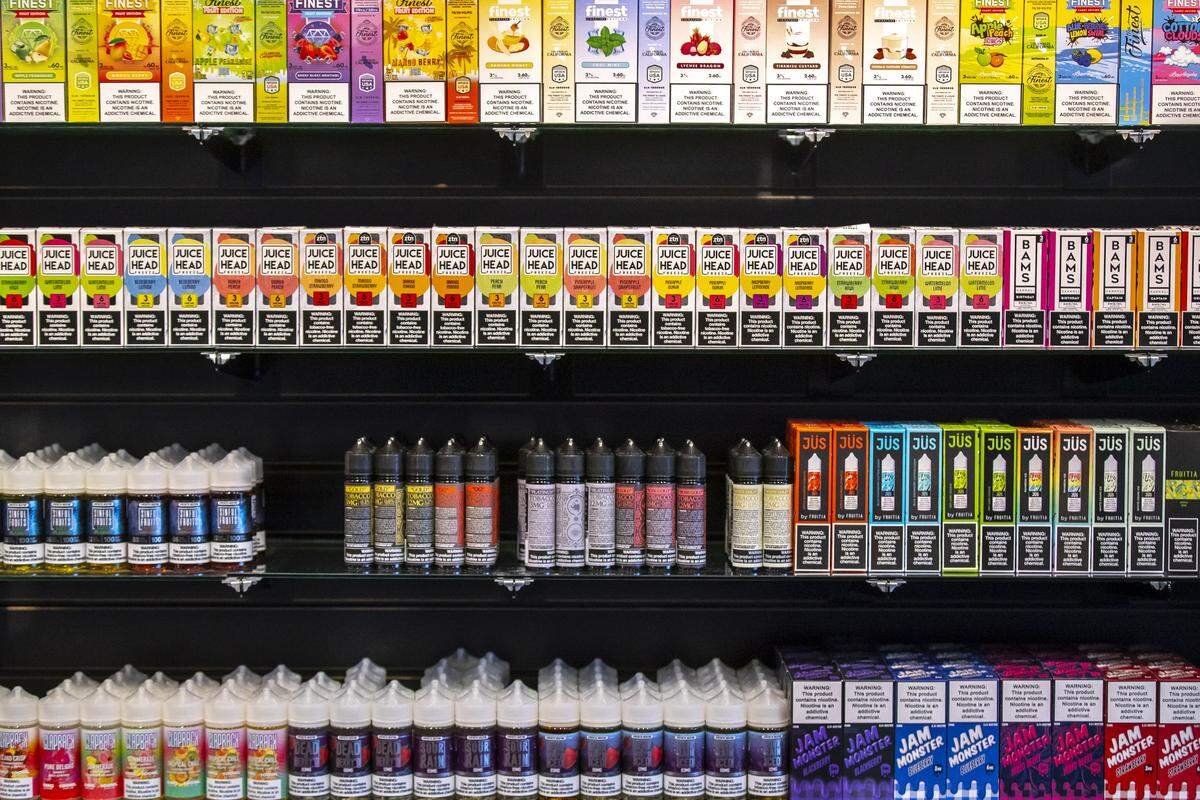
Some products resembled video games or Sharpies, making them easier to hide, which she said is important to youth.
“Then these companies tell us they are not trying to appeal to kids,” she said.
Milo Muzyk, a 17-year old in Raleigh, said he’s watched “more and more” as close friends from high school turn to vaping as a coping mechanism for stress. “I’m seeing it like in real time, deteriorate their lives, and it’s just so accessible to them,” he said.
Students who are 18 can easily buy products for younger ones, said Muzyk, and those younger students often have friends in middle school. But raising the age to 21 would help cut off that pipeline, he said, as most high schoolers don’t have friends who are 21 or older and willing to buy for them.
Nicotine and tobacco use claims the lives of 14,200 North Carolina residents each year, according to the American Lung Association.
An estimated 76,000 North Carolina middle and high school students report regularly using tobacco products, and about 1 in 8 high schoolers use tobacco products in North Carolina, according to the 2022 NC Youth Tobacco Survey.
E-cigarettes are the most-used product by youth.
Advocacy day for tobacco restrictions
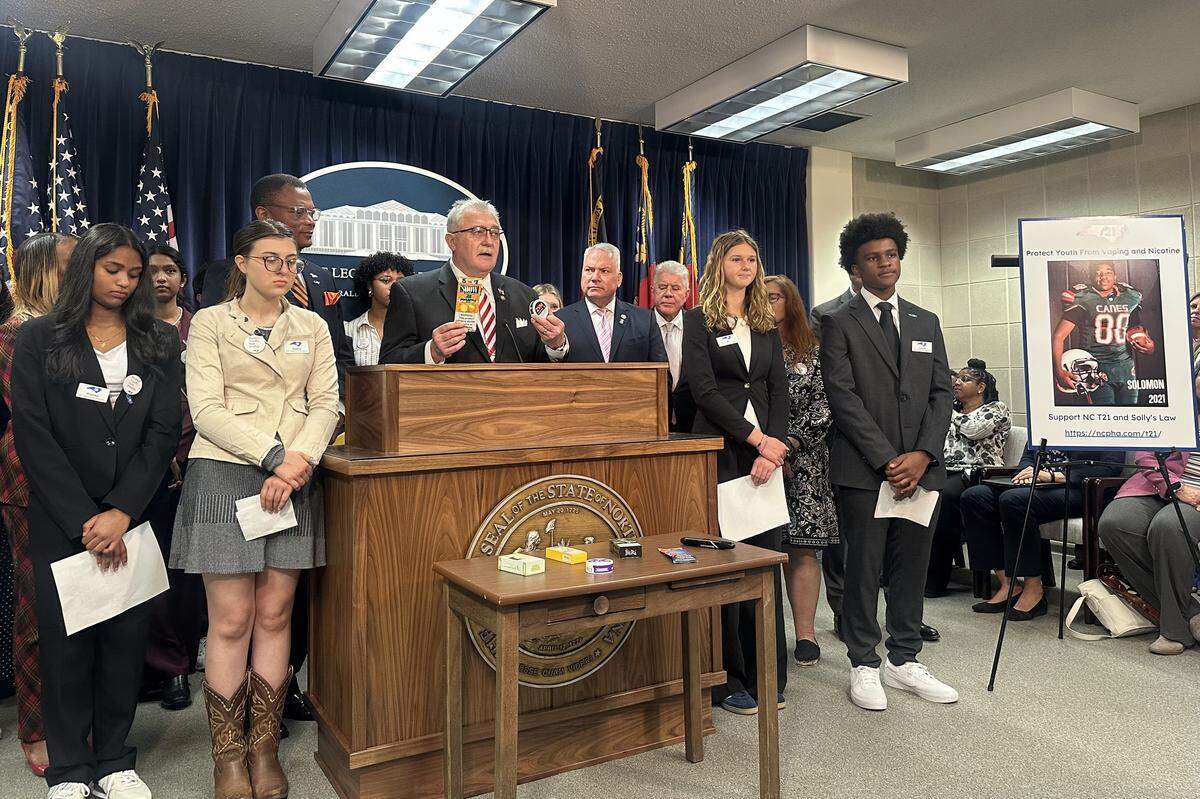
As part of the advocacy efforts led by the coalition, several students from across North Carolina went to the General Assembly on Wednesday to speak with lawmakers and reporters.
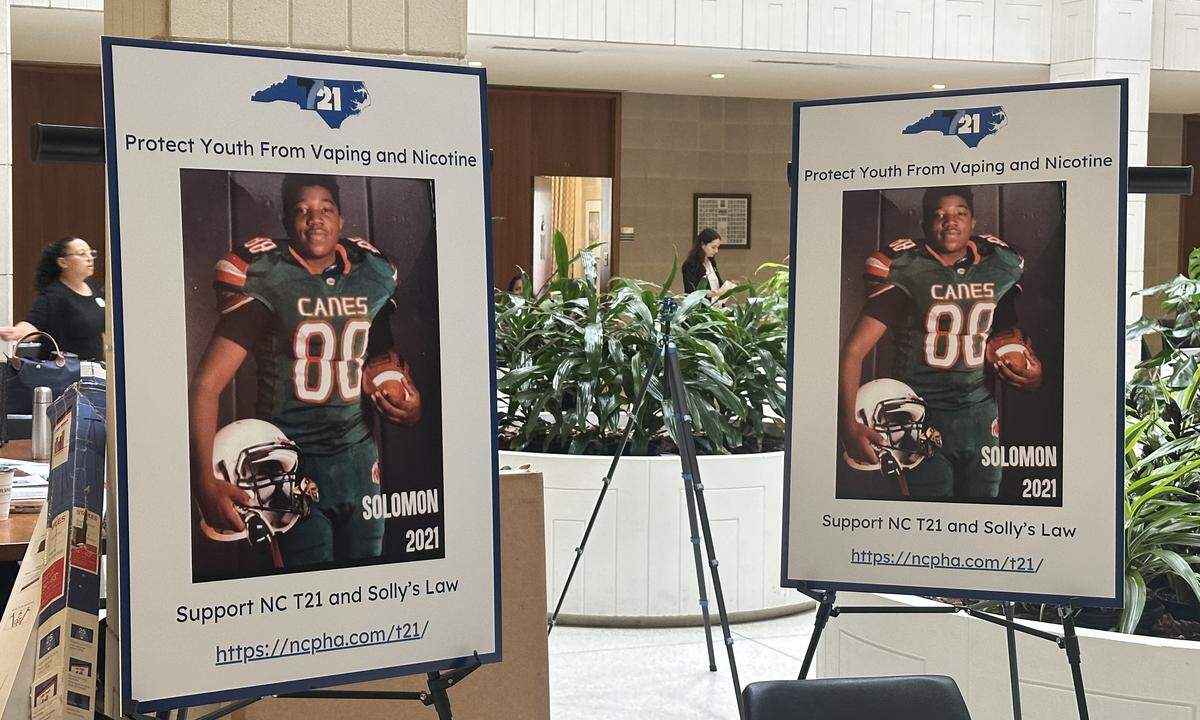
Charlene Zorn, Wynn’s stepmother, who joined students at the press conference on Wednesday, attended a similar advocacy effort last year on what she said would’ve been Solomon’s 17th birthday. She said then that he was “a healthy, active teenager” before he began vaping.
“Instead of planning a birthday celebration for him, I’m standing here talking to you about my son and the problems we have with youth vaping and nicotine in North Carolina,” she said.
Rep. Donnie Loftis, a Republican from Gastonia who sponsored the proposed legislation, pointed out on Wednesday several vape products, including one that “even has a video game (to play) so you can see the potential draw for young people.”
Loftis said the “stakes are higher” this year because vaping has connections with criminal activities. Law enforcement investigations from Johnston County to Wilkesboro have uncovered some vape shops being used as distribution hubs for dangerous controlled substances, including khat — a Schedule I drug — alongside unregulated cannabis products, said Loftis. Investigators have also found violations of laws, such as people with felony records with firearms working inside stores, which is against state and federal law, as well as large amounts of cash being sent overseas, raising red flags for things like money laundering or illegal financing, Loftis said.
Sixty-four percent of high school tobacco users in North Carolina reported having vaped marijuana, which is illegal in the state, according to the 2022 youth survey.
Another area where there have been advocacy efforts and bills over the years is on regulating the hemp industry. Hemp, which comes from the cannabis plant, has no age restriction and is not regulated.
A December inspection by the North Carolina Department of Revenue found that just eight retailers had 24,773 that were not compliant.
North Carolina prohibits the sale of any vapor products not listed on the revenue department’s Vapor Products Directory, which essentially bans disposable vapes that are not authorized by the U.S. Food and Drug Administration.
Loftis said that there have been fatal incidents involving teen students, including in December, when a Winston-Salem high school student was stabbed and killed over a vape pen by another student.
“We’ve progressed from just a simple vaping issue among teenagers to this is a deadly game,” said Loftis. “Enough is enough.”
Eric Cunningham, superintendent of Halifax County Schools, said his district’s staff are seeing addiction, not casual use.
”Students become aggressive,” Cunningham said. “Students fight. Students will do almost anything to get that vape pen back.“
“This is not a kids-being-kids issue. This is a public health emergency,” he said. “Schools cannot fight an addiction epidemic alone. We need stronger regulation, stronger enforcement and stronger support systems.”
Where are the shops?
Alcohol Law Enforcement Director Bryan House said Wednesday because of the lack of regulations and the age-18 law, the state is “operating at a disadvantage.”
Raising the state’s age to 21 would mean state Alcohol Law Enforcement officials could also enforce federal law. While federal agents can enforce the existing federal age-21 law, they can’t do it as effectively as the state can.
A permitting system would also help law enforcement know where shops are.
“We do not have a clear and consistent picture of where nicotine and other potentially dangerous products are being sold across our state. The lack of a structured system makes it difficult to track retailers and ensure accountability,” House said.
Solly’s Law “equips us not only to enforce criminal violations, but also to hold businesses accountable,” he said.
The bill requires all tobacco retailers to get a permit, display signs stating sale to those under 21 is prohibited and require proof of age, and would make it a Class 2 misdemeanor to sell or assist in selling tobacco products to someone younger than 21. Fees from the permit would fund enforcement of that law.
Numerous health effects
Tobacco use and nicotine exposure are associated with several health concerns, including impacts on brain development in young people and mood changes. Some products have been found to contain trace amounts of heavy metals.
Gabriel Anderson, a high school student from Durham County, said on Wednesday “many young people don’t even realize what they are consuming. Vapes have the nicotine equivalent of 20 to 90 cigarettes.”
“There’s a long list of chemicals added in, too. With this amount of nicotine, most youth are getting addicted to vapes after only a few uses — it’s scary,” he said.
Nicotine is highly addictive, and early addiction is common. About 90% of smokers began using tobacco before they turned 21, according to a UNC School of Medicine policy brief.
Sophia Frohlich, of Durham County, said Wednesday that she has struggled with addiction since she was 10 years old.
“I didn’t understand what I was stepping into. What started out feeling harmless quickly became one of the scariest chapters of my life. I hid everything from my parents. I thought I could manage it on my own,” she said.
By the time she reached high school, she said, “addiction was consuming me. My parents began to notice changes, but even then we all tried to explain it away. Eventually it became impossible to ignore. I reached a point where I couldn’t keep pretending, and I finally came to them,” she said.
She said she was hospitalized and spent two months in a recovery center in Texas. “I’m proud to say I’ve been clean for over a year. Every day is a choice, and every day I keep going.” She said she is sharing her story in the hopes it helps others.
Traditional tobacco smoking, which involves burning tobacco products, is also an established cause of cancer and connected with several other negative health outcomes.
Rep. Grant Campbell, a Concord Republican and another bill sponsor, said that as an OB-GYN he has helped deliver over 7,000 children back home, but part of his job “is also helping families through the unimaginable tragedy of losing an infant.”
He said the primary drivers of infant and neonatal deaths are preterm birth, low birth weight, and sudden infant death syndrome, all of which have strong links to tobacco and nicotine use during pregnancy. Campbell said Solly’s Law would also lead to cost savings in health care.
Legislative support
The bill will likely face an uphill battle.
Last year, Solly’s Law, or House Bill 430, and its Senate counterpart, Senate Bill 318, did not receive a committee hearing in either chamber.
Campbell told The N&O earlier this month sponsors were working to bring the bill out of the rules committees, where bills often languish.
Speaker Destin Hall said on Tuesday during a press gaggle that the House caucus had not talked about the legislation, but “vapes are in schools everywhere now, and we hear from a lot of superintendents and principals about the issue. And so we’ll see.”
“I find that if you’re 16 or 17 years old, they find a way, whether the limit’s 18 or 21. So I don’t know — maybe there’s some merit to it.”
Loftis said Wednesday he’d spoken with lobbyists for tobacco retailers and found they support raising the age. But “all of these groups have some stake in the game.”
“We’re past that. We have to figure out what is good for the young people in North Carolina,” said Loftis.
As for dealing with tobacco and other drugs in one package?
“I’m certainly not saying those issues don’t need to be addressed, but I think the more focused a bill is on a particular issue, I think you have a better chance of moving it through and getting it passed,” Campbell told The N&O.