
All eyes on North Carolina as Trump, Tillis come from behind in pivotal races
As voting results rolled in Tuesday night in North Carolina, Republicans U.S. Sen. Thom Tillis and President Donald Trump overtook their Democratic contenders to win by close margins, while Democratic Gov. Roy Cooper secured his bid for a second term.
Cooper accepted his victory in a live speech just before 11 p.m. at a N.C. Democratic Party gathering in Raleigh, thanking his wife for her work and his children for being his inspiration. The State Board of Elections still must finish a thorough vote count, he said.
Other Democratic candidates failed to hold their early leads.
As of 12:30 a.m. Wednesday, Trump had 2.7 million votes to 2.6 million votes for his rival Democratic presidential candidate Joe Biden, according to preliminary results. Only 76,701 votes separated the candidates with all of the state’s 2,662 precincts reported.
Most of the early results reflected mail-in and early-voting ballots, which were expected to heavily favor Democrats. Election officials said 117,000 of the absentee ballots requested, which had to be postmarked by Tuesday, have not yet been received. Absentee ballots are due to local election offices by Nov. 12.
North Carolina was considered a key swing state that could determine the outcome of the presidential election, and also could play a pivotal role in determining which major party will control the U.S. Senate.
Tillis, after lagging behind Democrat Cal Cunningham for most of the night, took the lead shortly after 10 p.m. The final count was 2.6 million votes for Tillis and 2.5 million votes for Cunningham. Over 96,700 votes separated the candidates.
Tillis addressed supporters in Mooresville late Tuesday about his “stunning victory.”
“It happened because of the individual efforts of thousands of people in North Carolina, knocking on doors, making phone calls, getting the message out, letting everybody know that the truth still does matter … and letting everybody know that keeping your promises still matters.”
The next six years will be focused on the COVID-19 recovery, Tillis said, “making this nation and this state as great as it possibly can be.”
In the governor’s race, incumbent Cooper outpaced his Republican opponent Dan Forest with 2.8 million votes to 2.5 million votes for Forest.
In Cooper’s acceptance speech, he said North Carolinians are resilient and “do not give up easily.” Now is the time to “do the hard work of healing,” he said, and focus on “what we have in common.”
“In order to move forward in the coming weeks, we have a hard job ahead, and we have to get on with it,” Cooper said. “We have to work harder than ever to understand each other’s perspectives, to strive to respect each other even though our political beliefs may still be different. Then we need to come together as a state and realize North Carolina’s boundless potential.”
Forest, whose speech in Selma followed Cooper, acknowledged the outcome was not what he wanted, but said he’s proud of his team.
“I hope that you will join our family in continuing to pray for our state,” Forest said. “There’s no doubt it’s a time for healing for the state of North Carolina. It’s time to pull people together. It’s time to get beyond political differences and theological differences and even sometimes philosophical differences that separate us, and join together as the good people of North Carolina.”
Most polls in the state closed at 7:30 p.m., but some polling sites remained open longer because of issues earlier in the day. Early results were delayed by about 45 minutes.
In downtown Raleigh, some retail businesses boarded up their windows in anticipation of possible vandalism as a response to the election outcome.
About 100 people wearing black clothing marched in downtown Raleigh Tuesday night, and at least six people were arrested, The News & Observer reported. One person was arrested after protesters lit fireworks, and police said the protest had become an unlawful assembly when people marched on the streets, not the sidewalks.
There were no reports of property damage.
Record number of votes cast early
Roughly half of North Carolina’s estimated 7.3 million voters cast their ballots during the early voting period, according to the State Board of Elections. Another roughly 1 million voters requested mail-in ballots.
Whether they cast absentee ballots or went to the polls on Election Day, North Carolina voters had plenty of issues to consider, including the coronavirus pandemic, the economy and social unrest.
“This is the most important election I’ve seen,” said Tonya Rogers, who voted Tuesday at Brooks Avenue Church of Christ in Raleigh. “I thought it was Obama in 2008, but this is probably the most important. I’m 36, and I don’t know how many more times I’m going to say that.”
Beyond the delays in closing some polls, there were some issues reported. The N.C. election protection hotline run by Democracy NC and other groups reported receiving more than 1,850 calls Tuesday, most about poor signage at polling places, according to the Southern Coalition.
Allison Riggs, interim executive director of the Southern Coalition, said poll watchers were “starting to see increased reports of excessively aggressive electioneering at precincts around the state.”
At Southeast Raleigh High School, a tabulator machine briefly jammed, causing a 25-minute delay Tuesday morning. But the precinct judge reported the “sensitive” machine there had been fixed because it was not completely level on the floor, and voting resumed with no lines. Voters got a bonus from volunteers on the way out: free granola bars.
The North Carolina Trump Victory Campaign and several Republican candidates gathered Tuesday night with the North Carolina Republican Party for a results watch party in Raleigh.
They were “cautiously optimistic” about the election results, especially with the turnout for early voting and on Election Day, N.C. Republican Party Chairman Michael Whatley said.
“President Trump truly has definitely driven turnout and driven interest at the top of the ticket,” Whatley said. “As he goes, I think the rest of it is just how well do we keep it all the way down the ballot.”
Most polls opened at 6:30 a.m. Tuesday to smaller-than-normal crowds, likely due to cool temperatures and heavy participation in early voting.
Leslie Cooper of Alamance County waited to vote on Election Day. She didn’t want to take any chances with her vote, she said, and went with one issue at the top of her mind.
“I always vote pro-life,” Cooper said in a phone interview with The News & Observer. This election year, she also has been frustrated with Gov. Roy Cooper’s leadership during the COVID-19 pandemic, she said. She blamed a stroke she suffered in September on the state’s COVID-19 shutdown, which closed her gym and prevented her from exercising.
“And I have three small ones, trying to school them at home and online, with not being able to let them go to school even half a day. Their schools aren’t even opening up until January,” Leslie Cooper said.
“With the whole shutdown, I think it could have been handled completely differently,” she added. “So I wanted to make sure I made my vote count. There were some people (in office) that I wanted to change. The only way I can affect it is by voting.”
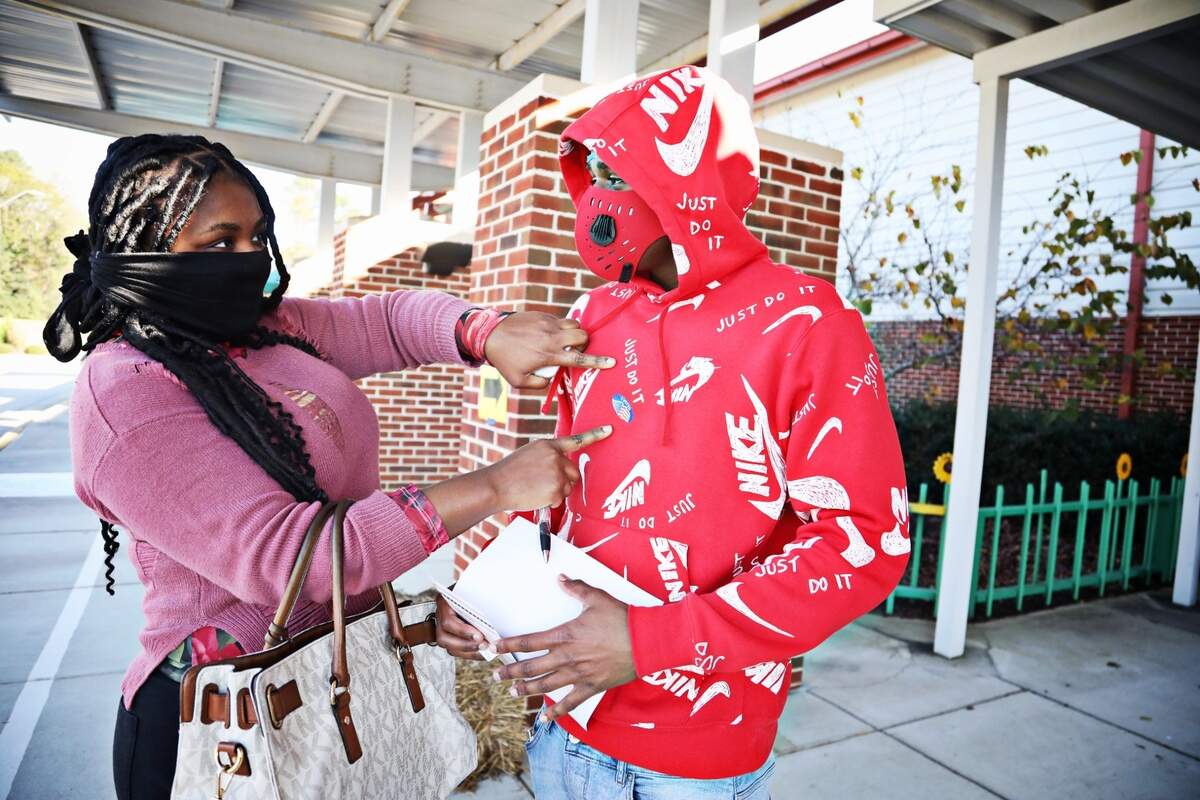
Jameliah Pinder, a Shaw University sophomore, can’t vote in U.S. elections because she’s a Bahamian citizen. But the political science major spent the past several weeks encouraging classmates at the historically Black school and helping about 50 register to vote.
“A lot of them are saying they’re voting because they want to see change,” she said, noting that some told her they are especially interested in health care, immigration policy and education funding.
“The most exciting part to me is going to be ... just seeing that I was actually able to have an impact,” Pinder said. “Although I could not vote myself, seeing that I know somebody who helped make a change — I think that is the most important part.
Candidates and their teams continued to work the state, with Trump holding a rally in Fayetteville on Monday. Jill Biden, Joe Biden’s wife, stopped by a Mills Park Elementary School polling site Tuesday in west Cary.
Biden handed out small, pink boxes of cookies to children during her visit, about four hours before the polls closed.
“It was awesome,” said 9-year-old Juliet Richardson. Her friend added, “My heart rate is so high right now.”
Nearby, mom Amanda Richardson wore a smile. She said she was proud the girls had gotten to see Jill Biden, if only for a few minutes.
“It was great, and I just love the fact that they’re so into politics at such a young age,” Richardson said. “And they care about what’s happening to our nation.”
David Campbell of Garner, who owns a home-theater equipment installer, mailed in his ballot early to make sure it would arrive in time. He voted for Dan Forest for governor, he said, because Cooper has been too restrictive during the pandemic.
“The overall agenda of Roy Cooper’s administration has not been very small-business-friendly,” Campbell said in a phone interview. “I’m just not very happy about the way the Democratic Party has been run in our state generally.”
He supported Trump in the presidential race, Campbell said, “because I feel like he’s got a better handle on the economy.”
“I do feel like this is a more important election than we have had in recent years,” he said, “but I guess it feels that way every time.”
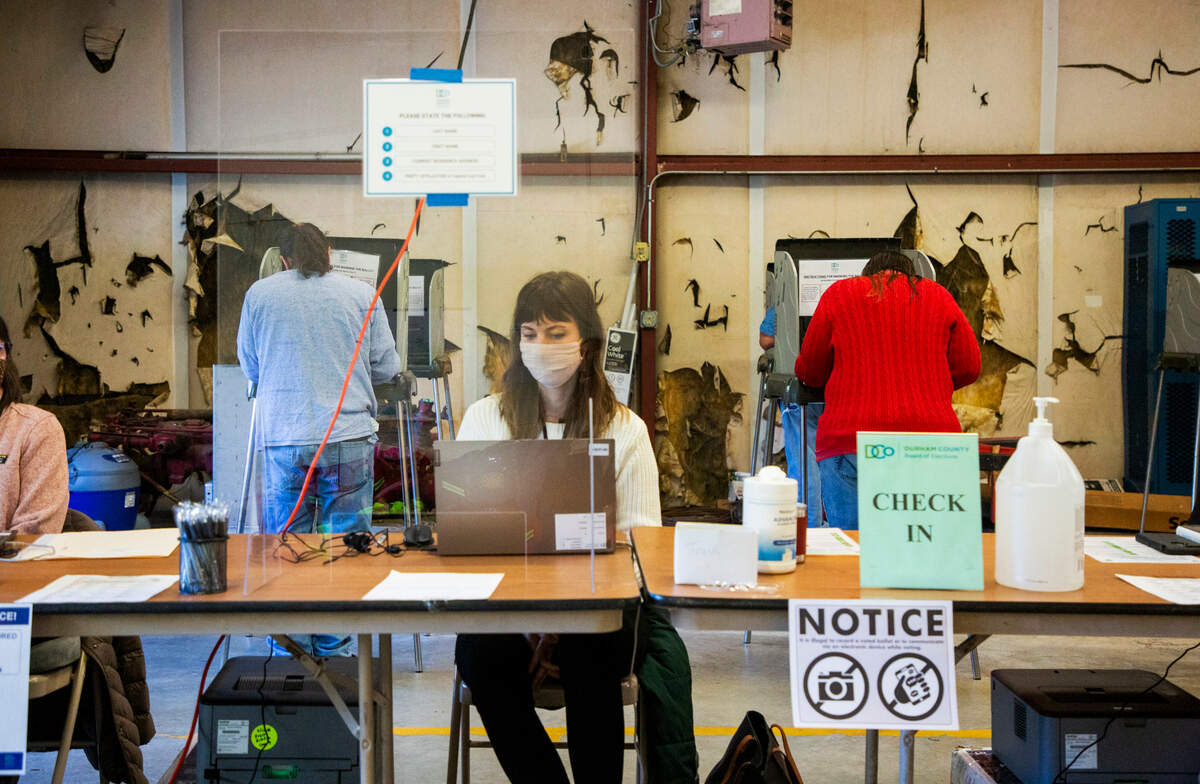
Suzanne Miller was at Wendell Middle School as a “vote protector” with the Poor People’s Campaign and Democracy North Carolina. She delivered her own absentee ballot to the Board of Elections in September.
“I wanted to have it in and have that piece taken care of,” Miller said in a phone interview.
The Moravian minister and executive director of the nonprofit Pastors for North Carolina Children, said that public education was the main issue for her in this election. Her group and Every Child NC have held get-out-the-vote events and worked to educate voters on the 1994 Leandro case, in which the N.C. Supreme Court ruled that the state has a constitutional obligation to provide a basic education to all children, including minorities, those with disabilities and those living in low-wealth districts.
Education is “a linchpin,” Miller said. “It connects to everything else: health care, housing, poverty, hunger.”
The Asian American community came out strong this year, with over 64,000 Asian American voters in North Carolina casting their ballots before Election Day, according to the state Board of Elections. That’s more than all Asian Americans who voted in 2016, according to data from North Carolina Asian Americans Together in Action.
Ricky Leung, 34, an NCAAT in Action co-founder, was at Parkside Elementary School in Morrisville Tuesday to advocate for candidates who support better health care, education and justice for immigrant and refugee communities. Asian Americans make up 38% of Morrisville’s population and 7% of Wake County’s, according to the U.S. Census Bureau.
Leung also was handing out face masks to anyone who needed them.
“Our mission is to uplift the Asian American communities throughout North Carolina by advocating for progressive causes that are beneficial to our communities,” Leung said.
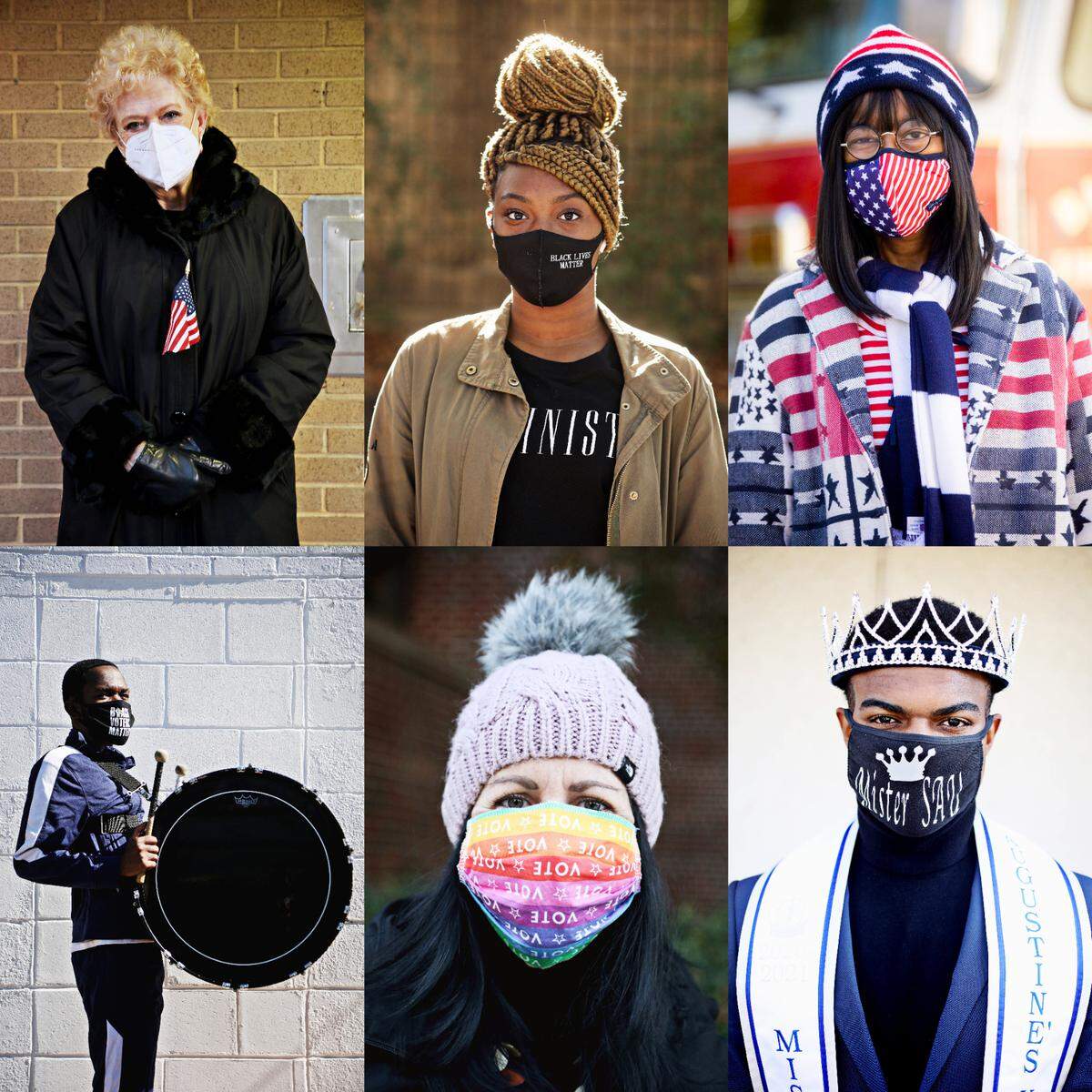
In Raleigh, more than 200 St. Augustine’s University students marched down Tarboro Street to the polls to the beat of thundering drums. Neighbors waved and danced from their porches, stepping in place as the school’s marching band passed.
“I’ve already voted, but I felt like it was important to be out here today,” said Tamika Sanders, a senior studying public health, wearing her Miss Pre-Alumni crown. “This is a very important election to be involved with today. I don’t want to say it’s scary, but it is on everyone’s mind: What’s going to happen tonight after the election?”
Staff writers Will Doran, Charlie Innis, Kate Murphy, Ben Sessoms and Andrew Carter contributed to this report.
This article will be updated throughout the day.
This story was originally published November 3, 2020 at 6:31 AM.