Every other town in the Triangle has an election on Tuesday. Why not Raleigh?
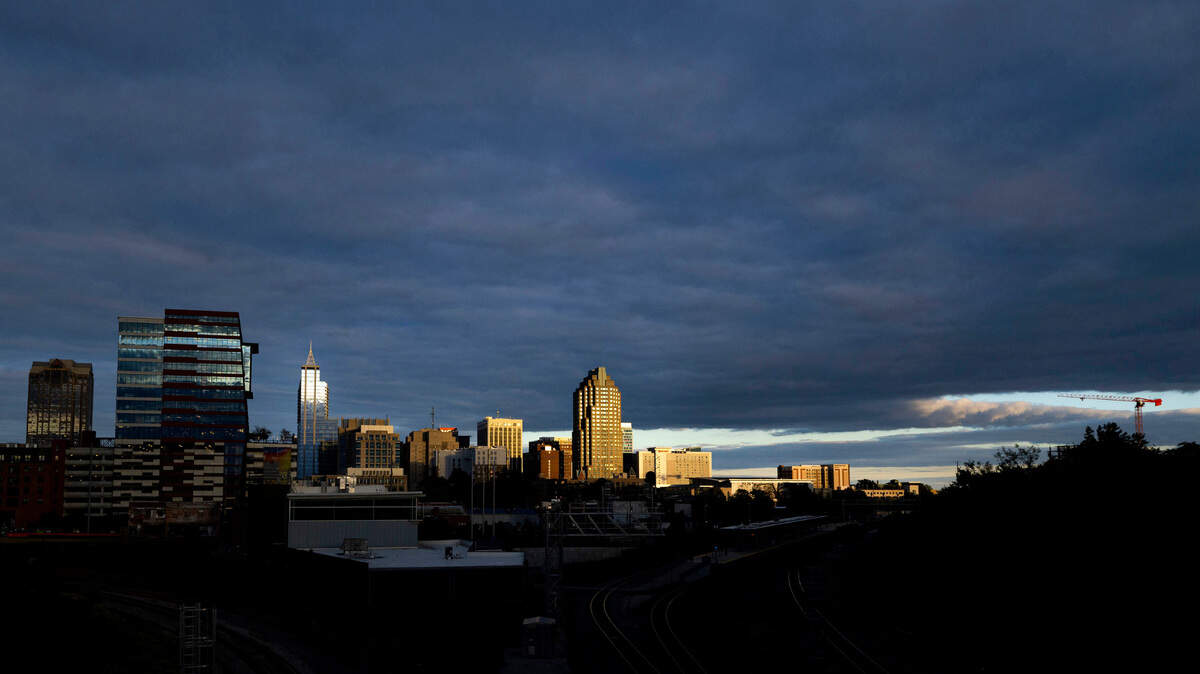
Durham and Chapel Hill voters are picking new mayors Tuesday. Cary residents will choose a new council member in a run-off election.
Nonpartisan municipal elections are synonymous with odd-numbered years, with larger, partisan elections happening in even-numbered years.
But that’s not the case this year in Raleigh.
And a small number of Raleigh residents are so confused — or so eager to do their civic duty — they’ve gone to the Wake County Board of Elections office to try to vote.
Raleigh’s elections for mayor and the City Council are now in even-numbered years. The controversial change stems from COVID-19, the U.S. Census and, yes, a back-room vote.
When did the elections move?
The change happened in the summer of 2021.
It gave the Raleigh City Council elected in 2019 an extra year in office and pushed the election for the new Raleigh City Council to November 2022.
Why did the change happen?
Raleigh, Cary and several other North Carolina cities postponed their 2021 local elections when the pandemic delayed the release of U.S. Census data cities needed for local elections. State law requires districts to correct “population imbalance” before the third day of candidate filing.
In summer 2021, the N.C. General Assembly considered a bill to push back 2021 district elections until March 2022.
But the Raleigh City Council took a vote behind closed doors, called a closed session, to ask that its elections be moved permanently to even-numbered years, starting in November 2022.
“This will create certainty, allow us to redraw our districts with public input and plan our parks bond, hear from our appointed study group and dramatically improve voter turnout,” Raleigh Mayor Mary-Ann Baldwin said in a previous interview. “It was a difficult decision but is the only one that brings certainty to the process.”
That “ask” was incorporated into the bill, Senate Bill 722, which pushed back other district elections.
The change was criticized for its lack of transparency by community members and some state elected officials, and it sparked a failed recall election of Baldwin.
Gov. Roy Cooper declined to sign the bill and instead let it become law without his signature.
“While delays to Census data caused by the pandemic necessitate changes to local elections, decisions about local elections like these should involve more open discussion and public input and therefore these changes will become law without my signature,” Cooper said in a statement.
Did anything else change?
The state law, at the request of the Raleigh City Council, also changed the type of elections that Raleigh has.
The Raleigh City Council elections used to be a nonpartisan election with a runoff, with the first contests held in October. Now, the elections are a nonpartisan plurality, meaning the elections are held in November and those with the most votes win even if they do not get the majority of votes.
When are the next Raleigh elections?
Nov. 5, 2024. Some incumbents and newcomers are already announcing their plans to run for re-election and mayor.