
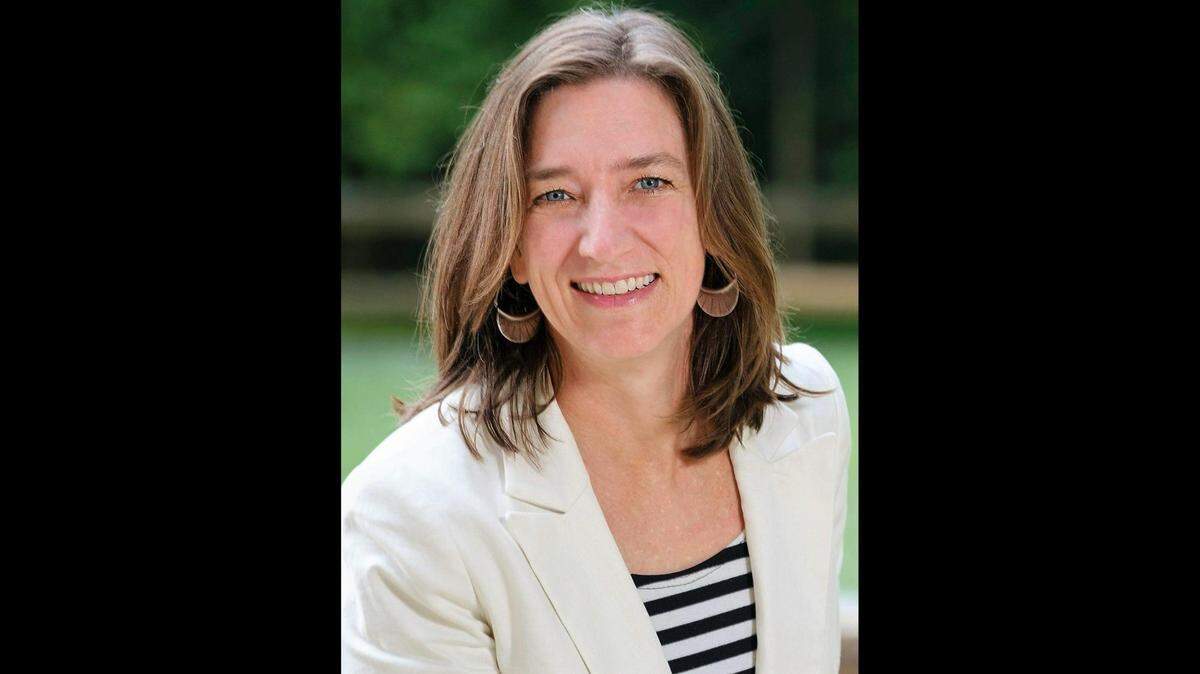
Jennifer Weaver, candidate for mayor of Hillsborough
READ MORE
Hillsborough mayor and town board candidates
Who are the candidates running for mayor and town board in Hillsborough? Get to know your candidates with our Voter Guide.
Expand All
Hillsborough Mayor Jennifer Weaver is running unopposed for her second term in office.
The incumbent candidate was elected mayor in 2019 and is on track to be re-elected to another two-year term on Nov. 2.
Early voting in the nonpartisan Nov. 2 election begins Oct. 14 and runs through Oct. 30.
To find polling places and full details on early voting, visit co.orange.nc.us/1720/Elections or contact the Board of Elections at 919-245-2350 or vote@orangecountync.gov.
Name: Jennifer Weaver
Age: 47
Residence: Hillsborough, NC
Occupation: parent, mayor
Education: Bachelor of Arts, Prescott College, Prescott, Arizona; Master of Arts in Political Science, UNC-Chapel Hill
Political or civic experience: Mayor of Hillsborough, 2019-present; DCHC-MPO, vice chair; Upper Neuse River Basin Association, Secretary; Mayor’s Task Force on Re-Imagining Public Safety; former Commissioner, Hillsborough Board of Commissioners (6 years); former Orange County Food Council co-chair; former Family Success Alliance; former Hillsborough Parks and Recreation advisory board (4 years).
Campaign website: facebook.com/hillsboroughncmayor
Endorsements: Sierra Club, Equality NC
What do you think the town’s top three priorities should be? Choose one and describe how you will work to address it.
▪ Creating and implementing the Comprehensive Sustainability Plan
▪ Assessing and addressing wastewater capacity to accommodate expected growth
▪ Following through on the recommendations of the Task Force on re-Imagining Public Safety
The Comprehensive Sustainability Plan will be the guiding document for Hillsborough for the foreseeable future. This will be the go-to source for all the things that shape our town in terms of planning, zoning, transportation (including bike/ped), public spaces, housing, and more. The CSP also will include Hillsborough’s Climate Action Plan to meet the town government’s clean energy goals. Nothing could be more important in terms of manifesting a more walkable, equitable, sustainable community where every person can thrive.
As mayor, I will facilitate the necessary and at times difficult conversations among the town Board of Commissioners, staff, and public. Like other communities, we sometimes have desires that are in conflict with each other, and we have to make the hard decisions to move forward. My goal as mayor is to help ensure we are centering our espoused values in the vision we have and create for the next 30 years in Hillsborough, even when that means making choices that some will find displeasing. If we truly want a Hillsborough that is more equitable, more affordable, more accessible, and more resilient in in the era of climate change (that is very much here), we will have to commit to doing some things differently. It is my job as mayor to help people understand that, to help our board come together in decision-making, and to both listen to the community and not shy away from the difficult conversations.
What is the town doing right, and wrong, about development and growth?
What the town is doing right:
▪ Guiding development south of the river and railroad tracks to be proximate to major vehicle transportation arteries.
▪ Saying no to housing development inquiries that lie north of town and outside of our water/sewer boundaries.
▪ Encouraging a mix of housing types (single family, apartment, townhouses).
▪ Requiring pedestrian connectivity and infrastructure with all new residential and commercial development.
▪ Fostering a strong relationship with Habitat for Humanity that has resulted in a significant number of Habitat homeowners in different locations throughout town.
▪ Carefully calculating/evaluating our water capacity in all development decisions.
What we could do better:
▪ Make it easier to have duplexes, triplexes, or quads in neighborhoods that are primarily single-family dwellings (dependent on appropriate wastewater capacity). This is an important tool for fostering compact, walkable communities and creating missing middle housing.
▪ Rethink parking space requirements for new development/redevelopment with an eye to how those requirements use valuable land and space and are a barrier to evolving away from a car-centric community.
▪ Facilitate more effective conversations in the public sphere regarding the relationships between development, affordability, equity, and sustainability.
How can Hillsborough preserve its small-town, historic character while meeting the needs of an increasing number of new residents and developments?
Hillsborough will always be a physically small town. Hillsborough’s ability to grow is constrained by the water-sewer boundary, water and sewer capacity, and limited land available for development. Within those constraints, the population of Hillsborough will continue to grow as long as it remains a desirable place to live that is close to some of the biggest job centers in the state. What is more important than any particular number of residents is how we answer this question: “Is Hillsborough a place where people of all incomes and backgrounds have the ability to thrive?”.
Hillsborough’s history is valuable. This value pertains to our local tourism economy, and because history has intrinsic value on its own — it is our responsibility to care for and tell that history in its entirety (including the unpleasant parts). But to me, the town’s character lies most deeply in the people who live and work here, who are in community with each other on a daily basis, interacting with each other in the context of the built environment that is constructed among the incredible assets of the Eno River, Occoneechee Mountain, and other natural areas. Hillsborough has an established record over the last 15 years of carefully directed growth that helps keep our community accessible while preserving those natural assets and investing in public spaces such as parks and Riverwalk. This is what we must do looking forward as well.
What skill or life experience do you have that would bring diversity to local government?
Like anyone else, I have my own unique life experiences that inform how I think about local government generally and on specific issues. Some of my earliest jobs taught me the biggest lessons: waiting tables, working on farms, a year teaching middle school, and a summer working a landscaping crew for NCDOT alongside a crew of incarcerated men. The list of lessons is long, but one of the most important is how critical it is to be able to relate to all kinds of different people when you are living and working in community.
I think our elected bodies should reflect the communities in which they reside, and I am the first woman elected mayor in the 260-plus-year history of the town of Hillsborough. Representative diversity in terms of race, ethnicity, sex, gender identity and sexual orientation is important, but not a panacea on its own. Advocating for policies and practices that help manifest the equitable, thriving Hillsborough to which we aspire is essential. One place where we still have work and growth to do as a town and community is to broaden our community leadership pipeline so that our advisory boards and other leadership roles are more reflective of the community.
This story was originally published October 4, 2021 at 9:40 PM with the headline "Jennifer Weaver, candidate for mayor of Hillsborough."