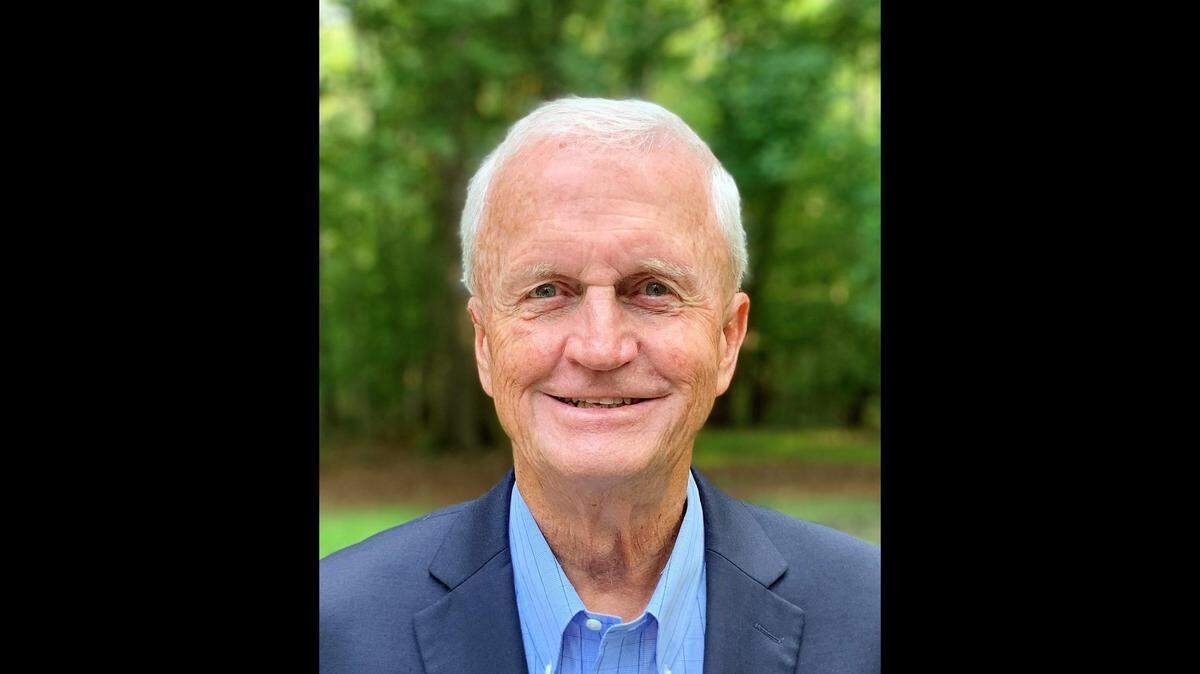
George Griffin, candidate for Chapel Hill-Carrboro School Board
READ MORE
Candidates for Chapel Hill-Carrboro school board
Who are the candidates running for the Chapel Hill-Carrboro City Schools Board of Education? Get to know your candidates with our Voter Guide.
Expand All
Six newcomers are running in November for one of three seats on the Chapel Hill-Carrboro City School Board.
George Griffin, a retired education consultant and teacher, is competing in the Nov. 2 general election against Ryan Jackson, Riza Jenkins, Meredith Pruitt, Mike Sharp and Tim Sookram.
Board member Lisa Kaylie, who was appointed earlier this year to serve out now-Orange County Commissioner Amy Fowler’s term, and board members Mary Ann Wolf and Joal Broun, who was appointed to be a District Court judge, are not seeking re-election.
Early voting in the nonpartisan Nov. 2 election begins Oct. 14 and runs through Oct. 30.
To find polling places and full details on early voting, visit co.orange.nc.us/1720/Elections or contact the Board of Elections at 919-245-2350 or vote@orangecountync.gov.
Name: George Griffin
Age: 72
Residence: 1912 Billabong Lane, Chapel Hill
Occupation: Educator, retired
Education: Bachelor of Arts, Sociology, Duke( 1971); Master of Education, Special Education, Duke (1975); Doctorate in Special Education, UNC-CH (1984)
Political or civic experience: PTA President, School Improvement Team when my children attended CHCCS schools; Parks and Rec Youth baseball coach
Campaign website: https://griffinforschools.com
Endorsements: Equality NC
What do you think are the district’s top three priorities? Choose one and describe how you will work to address it.
▪ Maintain a clear and consistent focus on high-quality teaching and learning (“the classroom”) experiences for all students as our No. 1 board priority. This includes addressing the major unfunded repairs and renovations previously identified at nine of our schools.
▪ Eliminate the racial achievement gap that has existed for 50 years. This will require a board commitment to make effective systemic changes in practices related to disciplinary suspensions, opportunities for identification and participation in programs for academically gifted students, and expectations for superior student achievement.
▪ Develop a clear and coherent plan to extend instructional services to afford students a chance to “make up” for lost learning time due to the pandemic.
The pandemic has resulted in significant gaps in learning for many students. We need an assertive and aggressive plan to identify those students most affected and increase academic and support services (extended instruction after-hours, on weekends, and in the summer). The board has regularly directed funds to support healthy hygiene and sanitation practices in order to allow our students and staff to maintain in-person instruction. It is now necessary to support additional instructional services to make up for lost learning time.
What is the school district doing right, and wrong, to support student education?
The district is doing a lot of things “right.” Administrative leadership in the central office has been strengthened with the addition of our new superintendent, Dr. Nyah Hamlett. Out of the gate, she and her staff have been creative and transparent in developing strategies to deal with the pandemic.
Our teachers and building-level administrators continue to provide superb instruction to our students, even under the most challenging circumstances! Our support staff (teacher assistants, non-teaching professionals, cafeteria and maintenance staff, and bus drivers) have all gone “above and beyond” to make things work.
At the same time, within the past several years, there have been several major and highly public issues affecting the school board and the community. A dispute over the dual language program resulted in a board member recall effort that was divisive. The previous superintendent resigned under a cloud of financial mismanagement. Board turnover has been significant during these past several years. At this point, I think the board (and consequently the entire district) would benefit from “stepping back” and developing a set of core beliefs (principles) that will guide decision making. Board members are ethically required to represent the entire district and it is not always clear what principles and beliefs are driving various decisions. I am committed to the following beliefs and actions regarding effective school boards.
Effective boards:
▪ Engage multiple perspectives.
▪ Engage in regular, data-informed evaluations of instructional programs and organizational conditions.
▪ Support the monitoring of teaching and learning for high expectations and learner-centered activities.
▪ Ensure the classroom and school learning environments promote creativity, curiosity, risk taking, collaboration, and critical thinking among students, faculty and staff.
▪ Ensure that students’ diverse learning styles and social-emotional needs are identified and effectively addressed through appropriate interventions.
▪ Develop and maintain an inclusive and equity-based learning culture that engages all stakeholders (students, teachers, parents and family members, and community) in support of student academic growth and well-being.
▪ Promote collaboration among school board and district and school-based leaders to support district priorities and continuous improvement.
What skill or life experience do you have that would bring diversity to local government?
I have been a special education teacher (including at Phillips Middle), a high school principal in nearby districts, a district and state-level program director, a university professor (NCCU), and a school system evaluator over my 46-plus-year career. As a result, I will bring multiple perspectives to the board, including a very long track record of supporting diversity in education. As a special education teacher at Phillips, I was able to return a self-contained classroom of 13 students into a mainstream education experience for each student within a matter of weeks at the start of the school year. Twelve of those students were black, one white. They all experienced varying degrees of success. And it was immediate!
As a department chair at NCCU, I was instrumental in developing the first Early College High School (Josephine Dobbs Clement) in North Carolina. I implemented a “fast track” Master of School Administration (MSA) program for aspiring principals that afforded them an opportunity to obtain an MSA and remain employed during the program. As a faculty member, I published (2002) a first-person op-ed piece in The News & Observer on white male privilege in education, and aspects of critical race theory. I have always supported inclusive participation in decision-making at all levels of education, and I will continue that leadership approach.
A majority of my career has focused on students with significant mental health needs. I have seen firsthand (far too often) the serious impact of discrimination and ostracizing of students who are “different.” I have assisted LBGTQ+ youth as they struggled with gender identity conflicts, and I remain committed to ensuring safe (emotionally and physically) school environments for each and every student.
This story was originally published October 5, 2021 at 9:01 PM with the headline "George Griffin, candidate for Chapel Hill-Carrboro School Board."
)