
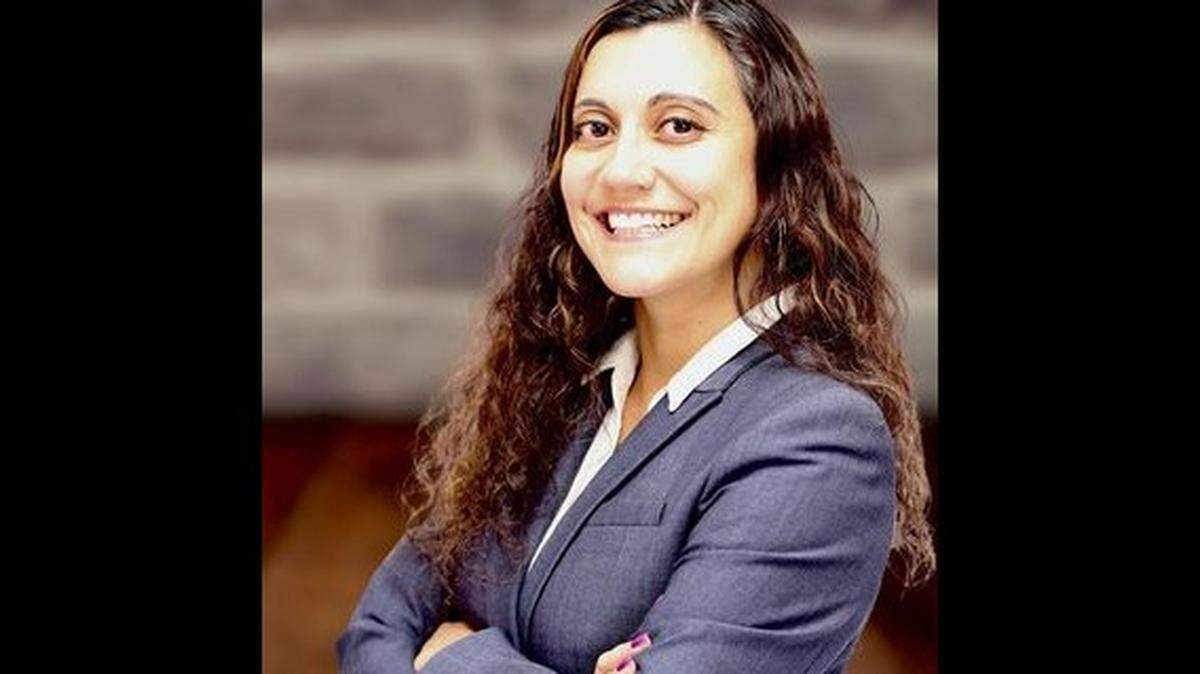
Emily Chavez, candidate for Durham school board
READ MORE
Candidates for Durham County School Board, District 1
Candidates in the nonpartisan race for Durham County School Board will be elected to four district seats and two consolidated district seats, based on where they live in the county. District 1 candidates are Emily Chavez, Jasper Fleming and Curtis Hrischuk. Get to know the candidates in our 2022 Voter Guide.
Expand All

Name: Emily Susanna Chavez
Political party: Unaffiliated
Age: 41
Campaign website: https://www.chavez4dps.com/
Occupation and employer: DREAM project director, School of Education, UNC-Chapel Hill
Education: MFA - NC State University, 2017, MAT - Duke University, 2004, BA - Swarthmore College, 2003
Have you run for elected office before? No
Please list highlights of your civic involvement: I served on and co-chaired the DPS Budget Process Advisory Committee in 2016-18, which sought to align budgetary decisions with district priorities, including racial equity. From 2017-19, I served on the board of Safe Schools NC, which provides resources to educators to address the needs of LGBTQ youth and which serves many DPS educators each year.
Who are your top three campaign contributors? We are funding our campaign via individual financial contributions and in-kind donations. This is a campaign born from my relationships with and commitment to the stakeholders of District 1 and Durham.
What are your top three priorities for Durham Public Schools?
1. Racial equity: This includes addressing the disparate academic outcomes for students of color; hiring of teachers of color, particularly Latinx teachers and Black male teachers; ensuring avenues of communication for parents of color, particularly low-income and working class parents; monitoring and increasing BIPOC students’ opportunities for academic and other forms of enrichment.
2. LGBTQ+ student support: Given the current attacks on LGBTQ+ students and families in other states, it is critical that our district implement policies that protect them. This includes developing a policy that sets a standard for our responsibility to gender nonconforming students, LGBTQ+ students, and LGBTQ+ families.
3. Improving teacher working conditions and wellness: We must build upon and develop plans to ensure adequate staffing, sufficient planning time, additional financial compensation where appropriate and possible, and opportunities for support, mentoring, and professional development.
What does DPS do well? In what areas does it need to improve?
We have many excellent teachers and administrators, several of whom I have been privileged to work with. We have a strong superintendent who is engaged in connecting with multiple stakeholders in Durham and is focused on getting results. We have a solid strategic plan now guiding our work that was developed through a thoughtful process that involved many Durham community members, including DPS teachers and administrators, parents, organizers, members of the business community, and policymakers. We must address the disparities in the academic performance of our students across race using multiple strategies. We can make our schools more accessible for families with less technology access, families who don’t speak English, and others. Teacher retention was an issue prior to the pandemic and is even more critical now, particularly the recruitment and retention of Latinx teachers and Black male teachers.
What about your life experience makes you the best person for the school board?
My desire to be an educator began when I served as an intern with CDS Freedom Schools in North Philadelphia in the summer of 2000. I participated in servant leader training at the CDF Alex Haley Farm where I learned alongside hundreds of other young adults about the history of Black Americans and civil rights in the U.S. I met college-age people of color like myself who wanted to make a difference in children’s lives. That summer I immersed myself in creating culturally relevant curriculum for Black and Latinx students, piquing their curiosity in reading, and creating opportunities for them to explore their own histories and identities. In the fall I changed my college major to include education. I served as a Freedom Schools servant leader throughout college and co-founded a Freedom School summer program at NCCU in 2007. Racial equity and youth empowerment are at the core of why I became an educator and continue work for long-lasting change for youth and the teachers that serve them.
How should the school board evaluate the superintendent and make that process more transparent to the community?
I believe that the superintendent should be evaluated on the following:
▪ Developing a high-functioning organization in which lines of communication are clear, open and accessible.
▪ Using quantitative methods to evaluate the district’s progress toward an equitable school system that actively works to narrow disparities, particularly race- and socioeconomic status-based disparities in academic outcomes, disciplinary practices, and overall student well being.
▪ Progress made on the strategic plan in accordance with the timeline and benchmarks qualitative methods that should be used include a regular performance review conversation between the school board and superintendent and listening sessions with students, parents, teachers and other staff. Engaging students, parents, and staff in qualitative evaluation methods is an effective way of increasing transparency in the evaluation process..
Should anti-racism education be taught in the schools, and is DPS doing an adequate job teaching Black history?
The construct of race and the creation of racism are fundamental to the founding of this nation. As with any painful past, it can be hard to face; yet, we are better for it in the long-term. Furthermore, I believe that all students have a right to learn about the histories of people who share their identities, and thus, it is our responsibility as educators to continue to diversify our curriculum and to promote anti-racist education. This means addressing race and racism in classrooms in age-appropriate ways that do not cause stigma or blame, but rather allow students to understand, discuss, and analyze racism in an open and honest way. Many teachers are doing more than an adequate job teaching Black history; however, as a district, we can do more. In developing African diaspora-centered professional development programs for teachers, I have seen when teachers can increase their own knowledge of Black history, they can then better teach their students about this history.
What strategies would you advocate to raise the academic achievement of Black boys in the school system?
As a board member, I would continue to ensure funding for the Office of Equity Affairs, racial equity training for teachers, administrators and staff, and robust support services for students and families (including counselors, social workers, nurses, and translators), and to provide accountability and support for the execution of the Equity Policy. I would also advocate for hiring more Black male teachers; ensuring multiple and accessible avenues of communication for parents of Black boys; increasing culturally responsive curriculum and opportunities for students to learn about Black history; monitoring and increasing Black boys’ opportunities for academic and other forms of enrichment; and continuing to partner with local community colleges and universities, including Durham Tech, NCCU, and UNC-CH, and with nonprofits and business partners who can help us to employ these strategies.
How can DPS reverse enrollment losses and de facto segregation in its schools?
In order to reverse enrollment losses, on the whole we must function as effectively and as possible. As a district, we must do our best to secure appropriate funding and resources as well as leverage community partnerships. Our decisions should align with our values and objectives. In addition to conducting routine interviews with families who’ve left the district, we should continue to look for ways to provide a variety of academic programs and experiences that respond to the diverse needs of our students. On the secondary level, we should continue to expand pre-college and vocational offerings that satisfy a diversity of student interests and talents. To address de facto segregation in schools we must address racism across all levels of our students’ education. We must fully support and implement the district’s Equity Policy, ensuring that all employees have practical skills to address bias and microaggressions and to increase inclusion in their respective environments.
How can DPS better support teachers and other staff and reduce turnover?
We can utilize both quantitative and qualitative data to learn more about the working conditions and factors that discourage or incentivize teachers and other staff to remain in their positions. Having listening sessions with our staff is key, offering space for concerns to be raised and addressed. We should continue to employ creative ways to market and attract qualified staff. Developing pipelines for instructional assistants to become licensed teachers is critical. We should also provide opportunities for our own high school students to explore teaching, counseling and other school staff positions as a career. We must also ensure that teachers are supported in their schools through programs like PACE, Partnership for Authentic Communities of Educators, a DPS-UNC collaboration. Additionally, DPS can continue to partner with local community colleges and universities to support the development of teachers of color, through programs like LIFT at NCCU and DREAM at UNC.
Describe one idea you would like the school board to consider even though it might not be universally popular.
I would invite the board to consider reforming school resource officers and open the discussion about whether SROs are the most effective form of protection for students. Reforms that could be taken include increased racial and implicit bias training; more specialized education on child and adolescent development; a memorandum of understanding between the police department and the school system that gives more structure to the responsibilities and limitations of the SRO role; and implementation of a system for gathering regular and consistent [input] from students, parents, and teachers regarding SRO performance. There is a relationship the presence of SROs in schools and students being referred to law enforcement, particularly Black students (Terrell and Smith, 2021), and this warrants us closely considering what methods of protection would be most effective for all students.
How can DPS partner with charter schools or learn from their examples?
It is important to be aware of the role that charter schools play in the educational landscape. In general, I think it is important to maintain open lines of communication with charter schools. Given that charter schools provide various curricular offerings that often draw families away from DPS, at a district level we should think about how we can continue to offer rigorous and diverse academic programming that is desirable to students and parents and which maintains interest and participation in our district’s schools.
This story was originally published April 25, 2022 at 12:43 PM.