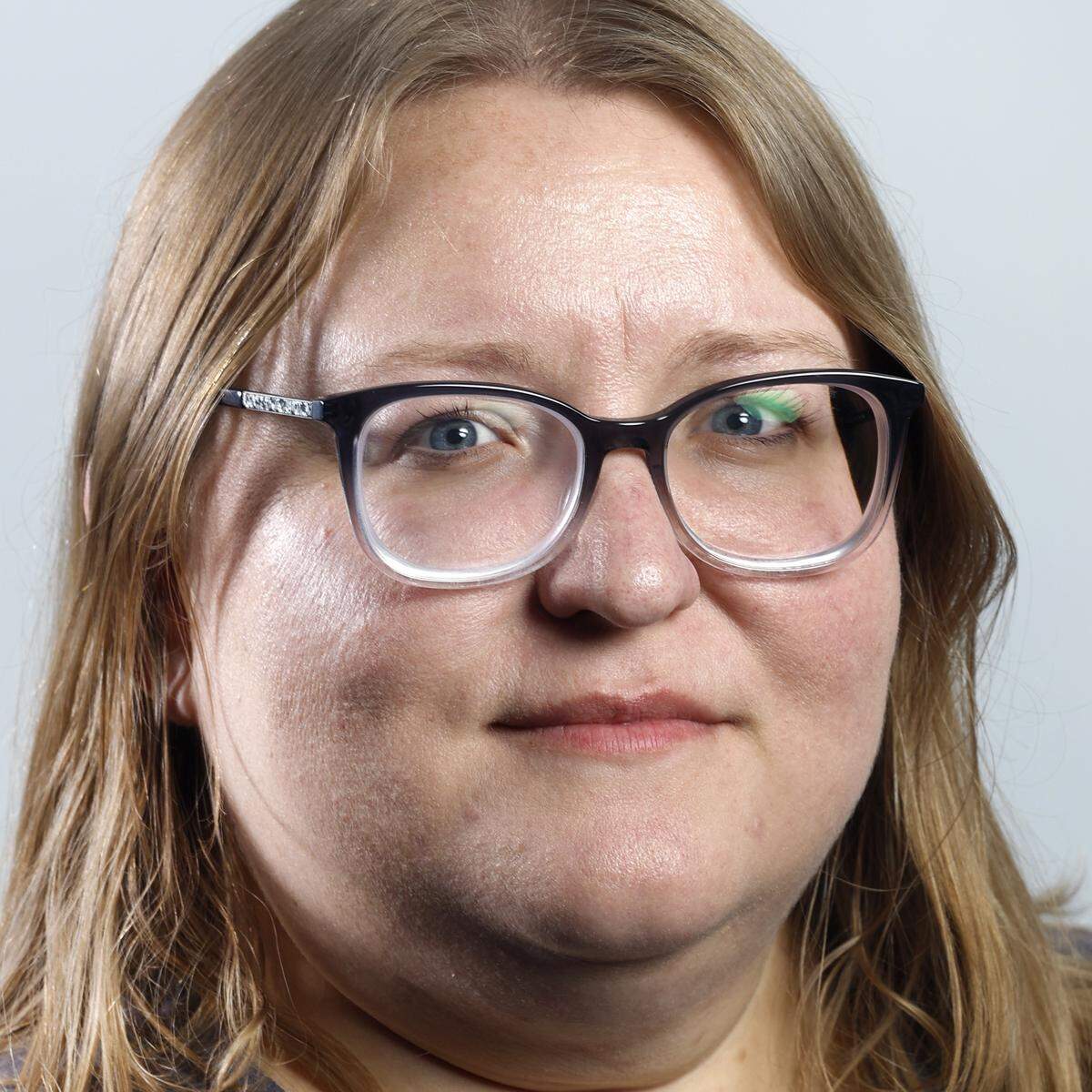
Minu Lee, candidate for Raleigh City Council District B
READ MORE
Candidates for Raleigh City Council District B 2022
The candidates running for the Raleigh City Council District A seat include Minu Lee, Jakob Lorberblatt, Megan Patton and Frank Pierce. Get to know the candidates with our NC 2022 Voter Guide.
Expand All
The News & Observer asked readers again this year to submit their questions for the people looking to lead Raleigh.
We received nearly 200 questions that covered a range of topics important to city residents.
We asked candidates for a yes or no response to 15 questions with a chance to fully explain their position. If candidates did not provide a yes or no answer, we didn’t include their fuller response.
We also included biographical and open-ended questions. Some responses were edited for clarity or length.
Here is how Raleigh City Council District B candidate Minu Lee answered the questionnaire. There are five people whose names will appear on the ballot, including candidate Zainab Baloch who dropped out of the race in September.
Incumbent David Cox is not seeking another term for the northeast Raleigh seat. District B candidates are elected only by people within the district and serve two-year terms.
All eight seats on the Raleigh City Council are up for re-election.
Early voting for the Nov. 8 election began Oct. 20.
Name: Minu Lee
Age: 21
Occupation: Substitute teacher
Education: N.C. State University, Political Science
Endorsements (limit to three): NC Democratic Party’s AAPI Caucus; Former Mayor Nancy McFarlane; Wake County Commissioner Sig Hutchinson
Previous political or civic experience? Commissioner, Raleigh Civil Service Commission; 3rd Vice Chair, NC Democratic Party’s State AAPI Caucus; 2nd Vice-President Wake County Democratic Party’s AAPI Caucus.
Campaign website: LeeForRaleigh.com
How do you identify your political ideology? Democrat
How would you add diversity to the City Council? As a first-generation Korean American college student running for City Council, I would add diversity in two historic ways. First, I would be the first Asian-American ever elected to the City Council. Asian-Americans are the fastest-growing demographic in NC, and they need proper representation going forward. As a 21-year old, I would provide a new perspective that is desperately needed. I would also serve to be a voice for the homeowners and renters of tomorrow.
What is your favorite locally owned restaurant either in the city or within your district? Casa Cubana
The city of Raleigh lowered the speed limit downtown to 25 mph. Are you in favor of lowering the city’s speed limit to 25 mph throughout the city?
Yes. Improving pedestrian safety is vital to protecting lives and property throughout Raleigh. As the NCDOT study found, lowering speed limits is only one piece of the puzzle when it comes to increasing pedestrian safety in dense areas such as downtown Raleigh. Lowering the speed limit to 25 mph in dense neighborhoods would enable people to be able to bike, walk, scooter, skateboard, etc. without having to risk their lives.
Should the city help bring a sports and entertainment stadium downtown?
Yes. Not only would a sports/entertainment stadium near downtown Raleigh promote our economy and tourism, but it would also improve the quality of life for Raleigh residents for years to come. A stadium would serve as a place where people can go to relax and have fun. Such economic benefits can be redirected toward community investments for more affordable, low-income housing, better parks, improving our transportation system, and much more.
Do you support reinstating Citizen Advisory Councils?
No. Citizen engagement is vital, and there should be an outlet in which residents can be involved in the City government. However, CACs were ineffective and unrepresentative of our communities. Often, attendees were individuals who had the time, money or interest to attend. This left many of our younger, minority residents out of the civic process. There are other ways to involve our community members (e.g., canvassing in neighborhoods under a rezoning case to keep residents informed).
Would you vote to increase the police department’s budget?
Yes. It is necessary to reallocate funds in an effective manner that does not promote the militarization of our police, but rather, its reform and progression to reduce crime and enable effective community policing. Funds should be directed toward increasing pay and benefits for officers to ensure that they live in Raleigh and are representative of our population. In addition, we should focus on the improvement of training, especially in terms of de-escalation and mental health crisis response.
Would you vote to increase the salary of the city’s first responders, including police, fire and 911 staff?
Yes. We need first responders that live in the same communities that they serve. Emergency workers in Raleigh continue to be outsourced to neighboring municipalities because Raleigh does not offer competitive salaries or benefits. By working to increase pay for our emergency workers, we would work to decrease the employee shortage we currently face and promote public safety as a whole.
Will you support keeping city buses fare-free indefinitely?
Yes. I am proud to say that I was one of the first candidates to publicly state my support for keeping city buses fare-free indefinitely. Not only would it promote more people to ride our city bus, but it would also ensure that people who rely on the city bus system continue to save their money to put towards other essential needs such as housing, food, clothes, and bills.
The city has received numerous noise complaints about traffic and street racing. Is the city doing enough to enforce its noise ordinance?
No. An interesting concept that is being tested in other municipalities is the development of “traffic noise cameras” in an attempt to target this very issue. I would like to see the plausibility of this, and other methods, in Raleigh.
Would you support the city creating a buffer zone around abortion clinics?
Yes. For many, abortions are a difficult process to go through. Having to face demonstrators/protesters while entering and exiting an abortion clinic only worsens the situation. Additionally, the amount of noise and disruption that is created as a result of such protests can be mentally draining, especially for those going through with the abortion process. I would work with city staff and abortion clinics to ensure that a proper resolution is made.
Do you support the city’s missing middle zoning changes?
Yes. The city’s zoning changes have put an end to many detrimental exclusionary zoning practices. As a result, a new variety of housing types can now be built in areas that were previously only zoned for single-family detached houses. This action is a step forward in expanding ’homeownership’ to also include townhomes, condos, and multiplexes. The city’s missing middle zoning changes are examples of revered urban planning concepts that have been proven to promote affordability in many other cities.
Do you support the city’s $275 million parks bond?
Yes. Although it would be great to see $275 million be allocated toward affordable housing and other issues, we cannot continue to kick the can down the road and do nothing to help improve the quality of our parks and green spaces. The price tag to repair, improve and develop new parks will only continue to skyrocket. We have seen a similar issue before with expanding public transportation, primarily light/commuter rails. If we wait any longer, taxpayers will have to pay more money for less.
Would you propose additional measures to address the affordable housing crisis for lower wealth residents?
Yes. Raleigh must work toward incorporating dense, affordable, low-income housing, increasing the housing stock by minimizing exclusionary zoning practices, and ensuring that new housing developments incorporate affordable housing for low-income residents. I would work to seek new community land trusts to develop affordable housing units as observed in other communities such as Durham. I would also advocate for the incorporation of affordable, low-income housing units in new housing developments.
Do you support Raleigh’s and Wake County’s efforts in bus rapid transit and commuter rail?
Yes. Bus Rapid Transit (BRT) and commuter rail are two significant factors in reducing traffic and improving commute times across our city. By investing in the development of BRT lines and commuter rail, we are making strides to be less car-dependent and more community-centric. With more people riding BRT and commuter rail, less people would be on the road and thus, reduce traffic congestion and emissions.
Should it be possible to live in Raleigh without owning a car?
Yes. Being a car-dependent community is unsustainable, costly, and promotes suburban sprawl. I understand that we will not be able to shift away from cars overnight. However, that does not mean that we should continue to develop and grow our city around cars. We should be focused on building a city that ensures people can drive, bike, walk, or take public transportation to get to wherever they want to go.
A council-appointed study group made a recommendation to add one seat to the Raleigh City Council. Do you support expanding the size of the council by a seat?
Yes. Raleigh needs to keep up with our ever-growing population. Adding a seat to the Raleigh City Council would enable representation that is much closer to the people by reducing the council member-to-constituent ratio. In addition, moving from an eight-member City Council to a nine-member City Council would prevent deadlocks and ties for votes, promoting the effectiveness and productivity of the legislative body.
Do you think the current City Council has put Raleigh on the right path?
Yes. Like any legislative body, there have been numerous missteps as well as numerous strides forward. I believe that the current City Council made a deep mistake when they chose to get rid of CACs with no alternative option for citizen engagement in place. However, the council made the right decision in enabling Missing Middle Housing and other zoning changes that make it easier to build different types of housing across the city and promote housing affordability.
What will you do to ensure Raleigh’s working-class residents don’t get priced out of the city?
For Raleigh’s low-income homeowners, I plan to partner with nonprofit organizations and community organizations to develop comprehensive solutions (such as a property tax relief program to alleviate the financial burden off of low-income homeowners). For low-income renters, I will advocate for an increase of community land trusts and public investments toward the development of affordable housing. I will also work to ensure a sufficient amount of affordable, low-income rental units are being incorporated into new development projects.
What lessons should the city have learned from public safety challenges like COVID, curfews and George Floyd protests? Would you propose any new policies or changes?
Throughout the COVID-19 pandemic, minorities were the most vulnerable demographic affected by the virus. The curfews impacted minorities disproportionately due to the fact that the curfew restricted people from being able to work their regular number of hours, resulting in a decrease in income that many could not afford to have. The George Floyd protests outlined the need for increased training and reform to reduce prejudice in our police system. I would ensure that minorities have a seat at the decision-making table, while also pushing for reforms such as increased de-escalation/mental health crisis response training for police officers.
How can the city limit investment firms from buying entry level homes?
If elected, I would like to work with city staff to examine the viability of establishing a “residency” requirement for individuals who own entry-level homes in the city. We cannot continue to have outside investment firms coming into our city and reducing the number of entry-level homes available to our residents. By establishing a requirement for an owner of an entry-level home to live in the city, this may serve to limit investment firms from reducing our housing stock.
Describe a program in another city that you want the city of Raleigh to try. Please be specific.
I would love to see Raleigh test a pilot program for curbside composting. The city of Durham tested this program recently and saw overwhelming success to the point that the Durham City Council recently voted to expand the program to serve 500 residents. Curbside composting would serve to reduce waste in Raleigh. Curbside composting has proven to be beneficial to protecting our environment (including reducing methane emissions from landfills) and should be a program that is tested out by the city of Raleigh.
Raleigh is the center of one of the fastest-growing metro areas in the country. How do you personally feel about that?
This is great news that more and more people are seeing the good in Raleigh. People are coming here for opportunities, and we should ensure that they are welcomed. However, we are not keeping up with this unprecedented growth. We need the proper housing units to accommodate the amount of people moving into Raleigh. We need efficient public transportation to reduce traffic on our major transit corridors. At the same time, we must be wary not to neglect the concerns of those who already live here. There is much work to be done before we can properly accommodate the growth we are experiencing, and I will work strenuously towards this goal.
Name one initiative you’d propose in your first 100 days in office.
I would love to examine the plausibility of shutting down Fayetteville Street to vehicles indefinitely. There is a key difference between a Space and a Place. While a Space is any location that serves no special purpose to a community, a Place serves as a location in which people remember and cherish. We can make Fayetteville Street a Place by only permitting pedestrian traffic with local vendors lining the street. Other municipalities have done so, and have seen overwhelming support and positive reactions to it. Not only would this promote our economy and tourism, but it would also promote walkability in downtown Raleigh.
This story was originally published October 24, 2022 at 4:59 PM.