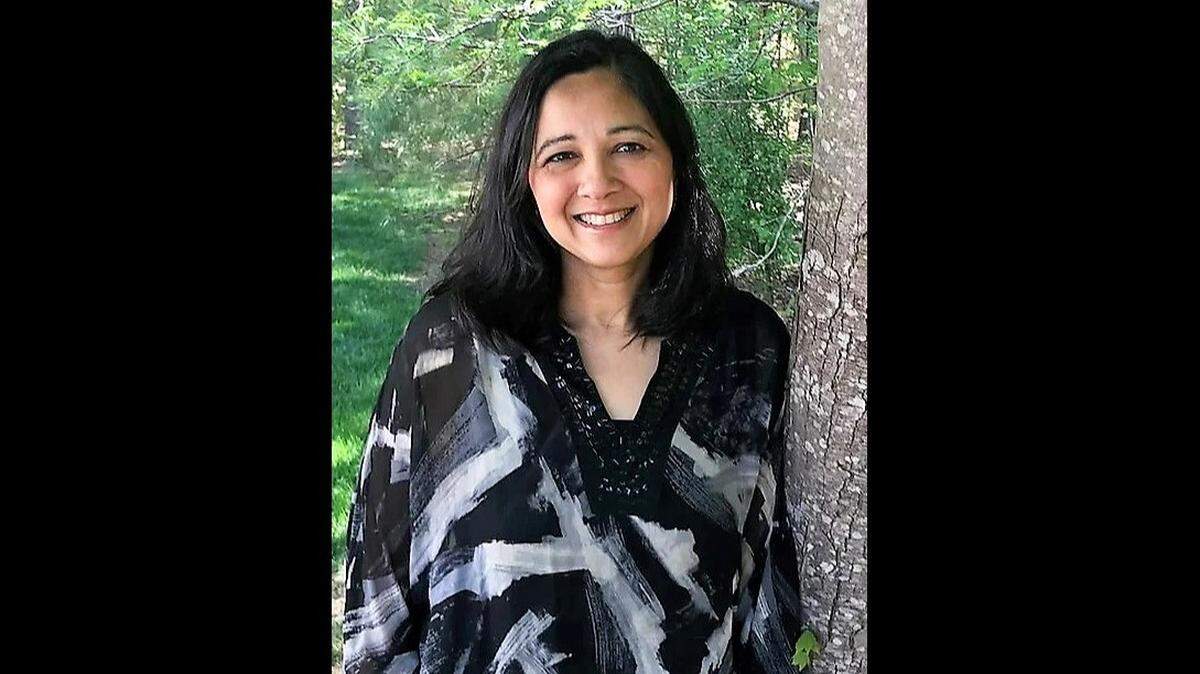
Amy Ryan, candidate for Chapel Hill Town Council
READ MORE
Chapel Hill mayor and Town Council election
Two Town Council members are vying to succeed outgoing Chapel Hill Mayor Pam Hemminger. Ten candidates are running for four open council seats Early voting starts Thursday, Oct. 19, and runs through Saturday, Nov 4. Voters may cast ballots at any early voting location.
Expand All
Chapel Hill will elect a new mayor and four Town Council members this year, giving voters a chance to check or continue the town’s current management and growth.
Council member Amy Ryan is the only incumbent seeking re-election. Council members Michael Parker and Tai Huynh will vacate their seats in December.
Council member Jessica Anderson’s seat is also open, as she runs against Council member Adam Searing to replace outgoing Mayor Pam Hemminger. Searing is supported by a bloc of four council candidates who have pledged to reverse some town decisions about housing and development.
Searing will remain on the council until December 2025 if he loses the mayoral race.
The Searing-aligned candidates — David Adams, Breckany Eckhardt, Elizabeth Sharp and Renuka Soll — are competing against Ryan and five others — Melissa McCullough, Jeffrey Hoagland, Erik Valera, Theodore Nollert and Jon Mitchell — to fill four council seats.
Early voting in the nonpartisan Nov. 7 election starts Oct. 19 and runs through Nov. 4..
To find polling places and full details on early voting, visit co.orange.nc.us/1720/Elections or contact the Board of Elections at 919-245-2350 or vote@orangecountync.gov.
Name: Amy Ryan
Age: 63
Occupation: Chapel Hill Town Council member, book editor
Education: Bachelor of Arts, Duke University; Master of landscape architecture, NC State University
Political or civic experience: Chapel Hill Community Design Commission 2003-09; Sustainable Community Visioning Task Force, 2009-10; Chapel Hill Planning Commission, 2011-19 (2 years as chair); Chapel Hill Town Council, 2019-present
Campaign website: AmyRyan.org
What do you think the town’s top three priorities should be? Choose one and describe how you will work to address it.
▪ Building a Complete Community
▪ Climate action/environment
▪ Budget
I’ve been working toward better planning and growth management in Chapel Hill throughout my 20 years of town service, and I’m excited by the real, data-driven progress we’ve made with our new Complete Community framework. It gives us a road map for growth that gets us the diverse housing we need and the inclusive, connected neighborhoods we want. I’m especially excited about our plans to connect the town with an Everywhere to Everywhere greenway network, adding 25 miles of new trails and creating a townwide transportation system and linear park that will link people to each other and to work, shops, and schools.
What do you think the town is doing right to create more affordable housing? What would you do if elected?
Chapel Hill has been doing a great job on affordable housing: working with community partners, donating town land, pursuing tax credits, providing subsidies (like $2.5 million in ARPA funding), negotiating for affordable units in new development and $5 million from UNC Health for a revolving loan fund. Since 2018, we’ve preserved or produced affordable units for more than 1,000 families, and we have 800 more in the pipeline.
I want to keep that momentum going. The extent of the need and the resources required are sobering, but making our town more affordable to more people is the smart thing to do, and the right thing to do if we want Chapel Hill to be a place for everyone.
Do you support keeping Orange County’s rural buffer, where the lack of water and sewer limits growth? How do you see the town growing with or without the buffer?
The rural buffer was a hallmark environmental achievement by local governments in the 1980s. It was a commitment to preserving farms and natural land, and a promise that Chapel Hill would avoid sprawl, growing denser, not spreading out. I strongly support maintaining the buffer.
Increasing density in town is good for the environment (reducing car trips, using infrastructure more efficiently) and our community (more places to walk and bike to, more choices for housing). We’re implementing new Complete Community and transit-oriented development plans to execute on this environmental promise by growing internally — and strengthening community while we do.
Would you consider a tax increase to pay for rising costs and delayed public projects? If not, what specific changes to the town’s budget would you support?
The inflation that hits my family’s budget affects the town too. We take as much burden off residents as we can by increasing sales tax revenue with economic engines like Wegmans and by expanding our commercial tax base. We’re making prudent decisions to delay some big projects, because construction is just too expensive right now. But as much as we dislike it, when costs increase, sometimes taxes have to go up.
At budget time, we work hard to balance aspirations with resources to make sure we keep our sound financial footing. Our new 5-year budgeting lets us be realistic about what we can spend, prioritize core needs, deliver on our values, and minimize increases to taxpayers.
How can the town bring people together who have different viewpoints to find workable solutions?
Chapel Hill is a diverse community with many opinions — it’s one of our strengths.
As a Council member, it’s my job to use those differences to drive us to good decisions. I’m a collaborator and problem solver, and while it’s not always easy, it’s satisfying to bring people together around hard issues and find a balanced way forward.
My colleagues and I don’t always agree, but we can work out good compromises, as we did on the Legion property. Constituents know I take their concerns seriously, do my homework, and make sure to listen to all voices, not just those who shout the loudest. I’m trusted by the community to work hard, and work in good faith, for what’s good for our town.
This story was originally published October 16, 2023 at 11:30 AM.


.jpeg)