NC rep pushed costly plan for liquor warehouse that favors developer, ABC official says
%20(4).jpg "A rendering of a proposed 600,000 square foot warehouse for liquor distribution being sought by the state Alcoholic Beverage Control Commission.")
AI-generated summary reviewed by our newsroom.
- Rep. Brenden Jones urged a public‑private option for a new ABC warehouse on June 18.
- Bauer, via a spokesperson, says he never requested the public‑private amendment.
- M Group and Mooresville BTR officials gave roughly $500,000 to lawmakers over four years.
Last year, North Carolina House Majority Leader Brenden Jones stood on the floor of the chamber and urged his colleagues to amend a bill intended to make building construction more efficient. He asked them to support a public-private partnership option to build a new state distribution warehouse for liquor.
“ABC Chairman Hank Bauer has asked for this,” Jones told his colleagues of his last-minute amendment on June 18, 2025. It passed with one vote against, and shortly after the House voted to pass the bill with a sizable bipartisan majority.
But Bauer, the Alcoholic Beverage Control Commission chairman since 2021, never asked for the amendment, he now says through a spokesperson. He hadn’t met Jones, let alone talked with him. But what came next raised the stakes.
In a meeting seven weeks later – set up by a lobbyist for a developer that has connections to roughly a half-million dollars in campaign contributions – Jones told Bauer he had to accept that option. Two weeks later, the developer came in to make its pitch.
“Representative Jones made it clear he was in support of a public/private deal and that was the only avenue for the Commission to secure House support,” ABC commission spokesperson Jeff Strickland said in an email response to questions The News & Observer sent about the warehouse project.
Bauer has not responded to several requests to be interviewed. But The N&O’s request for records shows the commission favors the $310 million loan to build a new ABC complex with a 600,000-square-foot automated warehouse that would replace an overextended one on Tryon Road.
That plan cleared the Senate in a strong bipartisan vote last week as part of an omnibus bill making changes to the state’s alcoholic beverage laws. But it now faces an uncertain path in the House.
A more expensive option, official says
Liquor sales are strongly regulated in North Carolina. The state handles the distribution of roughly $1.8 billion in liquor to local ABC stores each year.
Bauer’s calculations put the cost of the public-private partnership at nearly double that of the loan plan. The partnership would result in lease payments costing $502 million over 20 years and $589 million over 25 years. And the developer would keep the building.
Lobbyist David Powers set up and attended the meeting between Jones and Bauer at the commission’s headquarters, Strickland said. Powers is one of four lobbyists representing an M Group Companies subsidiary, Mooresville BTR Developers. M Group is a developer with headquarters in Florida and Texas.
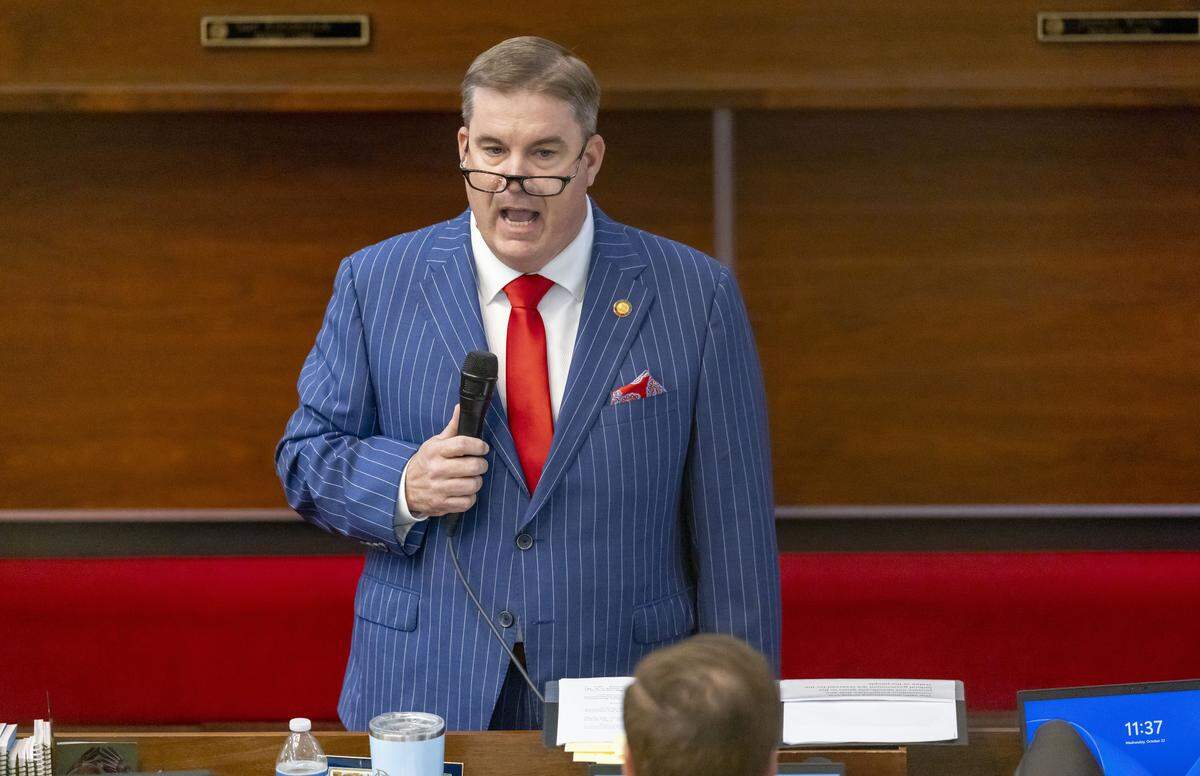
Bauer told Jones, a Columbus County Republican, at the meeting that the public-private partnership was a “horrible” idea, Strickland said.
Jones has not responded to an N&O reporter’s requests for comment and records related to the public-partnership plan. A spokesperson for House Speaker Destin Hall acknowledged that Jones has received the request.
Powers also set up the second meeting, held Aug. 20 at the commission headquarters. A team of M Group officials, including company CEO Patrick Marino and two other lobbyists, Kevin Wilkinson and Hardy Lewis, met with Bauer, Strickland said. Bauer also told that group he opposed a public-private partnership.
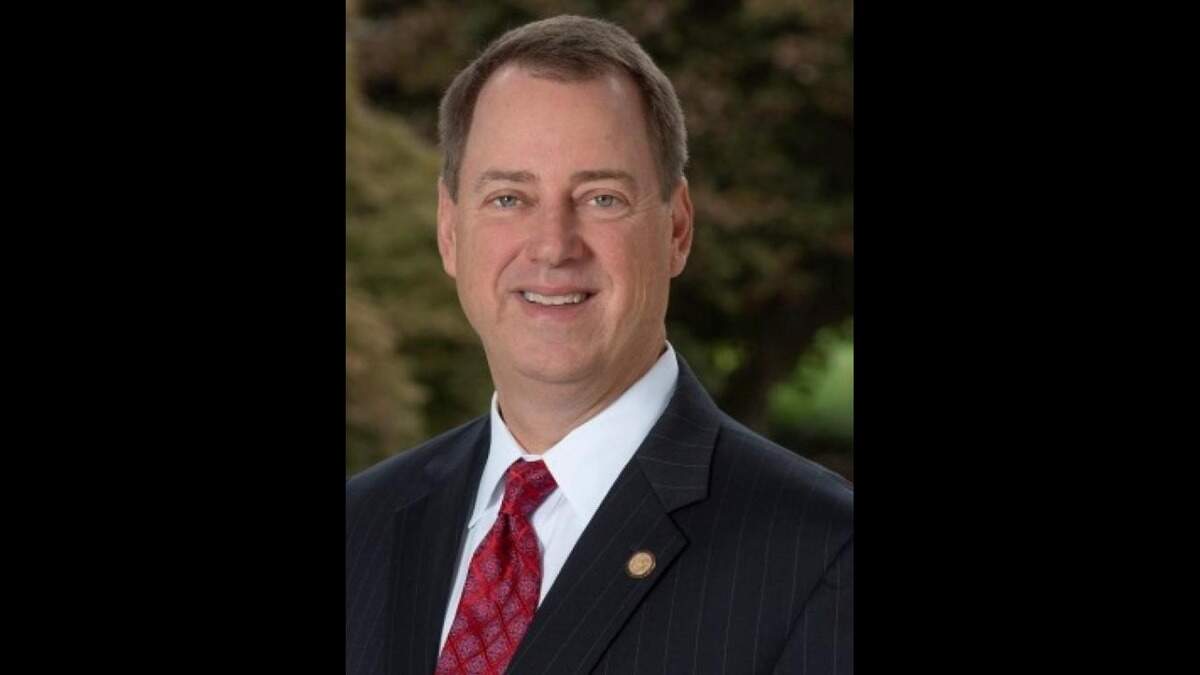
M Group and Mooresville BTR’s campaign donations
Over the past four years, M Group and Mooresville BTR officials and others tied to them have contributed roughly $500,000 to state lawmakers’ campaigns, election records show. Jones and Hall are among the beneficiaries.
Jones received maximum donations from four M Group officials, a Marino family member, and a Mooresville BTR official in the past three years, totalling $59,200. Four of those maximum donations were reported as being received three weeks after he met with Bauer.
Hall received $28,100 in campaign contributions from M Group and Mooresville BTR officials in 2024. By then, he had won the battle to replace House Speaker Tim Moore, who successfully ran for a congressional seat. The M Group and Mooresville BTR also contributed $118,250 to the Republican State Leadership Committee that year. The national political organization works to elect Republicans in state elections and Hall’s ascendancy to the speakership gave him a seat on the RSLC’s executive committee.
Powers’ wife, Shreita, is also a prolific contributor to legislative campaigns. Records show she has contributed more than $100,000 in the past four years to Republican candidates and political organizations that provide support. Jones has received $4,500 and Hall $7,500 during that period.
Hall, a Caldwell County Republican, did not respond to requests for comment from The N&O.
In October, The N&O published an investigative report detailing how Mooresville BTR quietly won $15 million from state lawmakers in 2023 to largely pay for a connector road in fast-growing Mooresville. A year earlier, Mooresville BTR offered to build the road as it sought town approval for a large residential development.
The provision, which didn’t mention Mooresville BTR, was added to the final version of the 2023 state budget.
Kentucky bourbon tours
M Group also has ties to Greater Carolina, the nonprofit under state investigation after being outed for taking lawmakers on bourbon tours in the Louisville, Kentucky, area in 2022 and 2024. Mooresville businessman David Coble is Mooresville BTR’s local representative on the town residential development and he is also Greater Carolina’s director.
Four lobbyists have been indicted in the Greater Carolina investigation, accused of a misdemeanor violation of the state’s ban on gifts to lawmakers. Among the lobbyists is Wilkinson, who was representing a different client, liquor company Sazerac, which helped pay bourbon tour expenses.
Wilkinson has been lobbying for Mooresville BTR since 2023. Saine, who became a lobbyist after leaving the legislature in 2024, represented Mooresville BTR last year. Saine is closely tied to Greater Carolina; a former legislative aide filed the incorporation papers.
In the 2022 bourbon tour, one of the accomplishments cited by another lobbyist was discussion of plans for a new ABC warehouse with the 11 lawmakers who attended, according to a search warrant The N&O obtained last month.
Greater Carolina has since closed off its website and reported a steep drop in revenues in its most recent tax return. Wake County District Attorney Lorrin Freeman has said the nonprofit remains under investigation for matters that go beyond the bourbon tours.
Marino, the M Group’s chairman and CEO, did not return calls requesting comment from The N&O at the company’s headquarters. Lobbyists Powers and Wilkinson also did not return a phone message seeking comment.
M Group donations continued
Bob Hall, the retired executive director for Democracy NC, a nonprofit that tracks campaign finance, first spotted the surge in donations connected to M Group last year, which led to The N&O’s report in October.
At the time, Hall wondered why M Group officials continued to donate after winning the $15 million for the Mooresville development. The large warehouse the ABC Commission wants to build may be the answer, he said.
“It looks like it’s another example of M Group using their money to buy special access and action from legislators,” he said.
Freeman and the State Bureau of Investigation should add the warehouse project to the Greater Carolina investigation, Hall said, given its connections with M Group and Wilkinson, as well as Bauer’s description of Jones’ actions.
“That’s M Group getting a legislator to strong-arm another public official,” Hall said. “That’s reprehensible.”
Freeman said in an interview this week that she was unaware of the M Group’s pitch for the ABC warehouse construction. She declined to say whether it was something she and the SBI would be looking into.
Senate legislation
A legislative battle now lies ahead for the new warehouse.
As recently as May 12, Bauer said in an email to the governor’s staff that some in the House were pushing for the public-private partnership, “a horrible option that is supported by very few House members.”
State Sen. Tim Moffitt, a Henderson County Republican, ran the Senate bill through that chamber. He also said he has heard House members pushing the public-private partnership plan.
“That’s not the best path forward for a warehouse for our state,” he said in an interview. “I’ve been working on ABC laws for about seven years, and it just does not make sense for our state to pursue a public-private partnership when it comes to the warehouse.”
This week, the bill stalled in the House when another member, Rep. Ray Pickett, a Watauga County Republican and a House ABC Committee co-chairman, urged his colleagues to reject it. When that happens, the next step often involves a small group of conferees from both chambers who hammer out a compromise bill.
That’s done behind closed doors, and the process has been used to produce radically altered legislation. Rank and file members would be required to vote it up or down.