
NC lawmaker’s bill on reporting flaws in AI advances. How would it work?
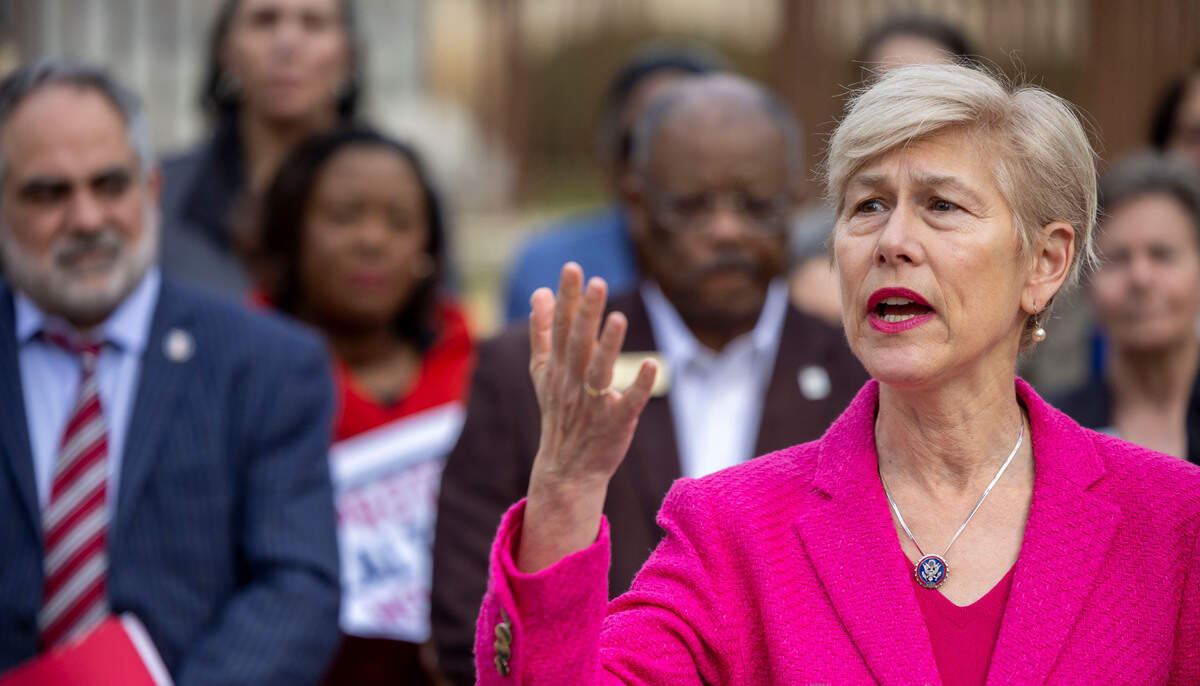
The Congress Committee on Science, Space and Tech had the largest House markup on artificial intelligence policy yet, where 10 bill proposals passed unanimously Thursday.
On the committee is U.S. Rep. Deborah Ross of North Carolina, who introduced a bipartisan bill, alongside two other representatives, that would create a voluntary federal reporting program through which AI developers can disclose vulnerabilities in their model to resolve any flaws without punishment.
The bill, called the AI Flaw Reporting and Security Enhancement Act, would coordinate efforts with the National Institute of Standards and Technology (NIST), which operates a global database that is used to identify and address cybersecurity vulnerabilities. NIST would create similar processes for the reporting of AI flaws and assist the private sector with developing methods for detecting, monitoring and remediating AI flaws.
Additionally, the bill would direct NIST to study these AI flaws alongside stakeholders and submit its funding to Congress within three years.
AI is still new technology
AI is still a new technology being researched, Ross said, noting the bill is intended to be flexible for that reason.
“As NIST starts to develop this database and see things that happen regularly, or things that are particularly malicious, malicious, they will be able to give people help and advice with it. This is more an enabling kind of legislation, which hopefully will get funded, rather than a prescriptive legislation that says you must do this.”
Ross said it’s a problem that there isn’t a law that can ensure companies don’t hide serious AI flaws. It will be up to NIST to coordinate with the developer who reported the AI flaw to disclose it publicly. However, as Ross said, the first step with this legislation is to create a system where companies can safely report issues.
“There are some bills that require certain things of AI, but right now we’re working on all these different bills for AI, and there’s no uniform consensus on them, and so what we want is to get as much trust so that they want to do it,” Ross said. “Anthropic has been very good about this, but they learned the hard way. They’ve been sued and lost lawsuits, and so they tend to be the ones that are more likely to do no harm.”
Another bill backed by Deborah Ross
Another bill on the docket backed by Ross is the Create AI Act that lets the National Science Foundation (NSF) develop a full-scale research program for public access. She also supports a proposal called the Literacy in Future Technologies that would authorize the NSF to improve K-12 education in AI.
Ross said these bills could go through the Rules Committee, but because they all passed unanimously during markup, it will likely be placed on the suspension calendar. Under the suspension process, a bill passes if it receives two-thirds vote, allowing it to bypass the Rules Committee.
This story was originally published June 26, 2026 at 4:23 PM.