Stein vetoes ‘poorly constructed’ bill banning homeless encampments statewide
AI-generated summary reviewed by our newsroom.
- Gov. Josh Stein vetoed a bill that would have banned homeless encampments statewide.
- Selling or delivering drugs in drug-free service zones would be Class E felonies.
- Nonprofits, faith and elected leaders said it imposed significant unfunded mandates.
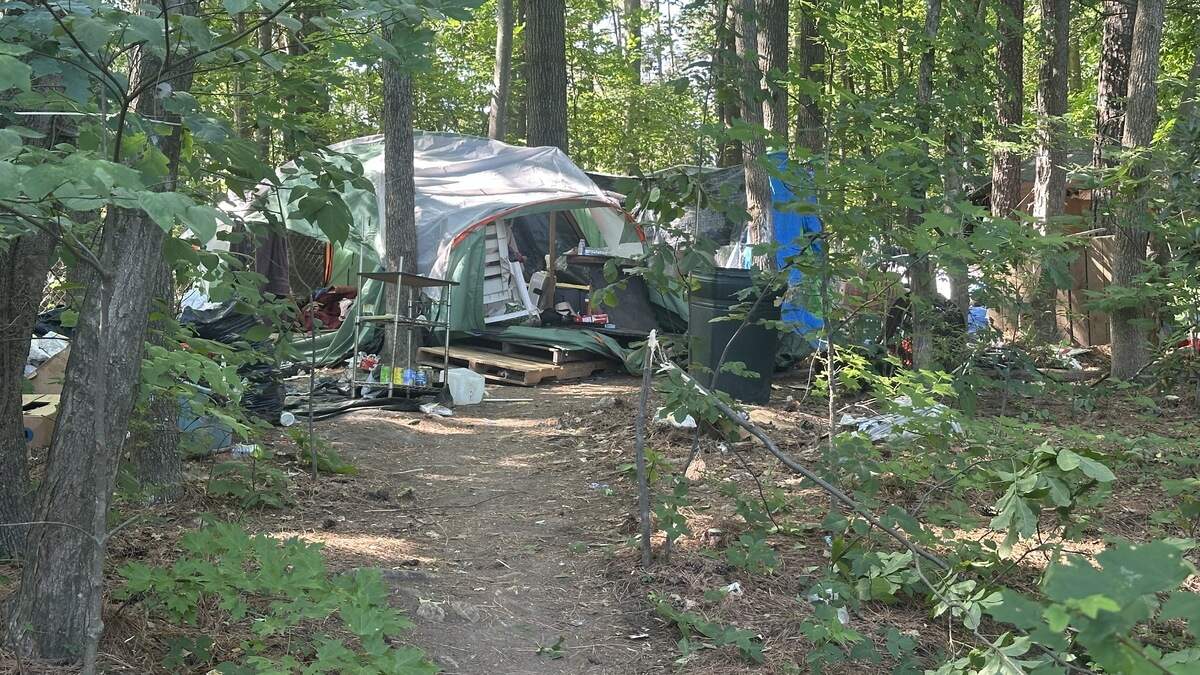
North Carolina Gov. Josh Stein on Wednesday vetoed a bill that would have largely banned homeless camps and public sleeping statewide.
The bill would have also established drug-free service zones for people without housing, and make selling or delivering drugs in those zones Class E felonies.
The Democratic governor in a press release said the “poorly constructed” bill would make it harder for people experiencing homelessness to “get back on their feet and live in safe, affordable housing.” He said it would create a “significant” unfunded mandate for local governments.
“The bill also fundamentally misunderstands how people suffering from addiction get healthy,” he said. “If government threatens criminal liability against those who seek treatment and against the people, organizations, and churches trying to help them, government stands in the way of services that promote health and safety, and people’s problems are made worse.”
Across the state, homeless encampments are regulated through local laws. Encampments are currently banned on public property in Raleigh, and the city has removed a few over the past couple of years.
A group of nonprofit homeless service organizations, local faith and elected leaders, and advocates co-signed a statement in support of Stein’s veto, writing that there was concern over “significant new responsibilities on local governments and community organizations without providing the resources necessary to effectively address homelessness.”
Liz Carbone, who leads advocacy efforts for the North Carolina Coalition to End Homelessness, said criminalizing public sleeping “does not create housing, treatment options, or shelter beds.”
Despite Stein’s veto, the bill is not tabled completely. Republicans have a supermajority in the Senate and, with help from a couple Democratic or independent House members needed to secure a three-fifths majority, can override his veto.
The bill initially passed the state House without the ban on homeless encampments. Sen. Brad Overcash, a Belmont Republican, added the provision when the bill made its way to the Senate.
Overcash has said it would increase public safety and improve economic vitality.
Some Democratic lawmakers and advocacy organizations criticized the bill throughout its journey through the Republican-controlled state legislature, saying it does not address root causes of homelessness.
Bill specifics
The House passed HB 437 last year with a vote of 76-36. Nine House Democrats voted in favor.
When the new version was brought to the Senate last month, lawmakers voted 26-16 to advance the bill. No Democrats voted in favor.
The bill does include an exception to a total ban on public sleeping. Local governments, through a majority vote, could designate property specifically for that purpose, ensuring access to bathrooms, running water, mental health and substance abuse treatments.
Overcash said local residents can petition their governments to comply with the bill. If they fail to comply, residents or business owners can petition North Carolina’s superior courts for an injunction to force adherence to the provisions.
Lawmakers debated the bill as it passed through House and Senate committees.
Sen. Julie Mayfield, a Buncombe County Democrat, previously asked Overcash if the city of Asheville would be required to take further actions against homeless encampments since an ordinance already prohibits them.
He said he understands the city already has an ordinance, but “it has failed.”
“It has failed in the city of Asheville, senator. It has failed in the city of Gastonia. It has failed in Charlotte. It’s failed from Murphy to Manteo,” Overcash said in committee. “This law will correct that.”
Rep. Brian Biggs, a Trinity Republican, previously said the bill will address homelessness at its root causes. He said federal funding is available to help local governments.
In June, the federal government announced a competitive funding program that criticizes what is known as the housing-first model, saying that the “status quo perpetuates addiction in taxpayer-funded homelessness assistance programs in violation of Federal Law.” The Department of Housing and Human Development also encourages communities “to address the unsafe realities of encampments,” but does not specify how.
Stephanie Watkins-Cruz, the director of housing policy for the North Carolina Housing Coalition, previously told lawmakers in committee that the funding mentioned is “not only competitive, it’s uncertain.”
“Disbursement would be years away,” she said. “And historically, no matter the administration, it has been inconsistent.”
Stein said he has “long called” for funding to invest in affordable housing options, reduce drug trafficking and increase behavioral health services “because homelessness and substance misuse are real problems that deserve real solutions, not this bill.”
This story was originally published July 8, 2026 at 11:09 AM.