
‘Funk in the river’? Here’s why water in parts of Jordan Lake is a freaky green color
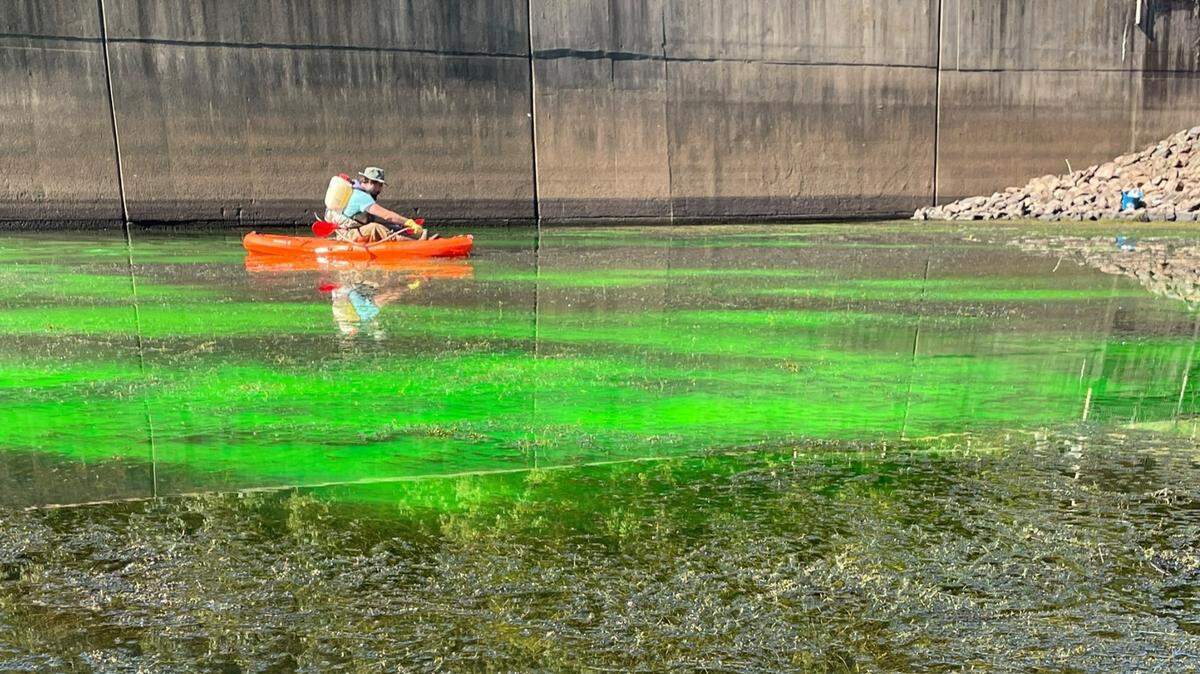
Visitors to B. Everett Jordan Lake west of Raleigh may encounter freakishly green water, and the U.S. Army Corps of Engineers is taking responsibility for the alarming development.
A photo shared on social media shows the toxic-looking spots are surprisingly broad and bright. The lake is a reservoir that covers a massive 14,000 acres in Chatham County, the state says.
“What’s that funk in the river?! Don’t worry, no one downstream will be turning into The Incredible Hulk anytime soon,” lake officials wrote Tuesday on Facebook.
“We just had to treat a really nasty aquatic invasive plant species that’s taken root down at the tailrace. The only effective way to treat this stuff when not in a self contained water body is with an EPA approved herbicide.”
The color is generated by an “eco-friendly dye” that helps experts trace where the herbicide has spread in the water. The herbicide was applied with the help of the N.C. Department of Environmental Quality, officials said.
“It’s important that we treat this because from here it could spread further downstream of the Haw River and elsewhere,” lake officials said.
“The species in question, hydrilla, can become so abundant that it blocks waterways, out competes local plant species, and makes the area inhabitable for fish. Hydrilla is one of the most invasive aquatic weeds in the world and is commonly seen forming thick colonies or mats.”
The floating plant is native to Korea and was sold in the United States as part of “the aquarium trade,” according to the Cornell Cooperative Extension. It is aggressive, fast growing and alters water chemistry, resulting in fish kills, experts say.
It was first detected in Wake County “around 1980” and has since spread across the state, lake officials say.
“The State of North Carolina recognizes hydrilla as a noxious aquatic weed; it is illegal to culture, transport, and sell this plant,” officials said.
It is suspected the plant made its way into Jordan Lake via a boat or fishing tackle that had come into contact with the plant in another body of water, officials said.
This story was originally published October 20, 2021 at 7:28 AM.