Corporate landlords used ‘abusive tactics’ to evict tenants despite pandemic eviction ban
READ MORE
Security For Sale: Converting NC homes to rentals
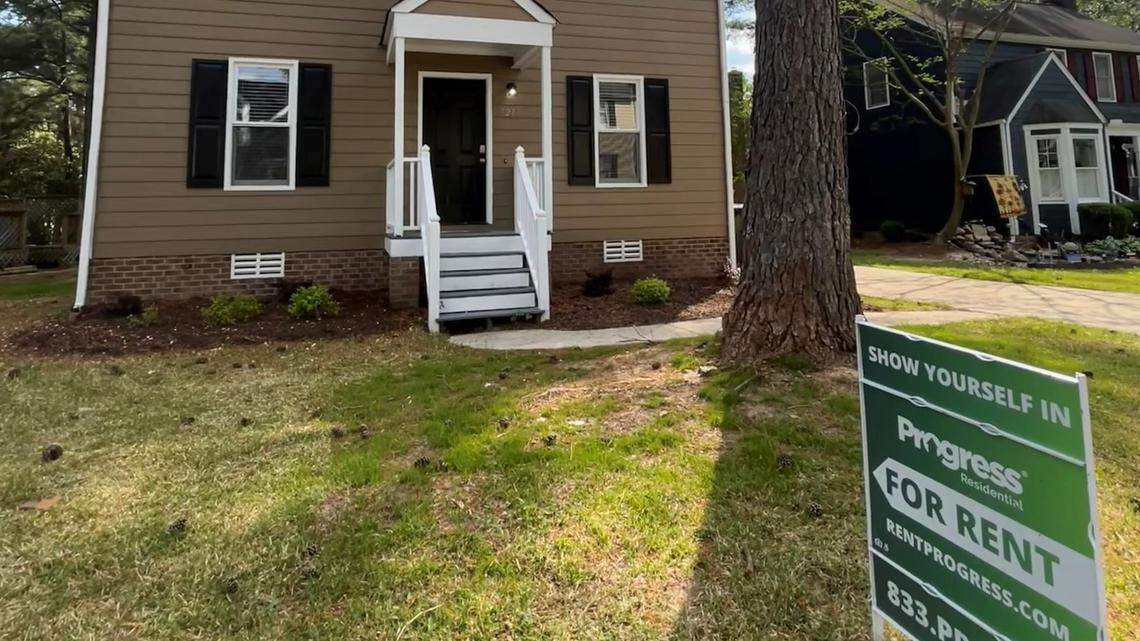
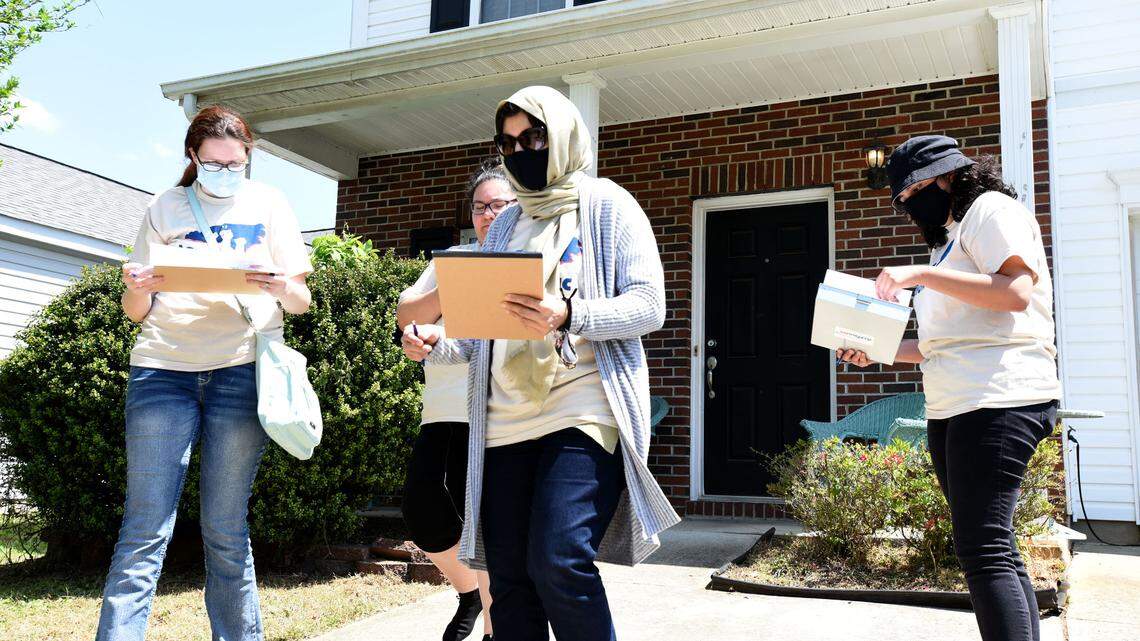
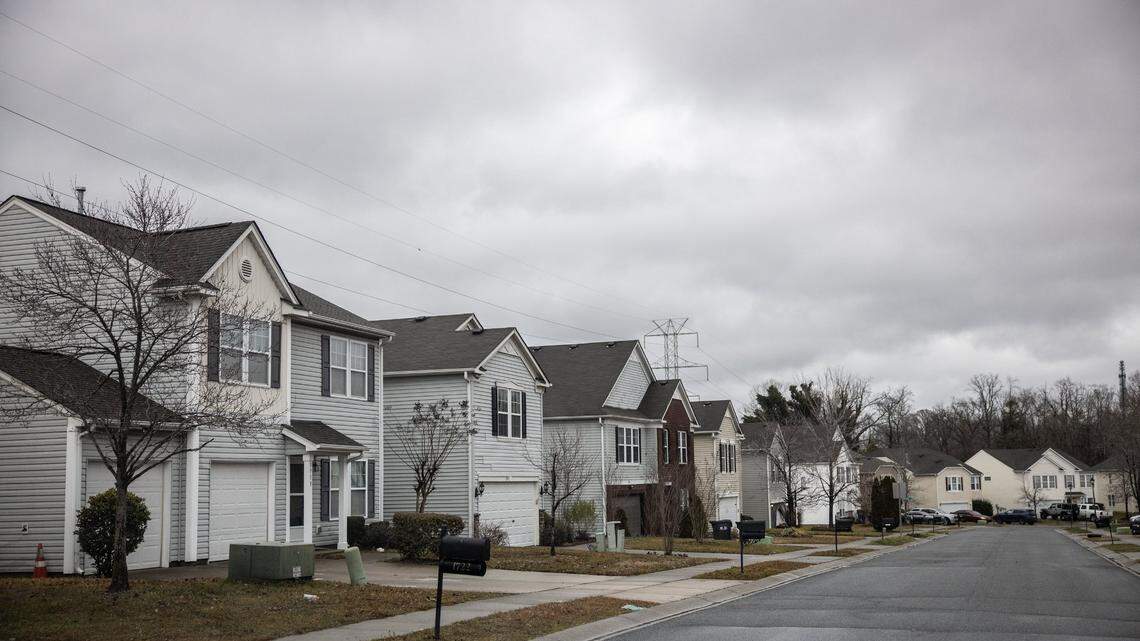
Institutional investors have bought at least 40,000 single-family homes across North Carolina in the past decade and now rent them out. The industry — primed for continued growth — says it improved the rental experience, providing safe, affordable houses that were previously inaccessible to renters. But owning a house traditionally offered financial security for most American families. And our investigation finds the business model of these companies is finely tuned to squeeze profit from the homes, often to the detriment of renters, neighbors or other would-be buyers.
Expand All
During the first 16 months of the coronavirus pandemic, when the federal government imposed a ban on evictions, five corporate landlords engaged in “abusive” and, in at least one case, potentially illegal tactics to try to force people from their homes, according to a congressional probe.
The report, released last week by the U.S. House Select Subcommittee on the Coronavirus Crisis, detailed efforts by corporate landlords to evict tenants in multiple states while a deadly virus, not yet slowed by vaccines, ravaged the country.
Invitation Homes, Progress Residential and Front Yard Residential, which almost exclusively rent single-family homes, and The Siegel Group and Ventron Management, which rent apartments, are the landlords named.
Between March 2020 and July 2021 – when the federal eviction moratorium was in effect – these landlords filed nearly 15,000 evictions at a time the federal government took action to keep people housed and healthy, according to the report.
While actions against tenants in North Carolina aren’t specified in the report, civil court data analyzed by The Charlotte Observer and The News & Observer following its release shows that Invitation Homes, Progress Residential and Front Yard Residential filed hundreds of evictions in North Carolina during the federal moratorium.
In some cases, the congressional report said, companies deceived and bullied tenants, declined to accept rental assistance or filed evictions against tenants waiting for such assistance. This behavior occurred as the landlords raked in record profits or otherwise grew their businesses, the report said.
“Rather than working with cost-burdened tenants, abiding by applicable eviction moratoriums, and accepting federal rental assistance, these companies – with properties across 28 states – expedited evictions above all else,” said Rep. James Clyburn, a South Carolina Democrat and the subcommittee chairman, in a statement Thursday.
The companies may have violated the law in some cases, said Clyburn, who has referred the findings to federal and state agencies for investigation and potential enforcement.
“These companies must be held accountable, and we must work to ensure that future emergencies do not result in further egregious evictions,” he said.
Growing industry, growing criticism
These findings come as corporate landlords, particularly those that convert single-family homes to rentals, find themselves under increasing scrutiny in North Carolina and across the country. Calls for regulation of the industry are growing, from tenants up to members of Congress.

Security for Sale, an investigation published in May by The Observer and News & Observer, found that in the past decade corporate landlords bought more than 40,000 single-family homes across North Carolina, largely in the Charlotte and Raleigh areas. In Mecklenburg County, the 20 biggest landlords – including Invitation Homes, Progress Residential and Front Yard Residential – own one-quarter of rental houses and 5% of all homes.
These companies use nearly unlimited cash to outcompete traditional homebuyers, largely for houses typically considered to be starter homes, the investigation found. The companies are often quick to file for eviction and slow to address issues at their houses, sometimes hurting their tenants, according to the reporting.
The landlords have maintained that they offer safe rental houses in areas where people want to live. A representative for the corporate home-rental industry, along with its individual companies, rejected the notion that it did anything improper during the early days of the pandemic.
“The reality is eviction is always a last resort,” said David Howard, executive director of the National Rental Home Council. “Many residents experiencing hardship were offered payment plans and opportunities for extended support; the companies worked proactively with residents to access government rental assistance funds.”
Report details aggressive moves
But industry statements are at odds with what the congressional subcommittee found.
To prevent what it feared could become a catastrophic housing crisis spurred by COVID-19, the federal government in March 2020 imposed the eviction moratorium and ultimately set aside nearly $50 billion in rental assistance.
The congressional report says that during the moratorium Pretium Partners, the parent company of both Progress Residential and Front Yard Residential, was starting eviction proceedings against tenants after they were as little as $500 or $1,000 behind on rent.
Both Pretium and Invitation would file for eviction against tenants waiting on pandemic financial assistance, the subcommittee found. Pretium’s policies only directed employees to hold off on eviction proceedings if a tenant could show they filed for assistance within the last 30 days, even though it was often taking longer than that to receive the money.
Invitation told the subcommittee that the company would still file for eviction if it determined tenants awaiting assistance weren’t being communicative about their situation.
The subcommittee also found that both Pretium and Invitation would turn down tenant rental assistance requiring their approval if the companies deemed it wouldn’t be sufficient to cover outstanding rent.
Invitation Homes declined to participate in a rental assistance program in Orange County, Florida because the county’s $4,000 maximum payment was considered not worthwhile, the report says. Pretium’s policies directed employees to decline rental assistance offers of less than $1,000 or less than 50% of what the tenant owed, the subcommittee found.
Invitation also allegedly misrepresented its eviction practices to Fannie Mae, the government-backed agency that loaned the company $1 billion in 2017. Invitation told agency representatives in March 2021 that only 6% of its eviction filings in the previous six months resulted in tenants losing their housing. But the company’s own data showed about 27% of tenants lost their housing, either by removal or by vacating the home after an eviction was filed, the report says.
Clyburn, the chairman of the subcommittee, last week sent a letter to Fannie Mae recommending the agency reconsider its financial relationship with Invitation Homes.
Kristi DesJarlais, a spokeswoman for Invitation Homes, said that, during the pandemic, Invitation helped more than 33,000 tenants who needed extra time or financial assistance, spending nearly $175 million.
“The report clearly states that we did not engage in practices that were unlawful, a fact we know quite well since we work hard to follow the laws in all of our markets,” DesJarlais said in her statement. “We have always worked with our residents to keep them in their homes, and we will continue to do so.”
Progress struck a similar note.
“As we have affirmed publicly on numerous occasions, we have always complied with the CDC moratorium – no resident covered by a valid CDC declaration has ever been evicted from our homes for non-payment of rent,” wrote Nikki Sloup, a Progress Residential spokesperson, in an emailed statement. “In fact, we had voluntarily extended the CDC moratorium for residents covered by valid CDC declarations beyond its expiration. Nothing in (Thursday’s) report takes issue with either of these facts.”
The report did find, however, that Pretium and Invitation combined to file more than 9,000 evictions between March 2020 and July 2021. State records show corporate landlords submitted eviction filings in North Carolina during that time.
Filings in NC records
The Observer and News & Observer analysis of North Carolina court data shows that, combined, Invitation Homes, Progress Residential and Front Yard Residential filed hundreds of eviction cases against tenants across the state during the eviction moratorium. It’s unclear, however, how many of those cases may have violated moratorium rules or how many resulted in people losing their housing.
The federal moratorium ran March 15, 2020, through July 31, 2021. The state’s own eviction moratorium ended shortly before, on July 1.
Laura Brewer, a spokesperson for North Carolina Attorney General Josh Stein, said their office is reviewing the subcommittee report, including whether the N.C. Department of Justice has jurisdiction over potential issues for tenants impacted here.
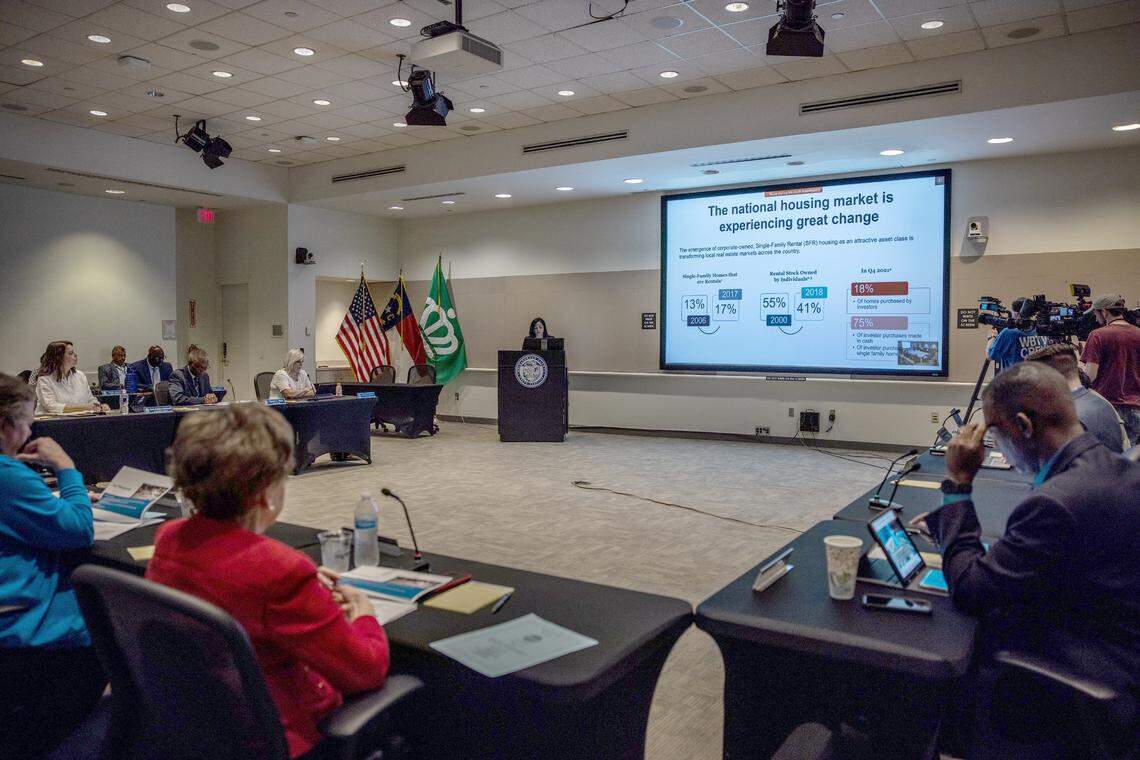
The Mecklenburg Board of County Commissioners last month set aside $500,000 in its budget to continue studying how to address corporate landlords.
“They’re unresponsive and the only time people are getting responses is when it comes to rent collection and the money,” Commissioner Mark Jerrell, who represents District 4, said, referring to corporate landlords. “Beyond that, folks are finding it difficult to get any level of response from these folks. Their goal is the bottom line and the profits.”
Apartment landlord called ‘abusive’
While the report calls the behavior of the corporate landlords “abusive,” more egregious is what The Siegel Group allegedly did in the early days of the pandemic.
Siegel executives attempted to “bluff tenants out of their apartments by ordering that subordinates post and distribute copies of a court order holding that the CDC lacked authority to impose the eviction moratorium — deliberately hiding the fact that the court had also ordered that the moratorium’s protections would remain in effect as the case was appealed,” the report states.
In one case, a Siegel official suggested that they call Child Protective Services on a past due tenant even though the official said he did not know anything about the tenant, a move the report called “unlawful”. That same official also suggested Siegel employees could get rid of the tenant by having security knock on her door during the night and replace her air conditioner with one that didn’t work.
Clyburn sent letters about Siegel’s conduct to both the Federal Trade Commission and the Consumer Financial Protection Bureau, asking both agencies to investigate whether the company violated federal law.
Siegel issued a statement on Thursday pushing back, but did not dispute the substance of the report.
“While we have read today’s report, we were surprised it was issued without being called or interviewed for the report,” Sean Theuson, the company’s executive vice president and general counsel, said in a statement. “That said, The Siegel Group has and always will try to run the most dignified rental housing business we can, all while still dealing with some of the most difficult issues facing communities around this great country. The Siegel Group has at all times been committed to abiding by the letter and the spirit of the law applicable to our operations.”
Kathryn Sabbeth, a professor at the University of North Carolina School of Law who specializes in housing and eviction, said the report details unlawful and deceptive practices involving both informal and formal efforts to evict tenants.
“Both of those pieces — the harassment and formal evictions — are very troubling,” Sabbeth said.
These aren’t just mom-and-pop landlords, Sabbeth said, adding that the report makes it clear that it’s not just a few bad apples in the industry.
“We’re talking about corporate executives making intentional decisions to direct those below them to violate federal law to increase profit at a time when people are suffering enormously,” Sabbeth said.
Sabbeth said she found the false reports to child protective services “particularly galling.”
“It’s really designed to terrorize people, quite intentionally, because that terror translates to profit,” Sabbeth said.
This story was originally published August 1, 2022 at 6:00 AM with the headline "Corporate landlords used ‘abusive tactics’ to evict tenants despite pandemic eviction ban."