
EPA proposes first-ever PFAS limits for drinking water — barely above zero
The EPA has proposed the first-ever drinking water standards for two “forever chemicals” and a mixture of four others that the agency says mark a milestone in its effort to protect public health against the substances.
Tuesday, the agency announced that it is proposing a maximum contaminant level, or a limit, of four parts per trillion for either PFOA or PFOS in drinking water. In effect, the agency is saying that if the chemicals can be detected, there is too much in the water. Both chemicals were used in a widespread manner for decades and are still being found in drinking water despite being largely phased out.
Additionally, the agency is proposing an index for for other PFAS including GenX chemicals PFBS, PFHxS and PFNA. Water providers would consider the amounts of all four chemicals and add them together to determine if the amounts in their water pose a risk to human health. If water systems detect any chemical above the proposed limits, they would need to notify the public.
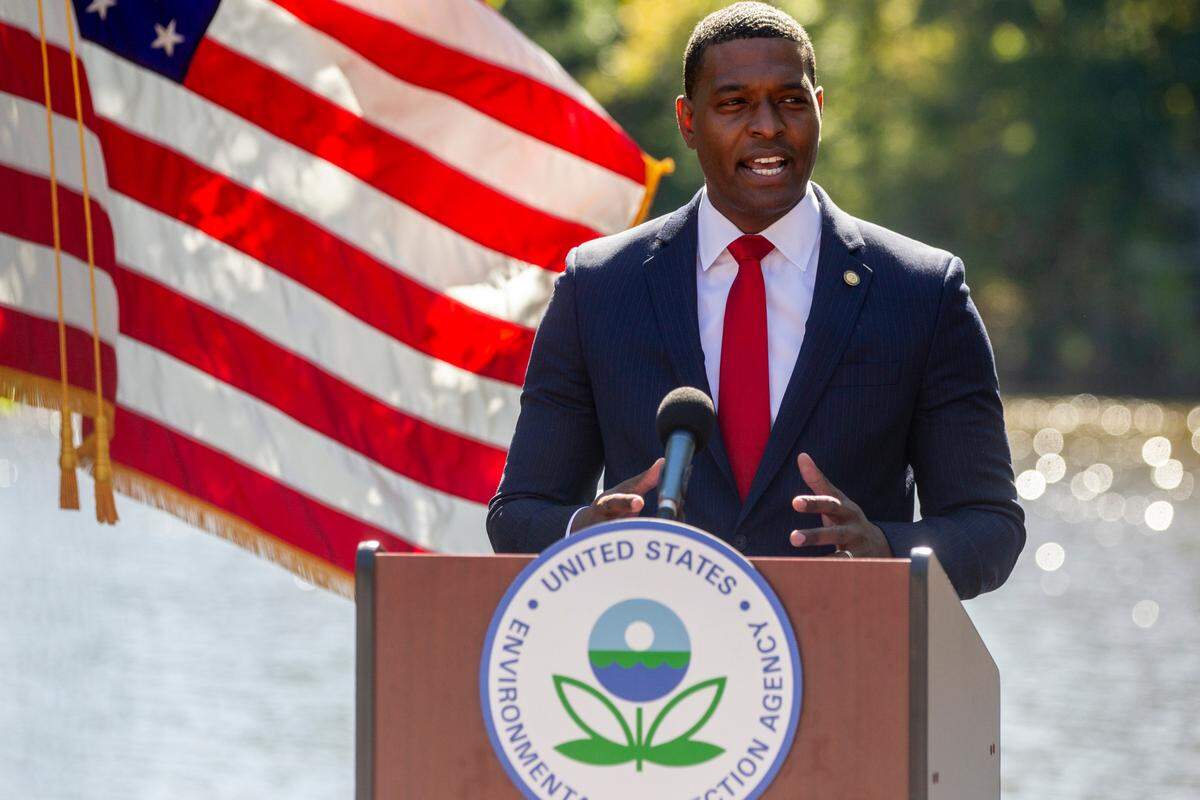
“This is a transformative rule. This is very aggressive, very stringent and very protective of public health,” EPA Administrator Michael Regan told The News & Observer.
Per- and polyfluoroalkyl substances, also known as PFAS, are a class of chemicals that have been found in drinking water throughout the country. The chemicals are valuable to industrial users because they are very durable, but that same trait means they persist in the environment, lending them their “forever chemical” nickname.
The rule proposed Tuesday will prevent “thousands of deaths and reduce tens of thousands of serious PFAS-attributable illnesses,” the EPA wrote in a press release. The agency expects the rule to be finalized and effective by the end of 2023, and drinking water utilities will have three years to come into compliance.
“We all deserve access to health-protective drinking water. It’s a basic human right. We applaud the Biden EPA for having the courage to do what multiple administrations could not. Today, prayers were answered,” Emily Donovan, the founder of Clean Cape Fear, stated in the EPA press release.
The American Chemistry Council, a trade group of organizations that develop and sell chemicals, hit back at Tuesday’s proposed rule.
A spokesman wrote that while its members support restrictions on PFOA and PFOS, they question the EPA’s underlying scientific assumptions and believe the agency’s approach is “overly conservative.” The statement noted that the World Health Organization has set provisional health guidelines of 100 parts per trillion for PFOA and PFOS and 500 ppt for all other measurable PFAS.
“The EPA’s misguided approach to these MCLs is important, as these low limits will likely result in billions of dollars in compliance costs. The proposals have important implications for broader drinking water policy priorities and resources, so it’s critical that EPA gets the science right,” wrote Tom Flanagin, the American Chemistry Council spokesman.
Testing in North Carolina
In North Carolina, 2019 sampling found 50 county or municipal water systems that had PFOA, PFOS or GenX levels above health advisory levels the EPA announced last summer.
From September to November 2022, the N.C. Department of Environmental Quality returned to those utilities to sample again to prepare for the anticipated regulation. Those samples found more than 30 utilities had either PFOA or PFOS levels above the proposed limits.
“Having clear direction on national drinking water standards supports DEQ’s work with public water systems to protect the people of North Carolina,” Secretary Elizabeth Biser wrote in a statement.
Environmental groups continued Tuesday to emphasize that the best way to protect drinking water is to prevent PFAS from entering the environment in the first place by controlling contamination at the source. Geoff Gisler, a senior attorney at the Southern Environmental Law Center, said in a statement that the EPA already requires sources to say what PFAS they are discharging and that agencies like DEQ are responsible for using permits to reduce those discharges.
“If those existing laws are enforced, drinking water utilities will be able to meet these standards and keep our communities safe from the PFAS covered by today’s announcement and others that are not,” Gisler wrote.
Money available but ‘not enough’
Regan was serving as secretary of North Carolina’s DEQ when the public learned that Chemours — and DuPont before it — had been contaminating the Cape Fear River with PFAS for decades. The river is a drinking water source for hundreds of thousands of people in the Wilmington area, and research showed that common drinking water filtration devices did not remove the chemicals.
Tuesday, Regan visited Wilmington to announce the new limits.
Under Regan’s leadership, the EPA has frequently turned to North Carolina for significant PFAS announcements.
In February, Regan visited Maysville to announce the agency was releasing $2 billion in funding to help drinking water utilities treat emerging contaminants like PFAS. And last June, Radhika Fox, the agency’s assistant administrator for water, was in Wilmington when she announced the EPA was slashing health advisory levels for PFOA and PFOS to virtually zero and GenX chemicals to 10 ppt.
Utilities could turn to grants provided from the Bipartisan Infrastructure Law to fund some improvements. The legislation includes $50 billion to upgrade water infrastructure, including $5 billion specifically targeted to help utilities remove PFAS from drinking water.
Regan acknowledges that while that is a historic investment, it likely won’t be able to pay for all of the needed upgrades.
“The amount of money is a significant shot in the arm, but it’s not enough,” Regan said. “Of the $50 billion that we received from the Bipartisan Infrastructure Law, we know that that’s an historic amount of resources to tackle the water infrastructure challenges based in this country but we know the need exceeds that.”
This story was produced with financial support from 1Earth Fund, in partnership with Journalism Funding Partners, as part of an independent journalism fellowship program. The N&O maintains full editorial control of the work.
This story was originally published March 14, 2023 at 12:09 PM.