Countering violent hate groups and saving democracy takes hearts, minds, eyes and ears
READ MORE
Hate on the rise
This special report covers how dangerous rhetoric is spreading across North Carolina and the United States, and what can be done about it.
Expand All
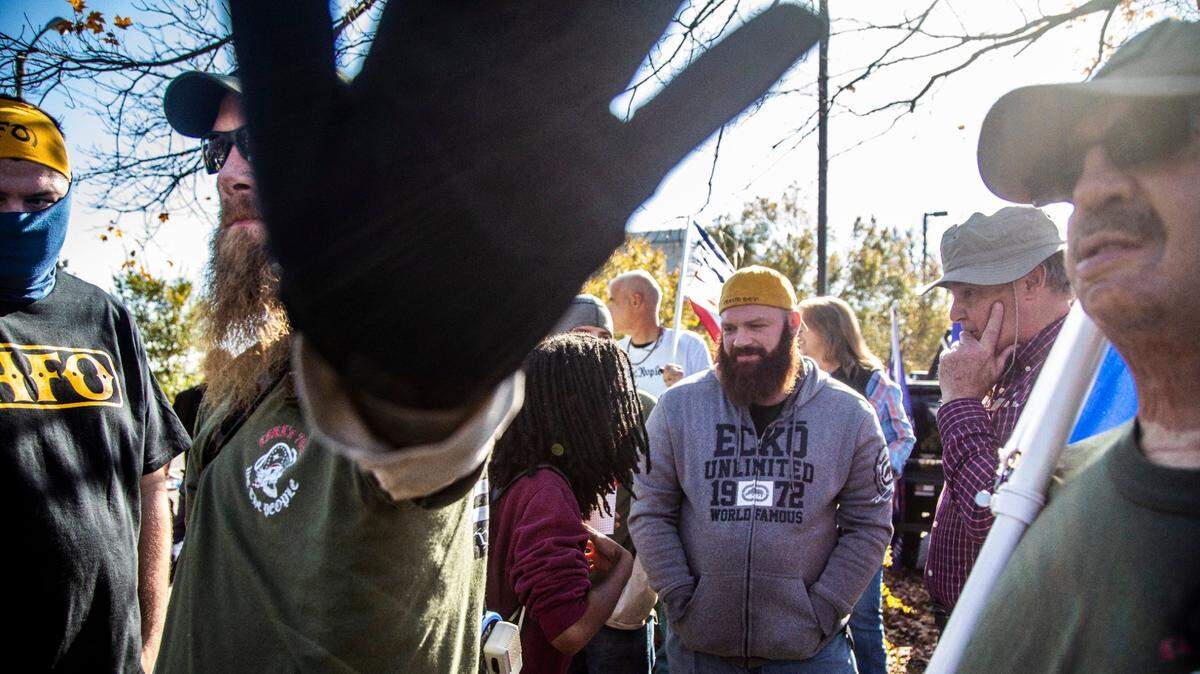
It would be nearly impossible to harden every potential infrastructure target or disrupt every attack planned by “accelerationists,” extremists who hope to wreak enough havoc to collapse American society so it can be rebuilt as their white-supremacist utopia.
But it may be possible to thwart those hate groups by focusing on hearts and minds, eyes and ears.
Better reporting
Meredith Weisel, regional director of the Anti-Defamation League’s Washington office, said she always advises against confronting extremists at protests, marches or other events where they spread propaganda or try to recruit members.
But if extremists break the law — by harassing or assaulting people, damaging property, trespassing — witnesses should contact local law enforcement, Weisel said. Estimates are that only about a third of hate crimes get reported, and Weisel said better reporting is essential to understanding what extremist groups are in play, what they espouse and what tactics they use.
To report an anti-Semitic incident to the Anti-Defamation League, go to the ADL’s website. (www.adl.org/report-incident)
Hate crimes and incidents also can be reported to the FBI, either online (https://tips.fbi.gov/) or by calling 1-800-CALL-FBI. Information can be submitted anonymously.
Stand with others
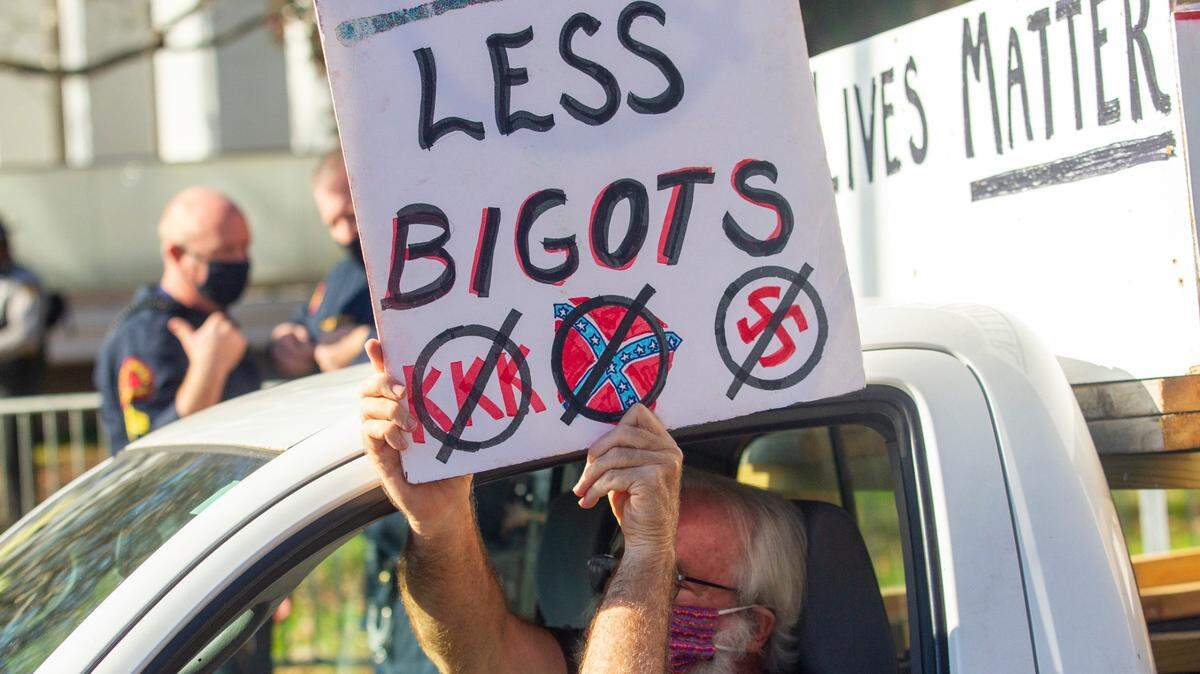
Standing with others against extremism can discourage hate-mongering and violence, experts say, by showing that radical behavior is unwelcome and that violence is not an acceptable solution to problems.
After the protests against a drag show in Southern Pines and the hanging of racist, homophobic banners from two bridges that cross U.S. Highway 1 in Moore County in the weeks that followed the December attacks on power substations there, a group of religious and civic leaders in the town of Vass formed the Sandhills Coalition for Peace, Love and Justice.
In a letter announcing a “Take Back the Bridge” event in February, organizers said the group’s mission “is to act as a positive force against discrimination, intolerance, and hatred of all kinds through education and action.”
Guide for parents and teachers
In addition to mapping extremist groups, the Southern Poverty Law Center works with the Polarization and Extremism Research Lab (PERIL) at American University to try to prevent political polarization and violent extremism.
Young people are exposed to extremist ideologies more than many parents realize, experts say, such as through video games, music, social media and online chat rooms. The SPLC and PERIL created a guide for parents, teachers and others to help keep youth from becoming radicalized. It offers warning signs that youth have been reading or listening to extremist views, describes conditions that might make some children more susceptible to radicalization than others and coaches adults on how to talk with children and educate them about ways extremists might try to manipulate them.
Build connections
Working on the premise that it’s harder to hate people with whom you have a relationship, Phil Brodsky, CEO of the Jewish Federation of Raleigh, is planning an Inter-Community Seder, the second such event the Federation has hosted. It will bring together hundreds of leaders from Wake County government, law enforcement, business, and community and religious organizations.
Brodsky said the event is an opportunity to come together to discuss shared values and stand together against antisemitism.
Research and education
Megan Squire, deputy director for data analytics for the SPLC, says education is crucial in demystifying extremist groups and reducing the disproportionate effect they have.
Her advice: research different groups that are active in the community to find out what they believe and what they do. Extremists count on people being too afraid or too busy to push back, she said. If an extremist group comes to your town or your neighborhood, that’s the place to counter their message of hate by showing support for whomever they’re targeting.
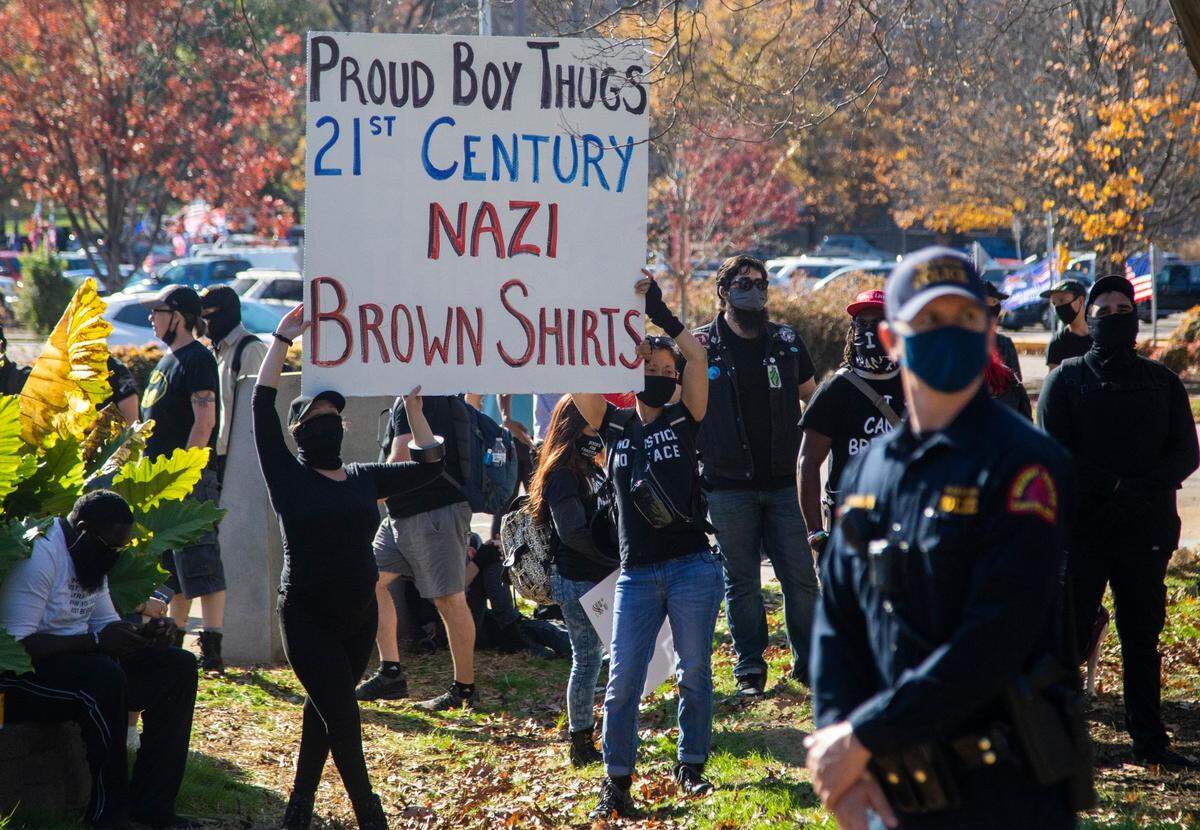
“At the end of the day, if people really do care about their neighbors, if they have an understanding of the U.S. as potentially being an equitable place that really honors human rights and various ways of life, this is where the rubber hits the road,” Squire said. “You’re talking about how these hate groups of maybe just five people, how much power they can have. Well, just five people in a neighborhood can carefully push back. Just as the Proud Boys can have an out-sized sense of power, so can local citizens.
“It kind of pushes both ways.”
This story was originally published March 17, 2023 at 6:00 AM with the headline "Countering violent hate groups and saving democracy takes hearts, minds, eyes and ears."