
NC’s baby copperhead season is here, so you might see some more snakes. What to know
The weather is beginning to cool down in North Carolina, which means newborn copperheads are about to make their debut.
There is a large population of copperheads in North Carolina, which account for more than 90% of venomous snake bites in the state, according to the N.C. Wildlife Resources Commission (NCWRC).
With the upcoming appearance of baby copperheads, The Charlotte Observer spoke to NCWRC biologist Falyn Owens about what they look like, where they live, the likelihood of a bite and how to keep them away from your home.
Here’s what to know about baby copperheads.
.jpg "Newborn Copperhead_Falyn Owens_8-18-2024 (1).jpg")
When are baby copperheads born?
Copperhead mating season begins in spring, and gestation for female copperheads usually lasts until late summer or early fall, when the babies are born, Owens said.
Owens also cleared up a couple of common misconceptions about copperheads, pointing out that some people believe the snakes lay eggs.
“Copperheads give live birth, and there’s no such thing as a copperhead nest, which will hopefully make people feel a little bit better,” she said.
What do baby copperheads look like?
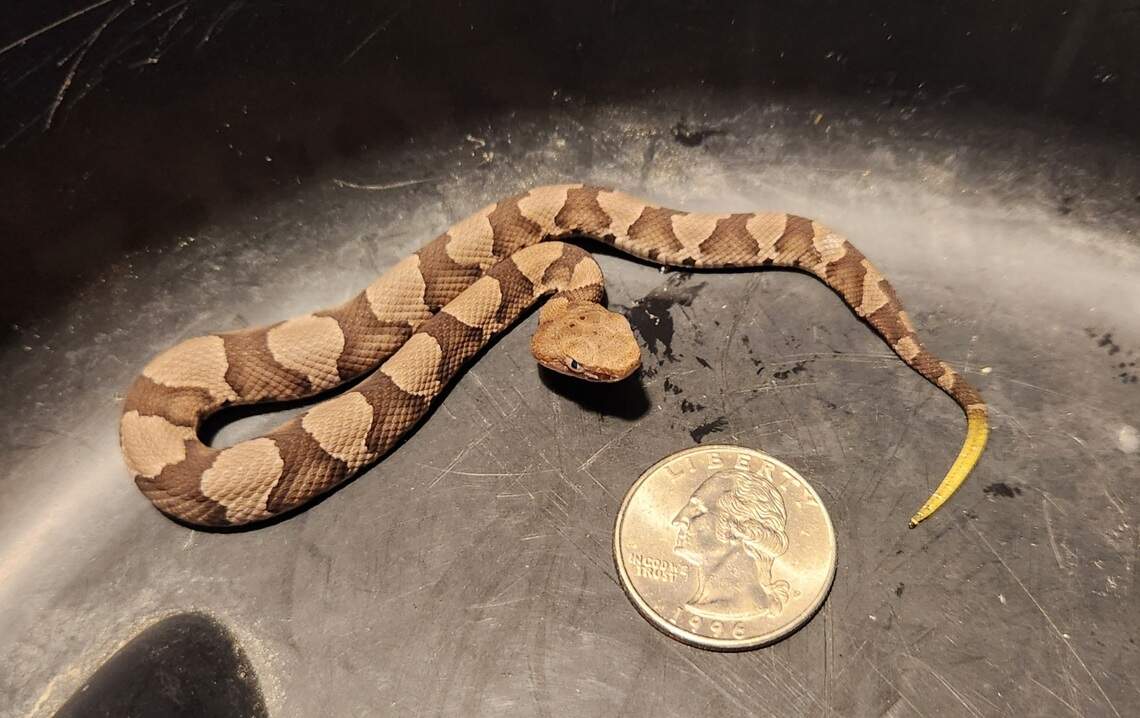
Baby copperheads “look almost exactly like adults,” which makes them easier to identify, Owens said.
“They have the same pattern as the adults, which kind of looks like Hershey Kisses sitting in a row, sort of like dark chocolate triangles in a line over a paler background,” she added.
What sets baby copperheads apart from their parents are their bright neon yellow or green tails they use to attract prey, such as lizards and rodents.
Baby copperheads are also considerably smaller than adults, coming in at around six to eight inches long when they’re first born, Owens said, adding that the snakes are “about the size of a silver dollar” when they’re coiled up.

Where are baby copperheads usually found?
Baby copperheads prefer wooded areas where their prey lives, Owens said – but that doesn’t mean they won’t show up in your yard.
“They do pretty well in mature suburban areas, especially if there’s a lot of very mature landscaping.”
“Even in an urban area, there could be a parking lot that has some bushes and trees and tall grass that hasn’t been mowed, so that could be good habitat for a copperhead.”
Will baby copperheads bite you?
Owens explained that baby copperhead bites — and copperhead bites in general — are rare.
Snakes generally won’t approach humans, so most bites occur when people try to pick them up or try to kill them, N.C. Wildlife Biologist Bret Ladrie previously told the Observer.
“Snakes do not bite people unless they’re defending their life,” Owens said. “So any snake that is not in a situation where it has to defend itself from being stepped on, squished or killed is not going to be a snake that’s that will bite a human being.”
Even if a copperhead does bite, it could be a “dry bite,” which means the snake does inject any venom into the person, Owens said.
What to do if you are bitten by a copperhead?
If you are bitten by a copperhead, you should seek medical attention immediately, Owens said.
“That is because you can’t tell whether or not you’re going to have an adverse reaction,” Owens explained. “You don’t want to take a risk that you assume everything is okay, and then you end up having health issues if you don’t go to a doctor.”
NC Poison Control offers the following advice for those who are bitten by snakes:
Sit down and stay calm.
Gently wash the area with warm, soapy water.
Remove any jewelry or tight clothing near the bite site.
Keep the bitten area still, if possible, and raise it to heart level.
Call NC Poison Control at 1-800-222-1222.
Should you suck out snake bite venom?
No. Home remedies for snake bites, such as cutting the bitten area or sucking the venom out, could make an injury worse.
“You don’t want to do anything to the bite or try to remove the venom. Go to see a doctor, and they’re going to give you the best possible outcome,” she said.
Copperhead bites can be fatal, but their venom isn’t as potent as other snakes in North Carolina, such as the rattlesnake, Owens said.
How to keep copperheads away from your home
Owens said the best ways to keep copperheads away from your home is to clear away any vegetation, such as tall grass or shrubs, and anything that may attract rodents.
“Things like pet food or bird seed can attract rodents, and then the copperheads are going to come and take advantage of the rodents,” Owens said.
Though some may want to attempt to move copperheads away from their home, relocation is not safe for them.
“Most snakes don’t do very well when they’re relocated, because their home is where they they need to be. That’s where they know how to survive,” Owens said.
“When you remove them from their home territory, basically they’re just going to go right back.”
This story was originally published September 4, 2024 at 2:56 PM with the headline "NC’s baby copperhead season is here, so you might see some more snakes. What to know."
