Three NC state parks remain closed indefinitely after Helene, including the largest
The fallen trees that blocked the road in South Mountains State Park are cut up now and piled in the parking lots. The 33-stall barn in the equestrian campground survived untouched by the remnants of Hurricane Helene, as did the bathhouse and most of the sites in the family campground up the road.
But the trails that are the centerpiece of North Carolina’s largest state park are still a mess, as are the dirt and gravel roads park employees use to reach back-country campgrounds and remote areas in emergencies.
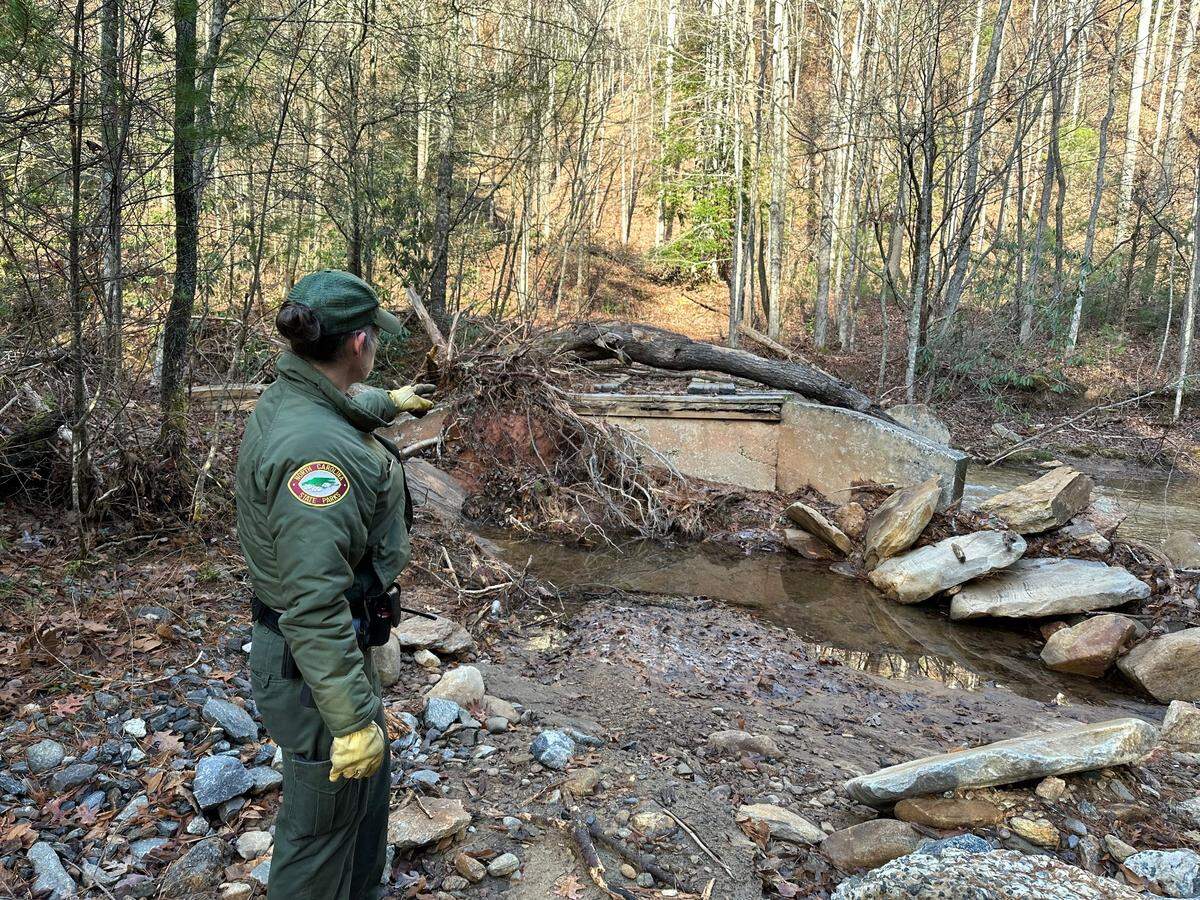
All 50 miles of hiking, equestrian and cycling trails in the 21,000-acre park are cleared of trees. But several remain impassable where rivers and streams washed out bridges or entire sections of the path, says ranger Mary Griffin.
“We also have landslides in the back country that are covering up trails,” Griffin said. “And when trees fall and their root balls come up, they take the trail tread with them, so now we have big holes in the trail.”
After Helene tore through Western North Carolina, the state closed all 13 of its parks west of Interstate 77. Most of them have since reopened, at least partially.
But three parks remain closed indefinitely, with no estimate of when they’ll accept visitors again. Two of them, Chimney Rock and Mount Mitchell, are inaccessible by car because of washed-out roads and bridges just outside the parks.
The third is South Mountains, a rugged expanse of wilderness that last year drew nearly 423,000 hikers, cyclists, equestrians and trout fishermen. The park is southeast of the Blue Ridge Mountains, where Helene was most devastating, but still suffered catastrophic damage.
The park was evacuated before Helene, except for Griffin and another ranger who live there and some equestrians who had fled Florida with their horses ahead of the storm (they left the park the following day). The road, campgrounds and trail heads are in the Jacob Fork River valley, where some flooding is to be expected, Griffin said.
“We were prepared for a storm, but we were not prepared for the magnitude of it,” she said. “We were surprised by the amount of trees down and the amount of water. ... I’ve asked the older timers, and it’s nothing they’ve seen before.”
Much has already been done to get South Mountains ready for visitors again. The splintered wooden walkway and front porch of the Hemlock Trail restroom building have been rebuilt. The picnic tables and bear-proof trash cans crushed by fallen trees nearby are gone, though not yet replaced.
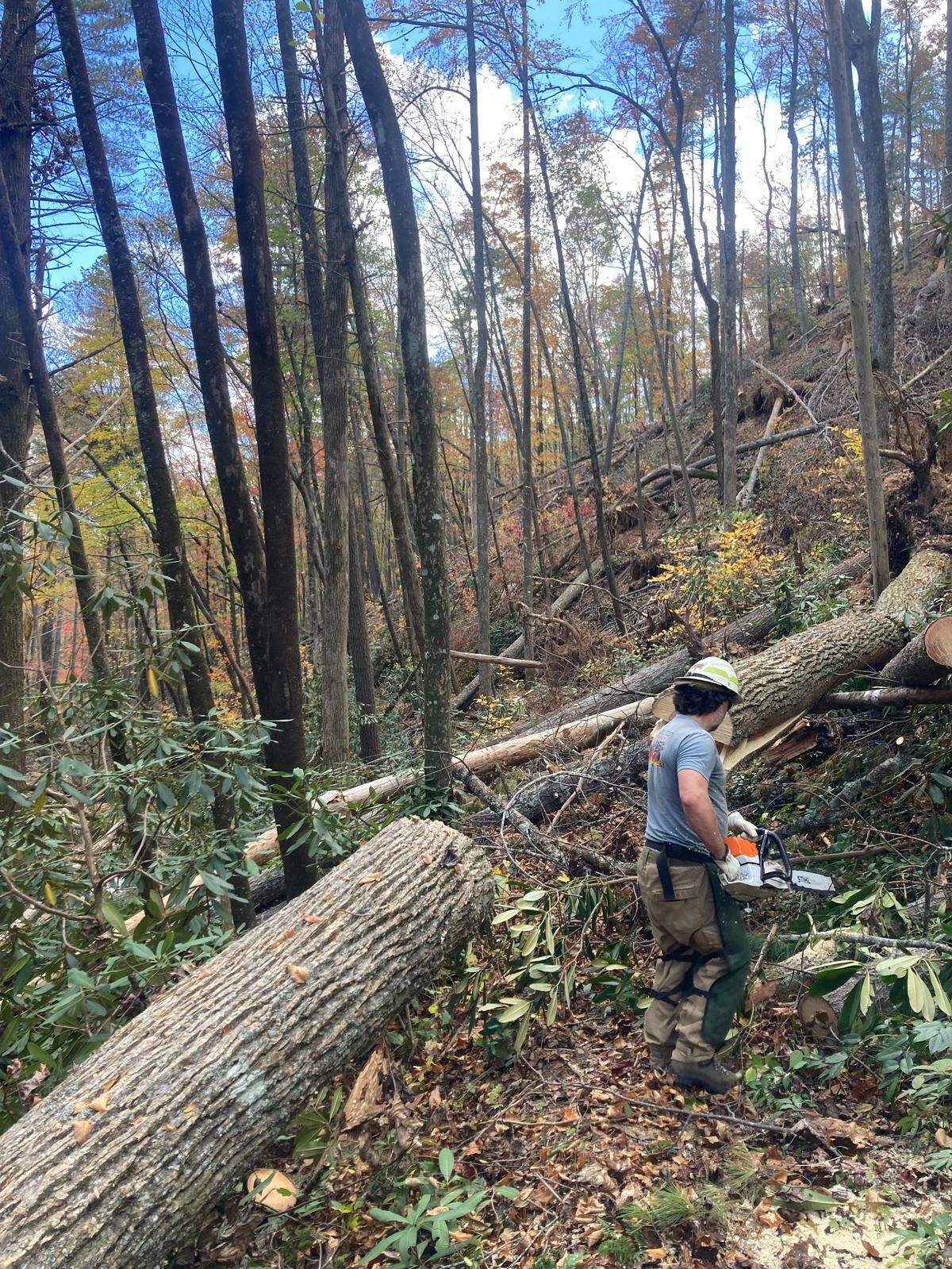
And the two miles of road inside the park looks almost like it did before the storm. A team of people from as far away as Alaska who normally respond to wildfires spent a week here cutting trees from the road and nearby trails.
“One day we had over 100 sawyers from all over the country here working to clear trees,” Griffin said. “It sounded like bees buzzing in the woods.”
A hazard hangs over a popular waterfall
The most popular feature in South Mountains is High Shoals Falls, an 80-foot waterfall about a mile from the main parking lot.
“If you’ve been here, you’ve probably been to the waterfall,” says Lance Huss, who began his parks career as a seasonal employee here in the 1990s and just became superintendent. “That’s what most people do when they come here.”
The trail to the waterfall is in comparatively good shape, with only a few areas washed out or covered with debris.
But a bridge just above the falls, spanning the Jacob Fork, was swept off its piers, leaving its steel frame perched on rocks atop the waterfall and above the viewing platform below. Huss and Griffin don’t know exactly how the I-beams will be removed but suspect it will involve a helicopter.
Griffin said it’s been quiet and “kind of surreal” in the park without visitors. The deer feel freer to roam, but she hasn’t seen trout in the streams and rivers since the storm.
Despite notice of the closure online and signs on the roads leading to the park, people still show up at the gate, particularly on weekends, she said.
“There’s folks still wanting to see the damage,” she said. “But I don’t think they realize how dangerous it is. If they get hurt and we don’t know where they are, we can’t reach them.”
Ten state parks have reopened at least partially
State parks in Western North Carolina remained closed through October because of damage and so rangers could help with storm recovery outside the parks. Five reopened Nov. 1, followed by five more later in the month.
Many of the parks still have some facilities or trails that are not ready for visitors. People are encouraged to check an individual park’s website for the latest information before heading out.
Meanwhile, Chimney Rock State Park will remain closed indefinitely until the bridge into the park over the Rocky Broad River can be rebuilt. Similarly, Mount Mitchell State Park can’t reopen until washed-out sections of the Blue Ridge Parkway are restored on either side of the park’s access road.
This story was originally published December 18, 2024 at 5:30 AM.