Police surveillance, interference detailed after latest Alamance protest settlement
They came to the Alamance County protest for different reasons. A local small business owner taking a stand against the powerful sheriff she disagreed with. A teacher whose student’s father was behind bars on immigration charges. And an aspiring teacher who wanted to help organizers make their point.
Before they arrived in the city of Graham in November 2019, local police had labeled them and hundreds of protesters “suspected subversives” in internal documents, spied on a sign-making event, and had plans to stop what was intended to be a peaceful march, according to interviews, public statements and court documents.
Earlier this month, protesters and their attorneys gathered at North Carolina Central University to celebrate a recently paid $120,000 settlement with Alamance and Graham officials linked to arrests for failing to obey police orders to disperse.
Documents and lawyer interviews with local law enforcement collected before the settlement reveal previously unknown steps Alamance and Graham law enforcement took in advance of the protest, said Scott Holmes, an attorney who represented the nine people who were arrested at the 2019 protest.
Officers not only surveilled some protesters, they “vilified” them in official documents and made plans in advance to stop protesters as they tried to march to the local jail and courthouse, said Holmes, also a professor at NCCU law school and director of its Civil Litigation Clinic.
“We always suspected it, but now we’ve got to look behind the curtain and see how they really think about it and what they do,” said Holmes, who along with Emancipate NC attorney Jaelyn Miller represented five of those arrested in the civil lawsuit.
The surveillance tactics are chilling, but they weren’t illegal, Holmes said. But officials’ plans to stop peaceful demonstrators walking downtown on public sidewalks appear unconstitutional to him, he said.
“The idea you would need a permit to walk on the sidewalks to go downtown, and that is somehow illegal, is just clearly and flagrantly unconstitutional,” Holmes said.
Neither the Alamance County Sheriff’s Office nor Graham Police Department responded to News & Observer requests to discuss the new revelations and accusations.
But in sworn deposition interviews, local officials described things differently. Two Alamance County deputies said they helped Graham officers enforce the city’s now repealed protest ordinance that prevented more than three people from gathering without a permit. The 2019 protest followed other groups that had damaged statues in other places and caused chaos in Graham, they noted.
Alamance Sheriff Major David Sykes in a deposition pointed to a social media post from the group that said protesters planned to “take over the Alamance County Detention Center.”
“I take people at their word, and if that’s what they said they were going to do, then I certainly wasn’t going to just dismiss it,” Sykes said.
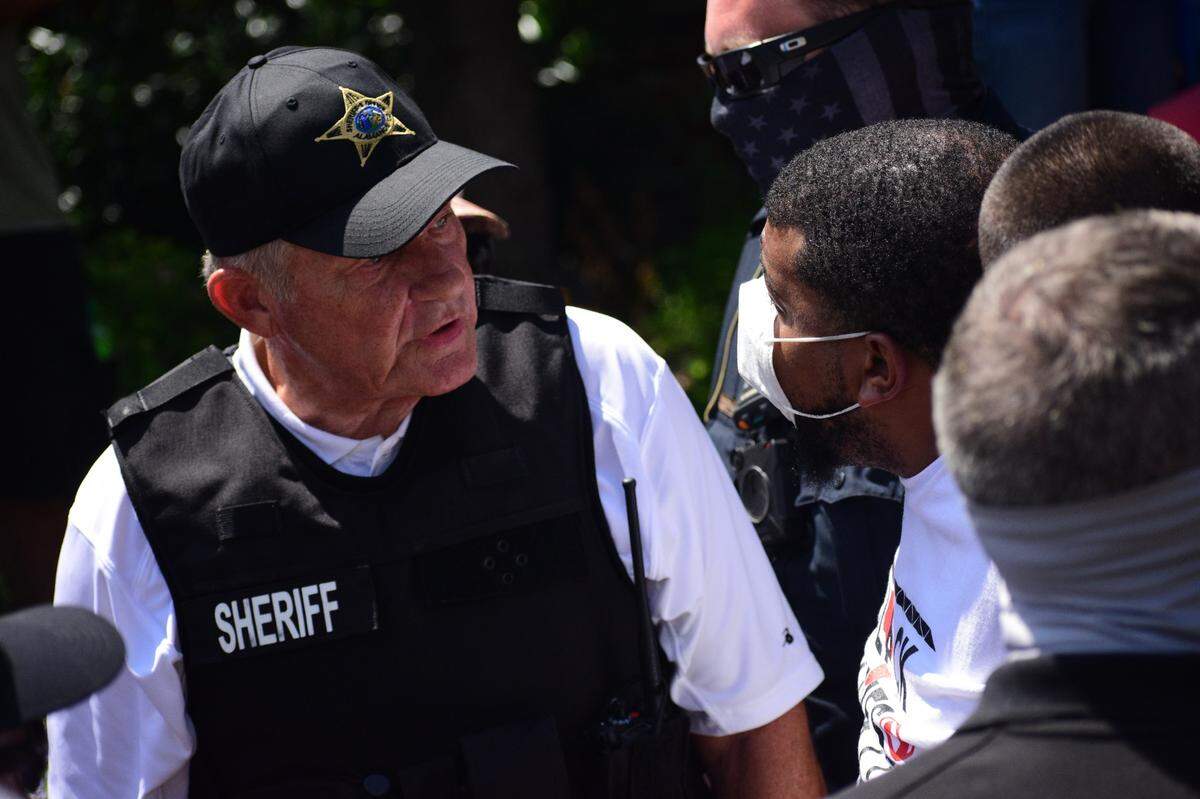
Lawsuits follow protests in Graham, NC
For years, protesters with multiple concerns flocked to downtown Graham to protest.
Some opposed Sheriff Terry Johnson housing federal immigration detainees in the local jail. Others demanded the removal of a Confederate statue outside the historic courthouse. Some targeted a now repealed strict city protest policy that prevented three or more people gathering to demonstrate without a permit along with officials’ response.
Many have criticized the city and county’s aggressive response to protests, including a 2020 event where police used pepper spray on children, The News & Observer has reported.
The 2019 demonstration was one of the first to take place, but it was among the last to settle, said Holmes in an interview. Officials have settled at least two other lawsuits related to protests.
Organized by a Jewish-led coalition called Never Again Action, on Nov. 24, 2019 protesters had planned to walk on the sidewalks to downtown Graham singing Jewish prayers and sit shiva in front of the county jail. The Jewish service was meant to honor those who died in federal immigration custody, those involved said.
Never Again Action organizers didn’t seek a permit as speeches were made at the Center for Spiritual Living, which is on private property, and they planned to stay on the public sidewalks, according to court documents.
Instead, officers executed a plan made in advance for police to use tactics, such as standing shoulder to shoulder, to prevent protesters from using the sidewalks.
Charges against the nine people who were arrested were eventually dismissed. Prosecutors dismissed at least two cases because defendants were on a sidewalk when arrested and not breaking the law, according to court documents. A third was dismissed after no evidence was presented in the case.
Five of the arrested protesters filed the federal lawsuit, which demanded the city and county officials give them cash for violating their rights to free speech and to not be illegally detained.
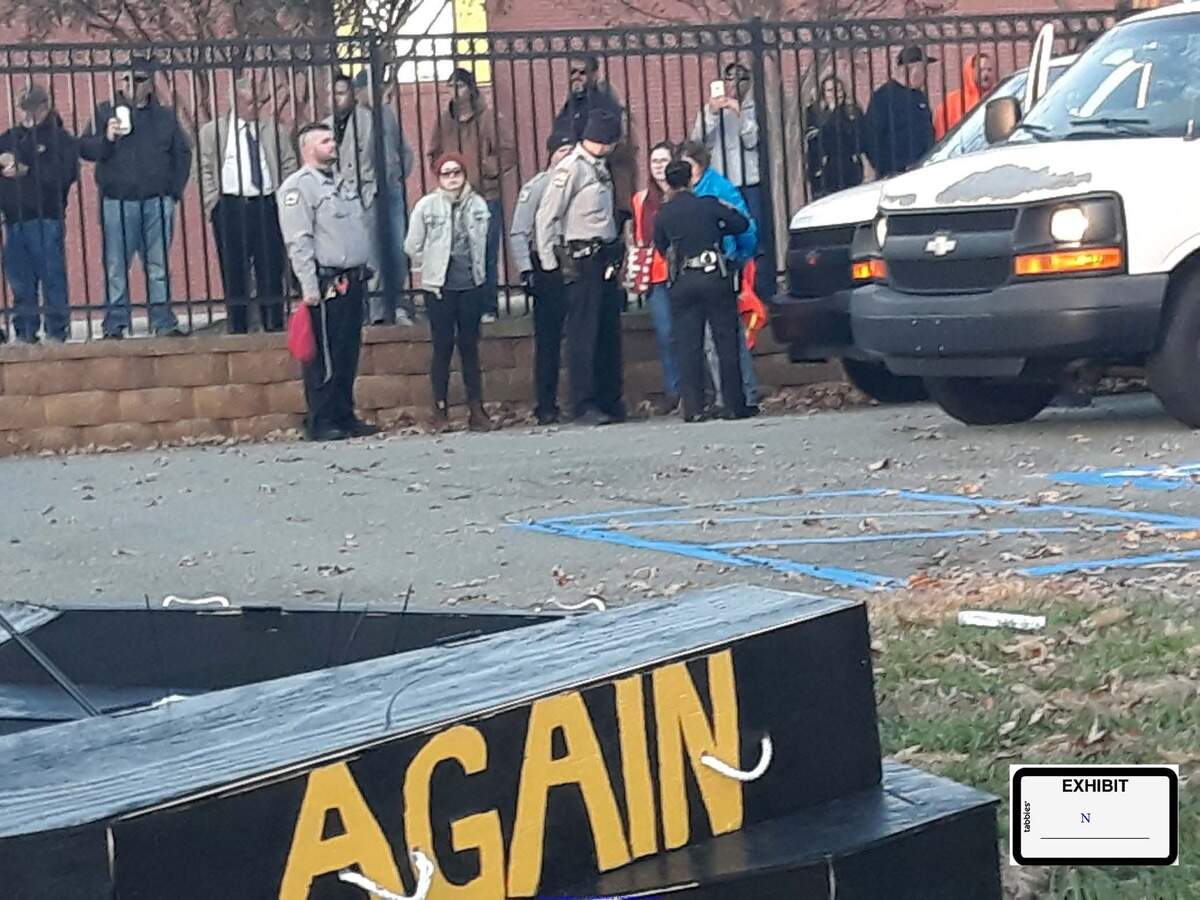
Law enforcement preparations
During the deposition, Holmes asked Sykes about a document listing about 200 license plate numbers, possibly gathered during previous protests. Nine of the tag numbers were tied to people police had labeled as agitators, including at least one who had defaced the Confederate monument at UNC Chapel Hill.
Law enforcement had collected license plate numbers at a previous protest in Graham, Sykes said, but he did not recall which it was, according to the deposition transcript.
In meetings before the protest, Graham police had created a plan to stop the protesters before they reached the courthouse, regardless of whether they were peaceful and on a public sidewalk, Holmes said at the NCCU event.
According to an “opps” plan Holmes obtained, local law enforcement sought bullet-proof vests, police radios, video equipment and a device that emits a loud sound for crowd control, he said.
Three officers were to be assigned to a surveillance team, including one plain clothes officer who would walk among protesters and report their actions back to police, Holmes said. In addition there were officers on a “contact team,” designated to stand in front of protesters.
Law enforcement leaders watched a live stream of the protest from cameras the sheriff’s office set up before the event, Holmes said.
In the deposition, Sykes confirmed that local officials had deemed any protest illegal in advance because organizers had not obtained a permit.
“Any assembly for the purpose of demonstration/protest in any public area shall be deemed unlawful, and all participants shall be ordered immediately to disperse,” the plan states, according to Sykes’ deposition.
If they don’t, they would be subject to arrest, the plan said.
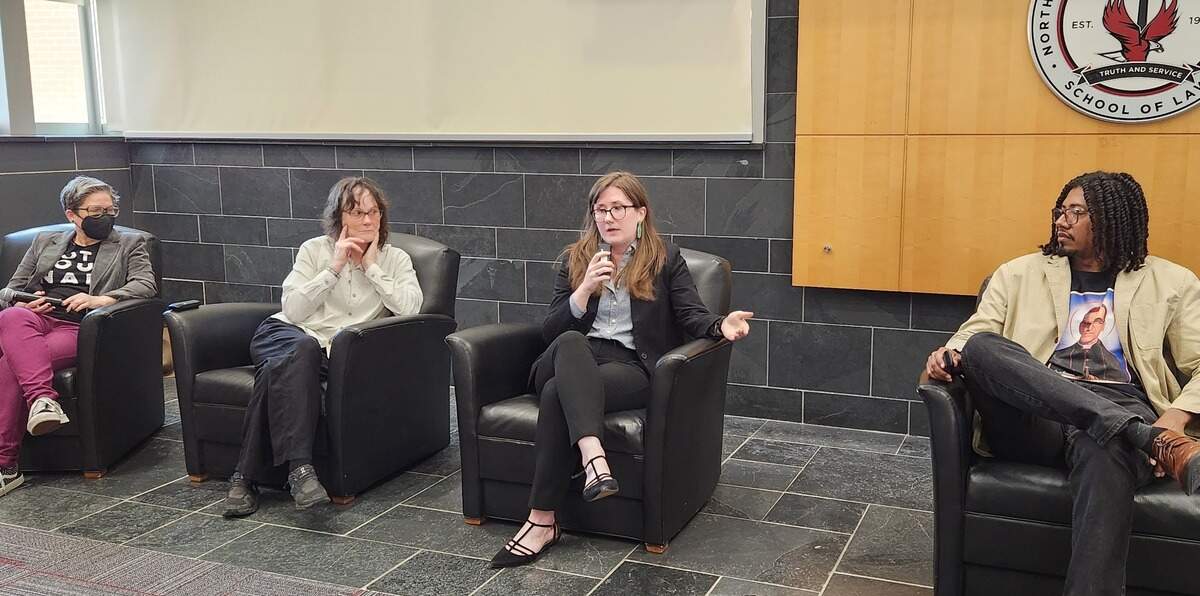
At the NCCU event, protesters stressed that they had planned a peaceful event.
Some plaintiffs had taken training in advance, learning how to deescalate tense situations and to urge others to follow directions to prevent getting arrested, they said.
Lisa Rowden, a longtime Alamance resident who had a pet grooming business in the county , as she participated to speak out against Sheriff Terry Johnson’s cooperation with federal immigration officials.
Plaintiff Katelyn Campbell said she was motivated to attend by a student whose father was at that time held by immigration officials. She expected resistance, she said, but not riot gear.
Plaintiff Xavier Adams was a college student who has gone on to become an Orange County history teacher. In 2022 he was awarded the North Carolina Center for the Advancement of Teaching 2022 Prudential North Carolina Beginning Teacher of the Year.
“Yeah, right, subversive,” he said during the celebration.
Virginia Bridges covers criminal justice in the Triangle and across North Carolina for The News & Observer. Her work is produced with financial support from the nonprofit The Just Trust. The N&O maintains full editorial control of its journalism.