Rebuilding I-40 in Pigeon River Gorge will take 3 years and lots of rocks
Rebuilding a section of Interstate 40 through the Pigeon River Gorge will take tons of rock, and now the N.C. Department of Transportation has a pretty good idea where it will come from.
NCDOT received permission from federal officials to mine up to 3 million cubic yards of stone from Pisgah National Forest across the river from the highway. The state and its contractors looked at seven possible quarry sites on federal land and have narrowed their search to two, based on geology and the ease of moving stone where it’s needed.
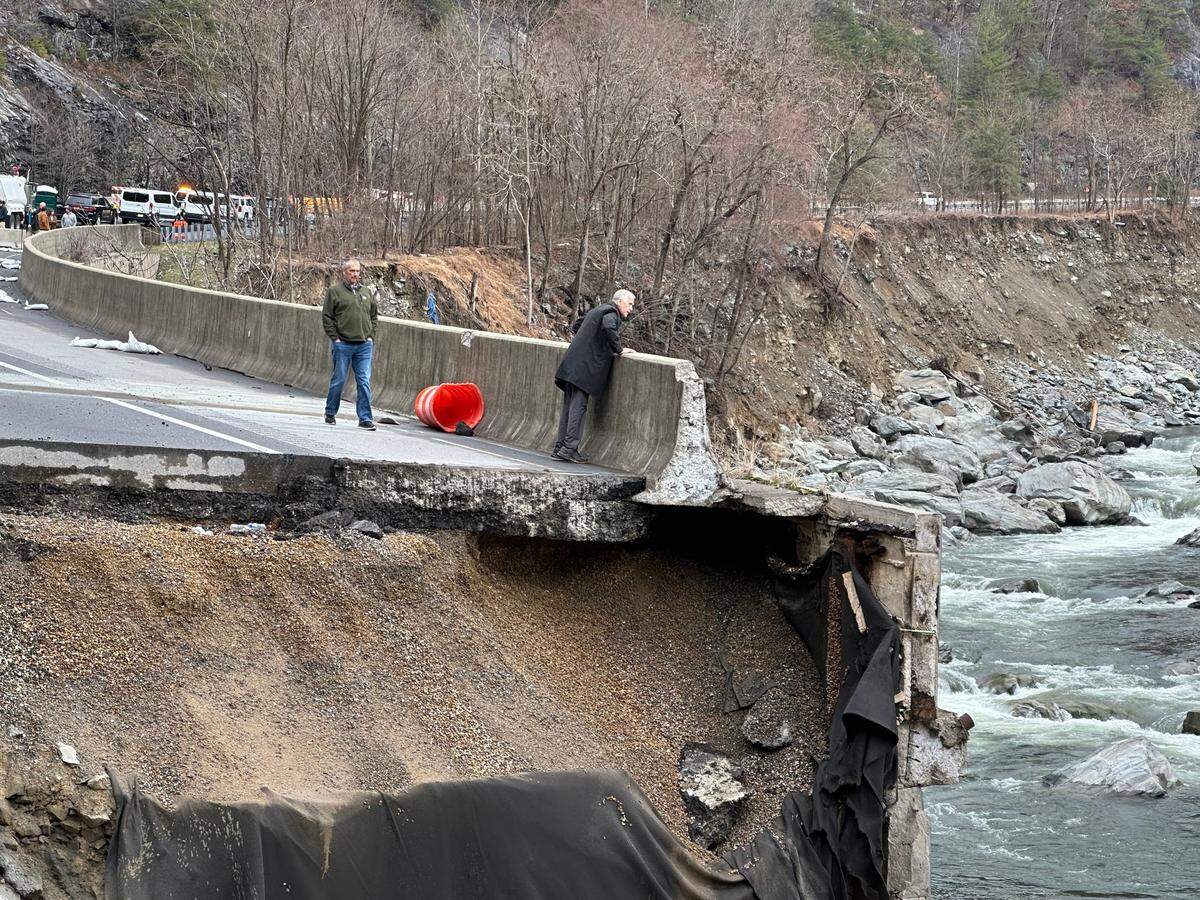
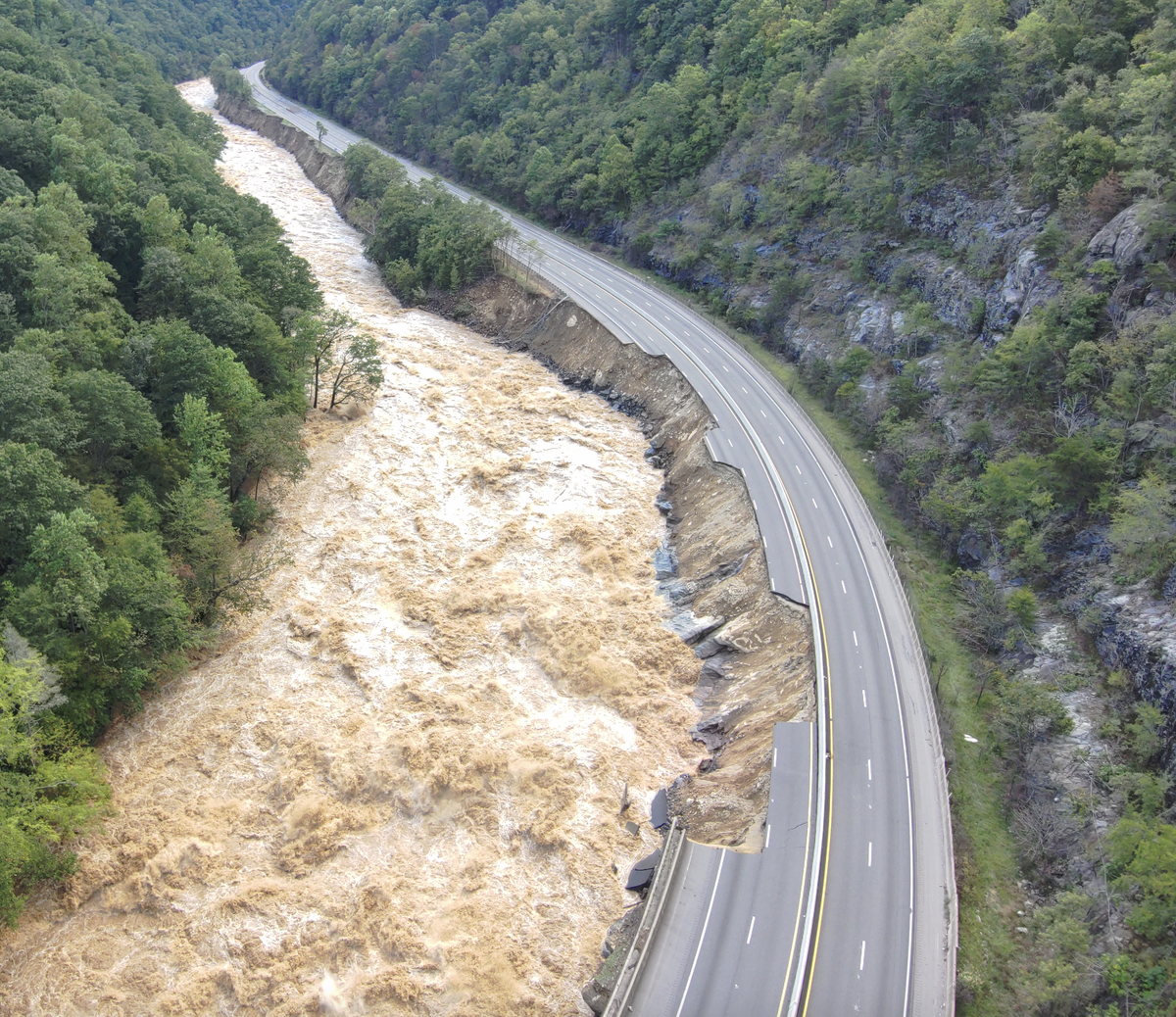
Flooding from the remnants of Hurricane Helene scoured the earth holding up the eastbound lanes of I-40 in the gorge on Sept. 27. Along a four-mile stretch of the highway at the Tennessee state line, more than a mile of pavement and guardrails disappeared into the river, leaving an exposed rock face dozens of feet high.
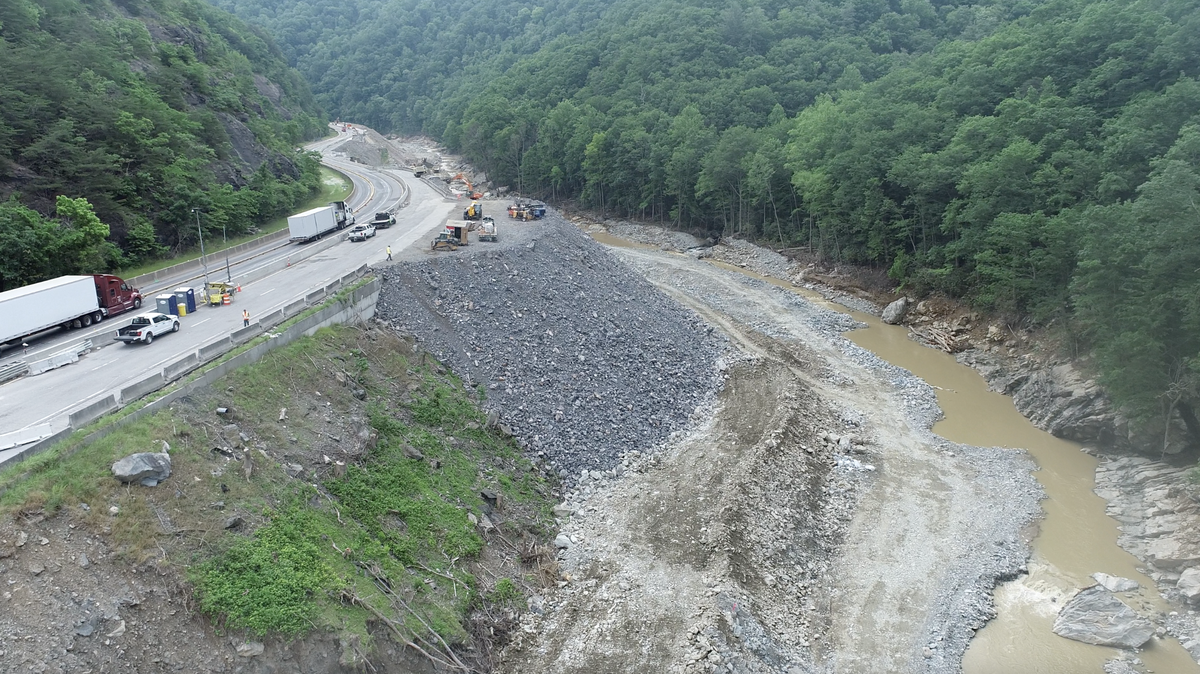
The process of restoring the roadbed begins later this year when contractors expect to start hauling stone across a temporary bridge. In the meantime, they’re building a four-mile causeway along the river that will be used to truck the stone and other materials to the base of the cliff.
“That’s been the primary construction activity focus and should be done in July,” NCDOT spokesman David Uchiyama said in an interview.
Highway will take three years to rebuild
I-40 remained closed through the Pigeon River Gorge for five months after the storm, as contractors worked to stabilize what was left of the highway on both sides of the state line.
In February, transportation departments in North Carolina and Tennessee opened the westbound lanes to nine miles of two-way traffic. The lanes are 11 feet wide, a foot narrower than the interstate standard. With only a 9-by-9 inch concrete barrier and hard plastic bollards separating oncoming cars and trucks, the speed limit on the North Carolina side is 35 mph.
NCDOT says it hopes to have the eastbound lanes rebuilt and open to traffic by early 2028, at an estimated cost of $1.3 billion.
The work would have taken much longer and cost more if the state had to truck in stone from the nearest commercial quarry, which is more than 20 miles away in Tennessee, said Secretary of Transportation Joey Hopkins.
Mining on national forest land also means contractors can get stone where it’s needed without putting trucks on I-40, which would considerably slow traffic through the gorge.
Most of the new roadbed will be held in place using a construction method called roller-compacted concrete, which will create a series of steps from the road down toward the river like a staircase, Uchiyama said.
In some areas, contractors will build a more vertical “secant wall” using overlapping pilings, he said.
NCDOT pledges to minimize environmental impact
It’s not clear yet how much stone will be needed to build up the roadbed behind the concrete walls, Uchiyama said. The agreement with the National Forest Service, the U.S. Army Corps of Engineers and the Federal Highway Administration anticipates about 3 million cubic yards, but the actual amount “will be determined as the project progresses,” he said.
Meanwhile, the causeway along the river is being built with stone found at the base of the cliff and crushed, Uchiyama said. NCDOT has permits to build the causeway and will need more to establish and operate the quarry, he said.
The quarry and causeway have the potential to cause environmental problems. But Sam Evans, an attorney who leads the forest program at the Southern Environmental Law Center, said NCDOT deserves credit for pledging to do the work responsibly.
“NCDOT is actively listening to us and our partners, and has been responsive to our concerns about how to reduce harm to the river, wildlife, and recreation in this extraordinary river gorge,” Evans wrote in an email. “Their commitment to quarry only at the least damaging site, given their limited options and the urgency of the project, is a responsible, lower-impact approach.”
Evans said SELC remains concerned about how the causeway and reconstruction work will affect the river.
But, he added, “NCDOT has committed to fully restoring affected areas once the work is complete. We will continue to engage closely to ensure those promises are kept and that the Pigeon River Gorge is truly set on a path to recovery.”
This story was originally published May 27, 2025 at 6:30 AM.