Three-year effort to rebuild I-40 begins along the Pigeon River, largely unseen
AI-generated summary reviewed by our newsroom.
- NCDOT to begin quarrying in Pisgah Forest to rebuild flood-damaged I-40.
- Contractors will use retaining walls to stabilize and protect five miles of highway.
- Reconstruction avoids I-40 traffic disruption; completion expected by end of 2028.
Nearly a year after the rampaging Pigeon River washed away parts of Interstate 40, the state and its contractor are poised to begin mining the tons of rock needed to rebuild the highway.
The rock will come from a quarry in Pisgah National Forest and be trucked across the river on a pair of temporary bridges to a new causeway along the base of the cliff below the highway.
Completed this summer, the causeway will allow the contractor, Ames Construction of Minnesota, to build retaining walls as tall as 70 feet to support the highway and protect it from future floods.
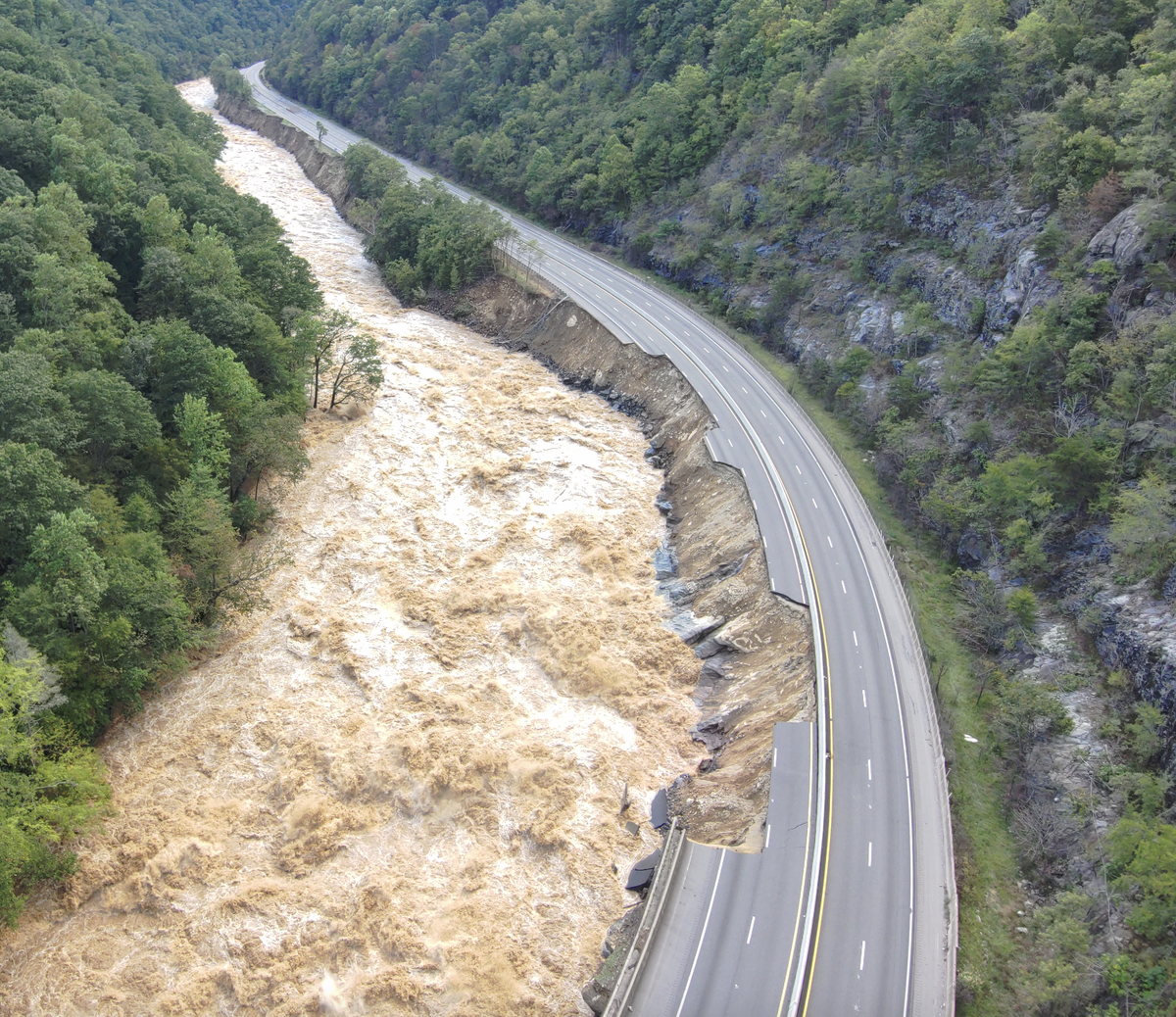
The Pigeon River undermined the eastbound lanes of I-40 on both sides of the North Carolina-Tennessee state line on Sept. 27, after the remnants of Hurricane Helene dropped historic amounts of rain. On the North Carolina side, more than a mile of the eastbound lanes fell into the river.
The N.C. Department of Transportation plans to fortify five miles of highway with two types of retaining walls. The walls will be tied in to bedrock and will be higher than the highest point of last year’s flood, said Josh Deyton, NCDOT’s regional construction engineer.
“Hopefully we can prevent what’s happened out here from happening again,” Deyton said Thursday, standing on the causeway.
The reconstruction of I-40 through the Pigeon River Gorge is the most expensive and complex NCDOT project following Helene. The department estimates the storm did $5 billion in damage to roads and bridges throughout Western North Carolina; rebuilding I-40 in the gorge alone is expected to cost $1.36 billion.
NCDOT says it hopes to have the highway completed by the end of 2028.
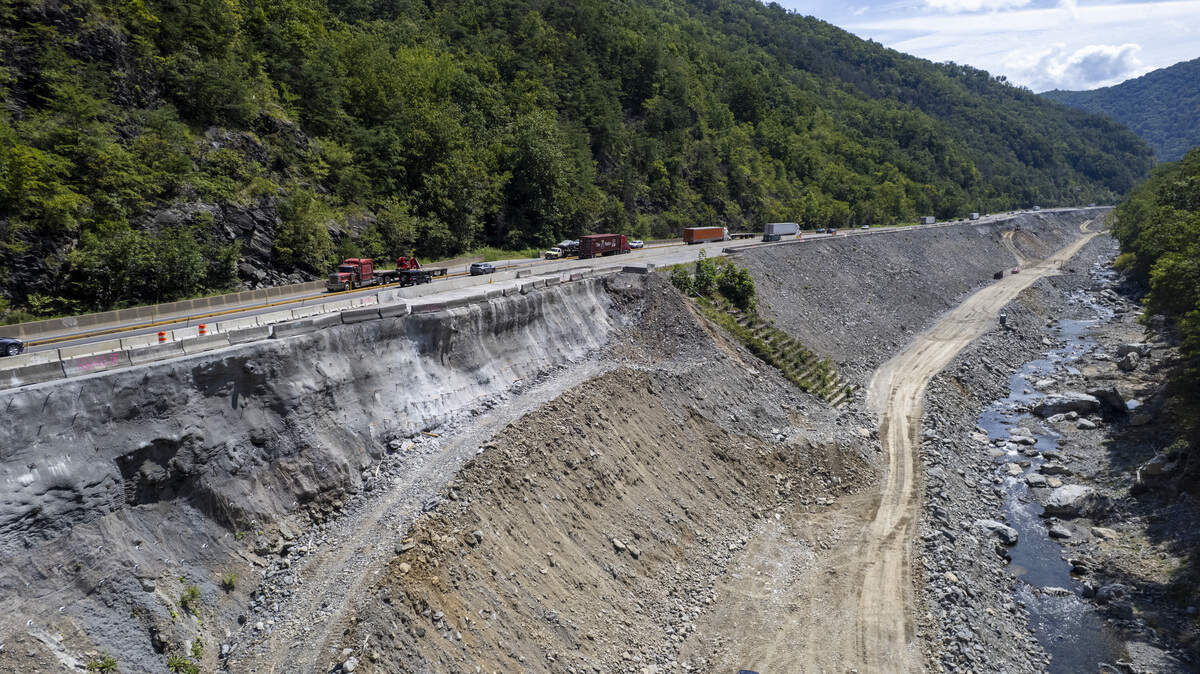
Causeway provides access to construction zone
I-40 reopened through the gorge in February on the surviving westbound lanes, which were converted to two-way traffic. As cars and trucks pass largely unseen above, Ames has reshaped the stone along the river into the causeway, a wide gravel road that its trucks and equipment will use to rebuild the highway.
Looking up toward I-40, you can see big chunks of pavement stuck in the slope where they fell last fall. Near the top of the cliff are large sections of sprayed-on concrete dotted with steel rods known as soil nails, which together hold surviving parts of the highway in place.
Most of the new roadbed will be supported with a construction method more commonly found on dams called roller-compacted concrete. Walls of concrete up to 30 feet thick will create a series of steps down toward the river.
In other areas, contractors will build a more vertical wall using overlapping steel pilings. In both cases, rock and earth will fill the space between the wall and the highway.
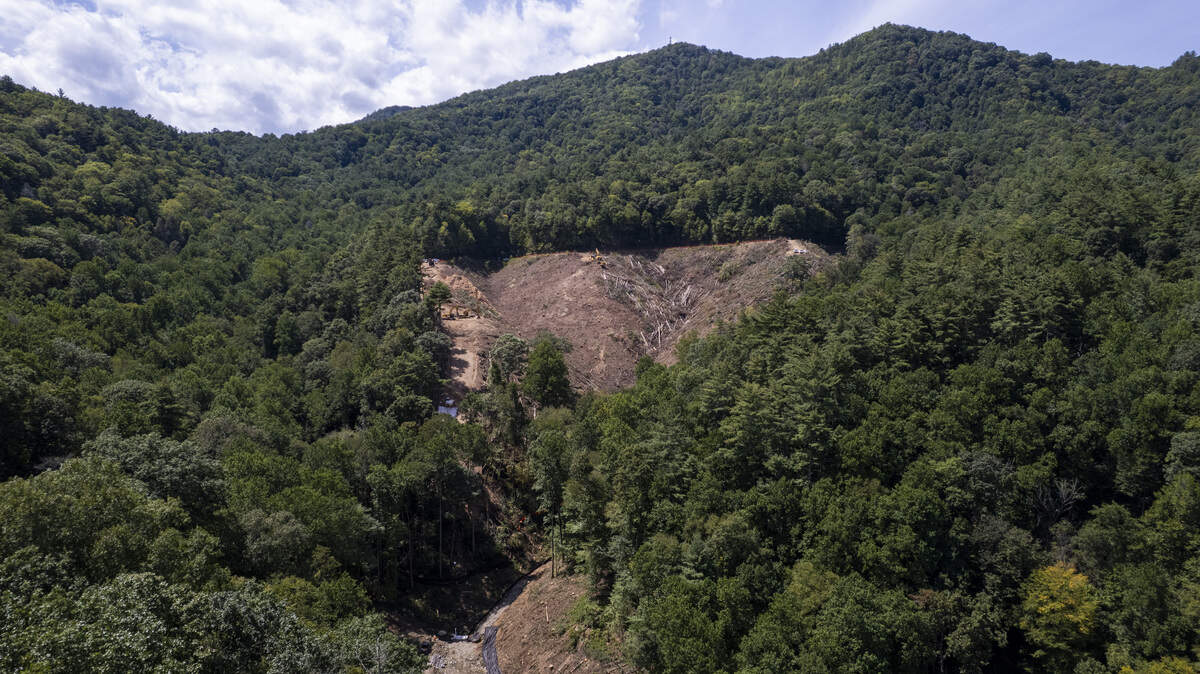
All the rock needed to make the concrete and to create the fill will come from the quarry in Pisgah National Forest. Last spring, NCDOT received permission from federal officials to mine up to 3 million cubic yards of stone from the forest and this summer received the state and federal environmental permits needed to begin extracting and moving rock.
Contractors have begun clearing the site and setting piles for two temporary steel-truss bridges across the river. They expect to begin removing rock from the quarry in October.
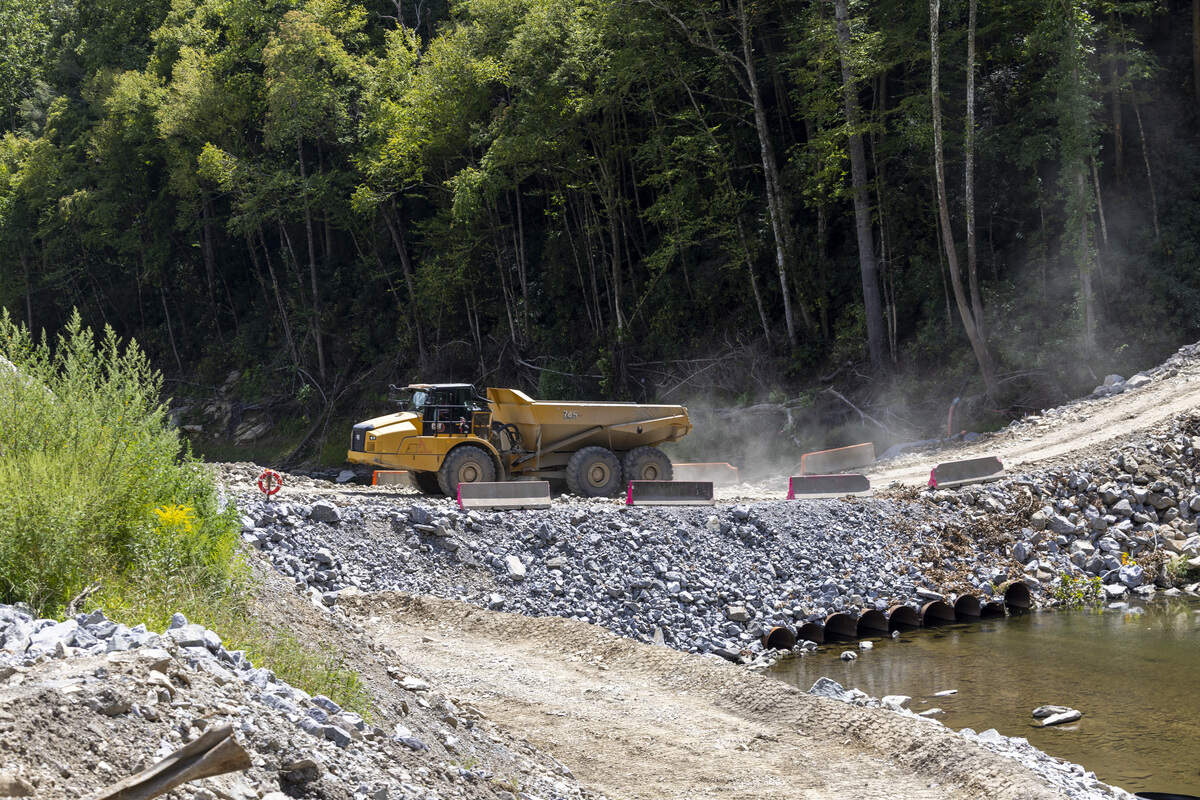
The quarry will make it easier and cheaper to obtain the material needed for I-40, state officials say. The project would likely have taken twice as long and cost a third more if the state had to truck in stone from commercial quarries, said Blake Soblesky, the contract resident engineer.
Mining on national forest land also means contractors can get stone where it’s needed without putting trucks on I-40, which would considerably slow traffic through the gorge.
“Our goal of building our causeway and haul road is to stay out of traffic,” Soblesky said. “Not to impede traffic, and for traffic not to impede us.”
Traffic moves, but slowly, through the gorge
The highway departments in North Carolina and Tennessee reopened I-40 by converting nine miles of the westbound lanes to two-way traffic. The lanes are a foot narrower than the interstate standard, with only a 9-by-9 inch concrete barrier and hard plastic bollards separating oncoming cars and trucks.
The speed limit on the North Carolina side is 35 mph, and electronic signs warn travelers of delays, which are common.
I-40 is the main connection between Carolina and Tennessee. Before Helene, about 28,000 cars and trucks passed through the gorge each day on average.
Now, with one-lane traffic, the road handles about 19,000 a day, said Wesley Grindstaff, NCDOT’s top engineer in the region. About 30% of that traffic is trucks, Grindstaff said.
“It shows how critical this route is to the movement of goods, not just regionally but nationally,” he said.
This story was originally published August 28, 2025 at 6:13 PM.