
An NC man didn’t report to prison. Why a US judge sent his mother to jail

AI-generated summary reviewed by our newsroom.
- Mother volunteered as custodian to supervise son on federal release.
- Prosecutors sought contempt after mother failed to ensure son's return to prison.
- Appeals panel upheld 3-day term; one judge warned custodians lacked penalty notice.
A North Carolina mother who promised a federal judge she would make sure her son followed court restrictions while awaiting trial ended up spending three days in jail.
In a rare case where prosecutors pursued contempt of court, an assistant U.S. attorney successfully asked a judge to hold Connie Jamerson responsible after she failed to report her son’s court violations and ensure his return to prison.
Connie Jamerson appealed the judge’s ruling and her three-day jail sentence. A federal appeals court panel upheld the sentence. But one of the judges expressed concern that someone who volunteered to be a custodian wasn’t told what could happen if they failed to carry out those duties.
“I find it alarming that an unrepresented third-party custodian may be subject to such criminal penalties without knowledge of the specific penalties,” wrote federal appellate Judge DeAndrea Gist Benjamin.
Through her attorney, Connie Jamerson declined to speak with The News & Observer.

What happened?
In October 2023, Steven Jamerson had finished a two-year federal prison term for aggravated identity theft and had started his one year of supervised probation in Western North Carolina.
That month, Steven Jamerson’s probation officer began taking steps to revoke his release due to violations, including failing to attend required treatment and missing appointments.
Steven Jamerson, now 33, was arrested the next month, charged with violating his probation. He attended a bond hearing in North Carolina’s U.S. Western District court in Asheville on whether he should be released or remain in custody until his revocation hearing, according to court documents.
The judge agreed to release him to his mother, who lives in Marshall, about 10 miles north of Asheville. Connie Jamerson, who is in her 60s, agreed to make sure her son followed his release conditions, including staying drug-free and reporting for his sentence, court documents state.
At the revocation hearing about four months after his arrest, Steven Jamerson admitted violating several conditions of his release, including being charged with new crimes, possession of methamphetamine and drug paraphernalia, according to court documents. The judge sentenced him to four months in prison but said he could remain free until a date was set for his return.
“Until then, you are released under the same terms of the bond that you had when you came here today,” the judge explained.
Building the contempt of court case
The mother and son were later informed that Steven Jamerson should report to prison on March 26, 2024.
But that didn’t happen. Instead, Marshall police arrested him about a month later. After his arrest, federal prosecutors began building the contempt-of-court case against his mother.
In January 2025, Connie Jamerson attended a federal court hearing on whether she should be held in contempt of court, according to a transcript. Her attorney and two legal experts told The N&O they had never heard of a judge finding a custodian in contempt.
In the hearing, Assistant U.S. Attorney Don Gast said Connie Jamerson failed to report that her son was using drugs, which evidence shows she knew about. She also didn’t tell authorities he had stopped living with her, as her son told investigators he was “hardly there at all.” Nor did she drive him back to prison on March 26 or alert officials that he had run from probation officers and county deputies, Gast said.
When officials asked her about her son, she said he was a “grown person” who was “old enough to be … responsible for himself,” Gast said.
“So in short, she basically completely abdicated her role as custodian. I think the only evidence of any positive use of her custodial authority was that she provided him an occasional place to stay, which was not part of the deal,” Gast said.
Gast said his office initially considered charging Connie Jamerson with obstruction of justice after she told law enforcement trying to find her son that he was driving a white Kia, when it was a black Kia. But they couldn’t prove she had given her son her car keys.
The mother’s attorney, Eric Foster, pointed out that before the judge appointed Connie Jamerson as custodian, he didn’t ask whether she understood what she was committing to and if she had the capacity to carry it out. Foster argued that the mother, who is poor, receiving full disability benifits, and has no previous criminal record, was facing jail time because she had not fully understood what she was promising.
Connie Jamerson, whose husband had recently died, didn’t have a telephone, had mental “frailties” and wasn’t defiant during interviews but very confused, Foster said. Foster also argued the November 2023 custody order was no longer in effect after her son was sentenced in February 2024.
What the judges said
U.S. District Judge Martin Reidinger said at Connie Jamerson’s contempt hearing that he recognized the challenges she faced as her son didn’t cooperate but that the punishment served as a deterrent that inspires respect for the law.
“And that is, in giving up to the degree she did on the — discharging the responsibilities as custodian, Ms. Jamerson showed a certain disrespect for the law,” Reidinger said.
Connie Jamerson’s sentence was paused for an appeal to the U.S. Court of Appeals for the Fourth Circuit, which includes North Carolina and surrounding states.
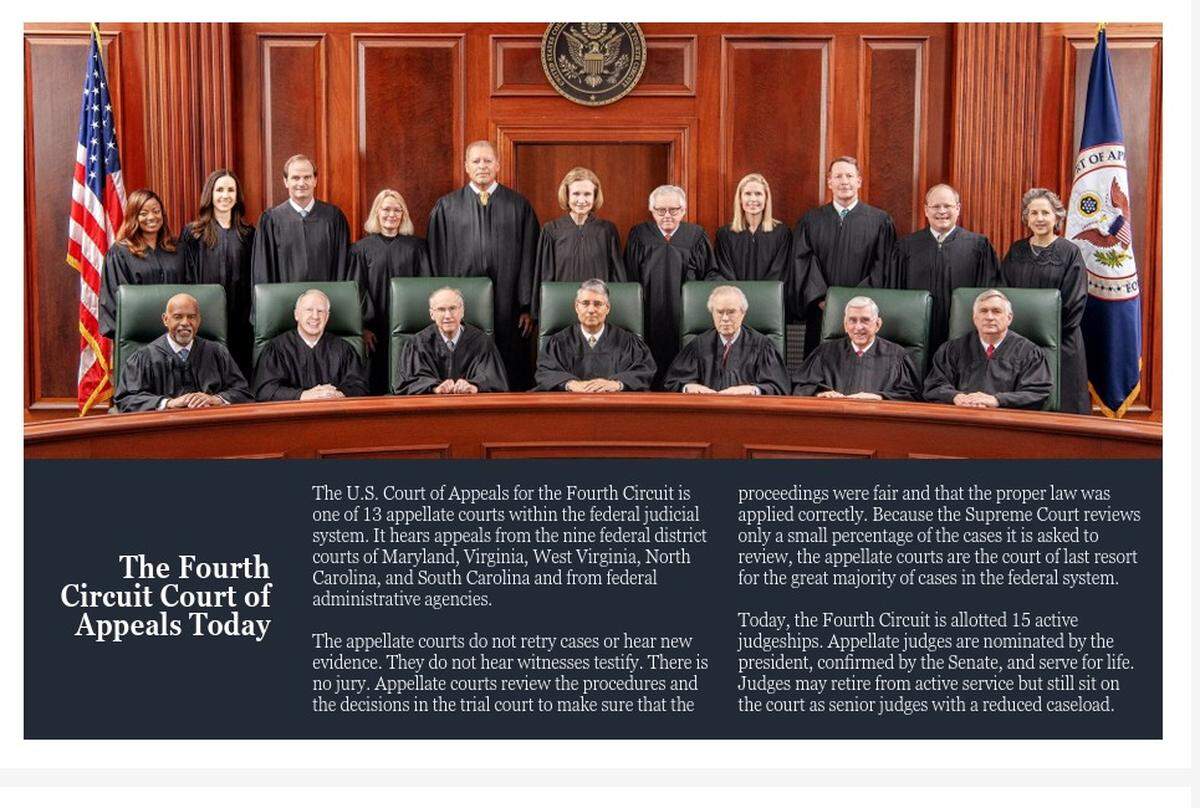
In a decision released in February, a panel with Judges Robert B. King, Stephanie Thacker, and Benjamin agreed that the lower court had the authority to find Connie Jamerson in contempt and sentence her to three days in jail.
While Benjamin agreed with the ruling, she wrote a concurring opinion expressing concern about Connie Jamerson and others who agree to be custodians without fully understanding their risks. A judge should explain the potential penalties to custodians, who play a key role in ensuring defendants comply with their conditions of release, she said.
“District courts should strive to fully inform custodians (as well as any other individual subject to the court’s authority) not only of their duties to the court but any penalty of criminal contempt, including incarceration, that might follow abdication of those duties,” she wrote.
Connie Jamerson served three days in jail near Marshall earlier this month, her attorney told The N&O.
This story was originally published March 23, 2026 at 12:19 PM.