Federal judge punishes ex-US attorney over AI use, error-riddled court brief
AI-generated summary reviewed by our newsroom.
- A judge reprimanded a former assistant U.S. attorney for filing an AI-generated brief.
- Rudy Renfer admitted at a March hearing he used AI and announced his resignation.
- Renfer, who resigned from his job, could have faced fines or a suspension.
A federal judge has reprimanded a former North Carolina assistant U.S. attorney for filing a brief generated by artificial intelligence and riddled with errors.
On Tuesday, U.S. Magistrate Judge Robert Numbers II signed an order reprimanding Rudy Renfer, who admitted during a March 10 sanctions hearing to using AI to draft a brief. At the hearing, Renfer also announced his resignation from the U.S. Attorney’s Office, where he had worked for 17 years.
Numbers wrote that the “seriousness of the misconduct,” Renfer’s “lack of candor,” and his position of trust would typically warrant serious sanctions to deter similar conduct.
Those sanctions could have included a fine, mandatory training or even suspension from practicing before the court.
But citing Renfer’s job loss and the local and national media coverage of the case, Numbers limited the punishment to a public reprimand.
“Renfer’s professional reputation, both locally and nationally, is in tatters,” Numbers wrote. “In this Court, his name will be synonymous with a failure to uphold the basic duties of competence and candor expected of every attorney.”
Citing cases where attorneys were fined $1,000 to $6,000 for misusing AI, Numbers said Renfer’s actions cost him far more. “When combined with the other consequences Renfer has suffered, this sanction reflects the seriousness of his misconduct and underscores that the submission of fabricated authority will not be tolerated in this Court,” Numbers wrote.
Veteran flagged Rudy Renfer’s filings
The March sanctions hearing stemmed from an ongoing lawsuit filed by Derence Fivehouse of Edenton, who is challenging the Pentagon’s Aug. 31 policy change ending insurance coverage of GLP-1 drugs prescribed for weight loss to Medicare-eligible veterans.
Late last year, Fivehouse, a retired Air Force colonel and attorney, flagged Renfer’s Dec. 23 filing, arguing it contained fabricated quotes and misrepresented case law.
Renfer initially claimed he “inadvertently included incorrect citations,” saying it was a clerical error that stemmed from the accidental filing of an unfinished draft, according to court documents.
Numbers then summoned Renfer and the U.S. Attorney’s Office for the Eastern District to court to explain why they shouldn’t be sanctioned.
Sanctions hearing for Rudy Renfer
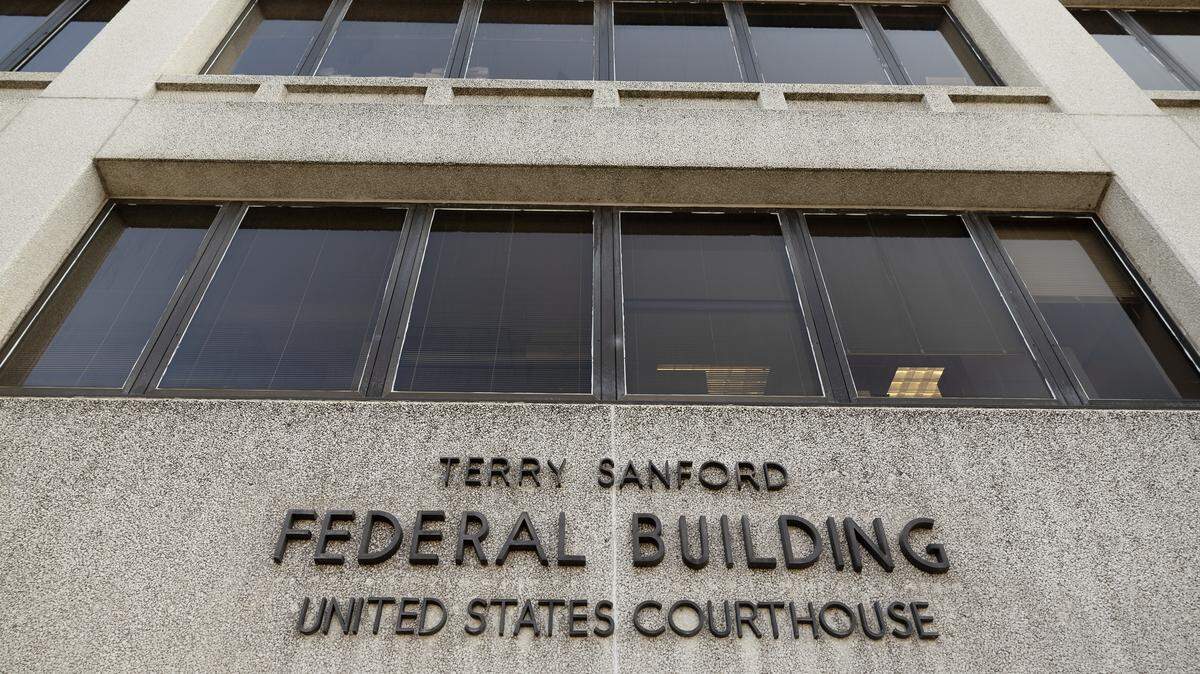
At the hearing in the federal courthouse in Raleigh, Renfer took the stand and read a statement announcing his resignation, taking responsibility for the mistakes and emphasizing that he didn’t knowingly file false information.
Numbers, pointing to errors in some of Renfer’s other briefs, continued to push Renfer about the mistakes until he eventually admitted to using AI to draft the December brief.
Renfer said he had typed up the brief but had somehow replaced it with another document while saving the file. When he opened the document a few days later and found it incomplete, he “panicked” as the court deadline loomed.
“I used artificial intelligence to catch me back up to where I was,” Renfer said. He thought he had gone through the document and checked it, he said, but instead sent a draft with the inaccurate information to his assistant to file.
At the March hearing, U.S. Attorney W. Ellis Boyle said he had asked the Department of Justice’s Office of Professional Responsibility to investigate Renfer.
Boyle called the inaccurate filing “unacceptable,” and said he sent a warning letter to the rest of the staff and scheduled training.
“We intend to make sure it is not repeated,” Boyle told the judge.
In his order, Numbers acknowledged the challenges attorneys and judges will face in identifying AI-generated errors, saying courts must take steps to safeguard the judicial process.
“This will, necessarily and unfortunately, involve moving beyond admonitions and reprimands into more punitive sanctions,” Numbers wrote.
This story was originally published April 28, 2026 at 1:30 PM.