It took 60 years to name this rare NC fish. Now the state can act to save it.
AI-generated summary reviewed by our newsroom.
- Scientists formally described and named the previously nameless sucker fish in April.
- The newly named Carolina redhorse is found almost exclusively in North Carolina.
- Formal recognition as a new species opens up increased protection for this rare fish.
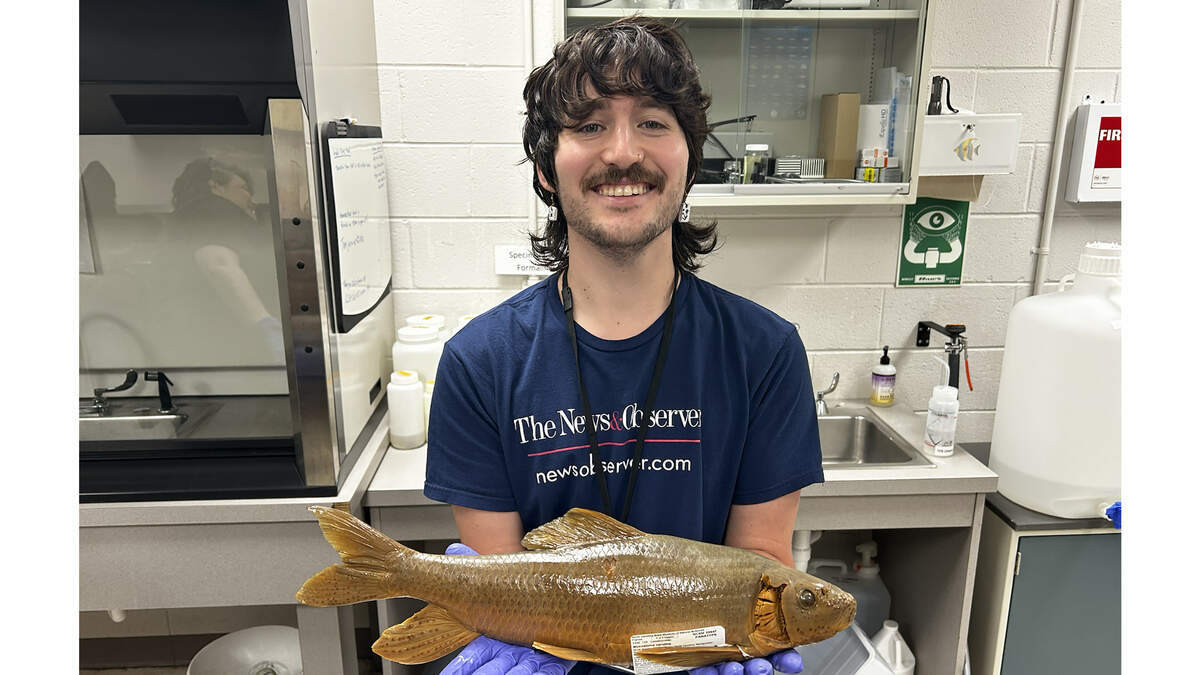
Glowing with amber-orange hues and fitted with lips only a mother could love, several rare sucker fish sit in jars of ethanol at the N.C. Museum of Natural Sciences.
Scientists first collected this species in 1961, yet it remained nameless for over 60 years, becoming rarer and rarer in its natural habitat.
That all changed in April, when scientists from the Raleigh museum formally described the fish, meaning they published a scientific paper to prove it’s distinct from other closely related species and gave it a Latin name.
The scientists named this sucker the Carolina redhorse (Moxostoma carolina) for its limited geographical range and reddish coloration. The fish inhabits deep water in the sluggish currents of the Cape Fear and Yadkin-Pee Dee river basins south of Raleigh.
While naming a species may seem unimportant, it’s a crucial step in helping save it from extinction, said Gabriela Hogue, manager of the museum’s aquatic collections.
“Our state agency will not accept our word that it’s a new species unless it has a scientific Latin name,” Hogue said. “They just don’t want to take our word that, ‘Oh this fish is different,’ so if we give this fish a name, then … it can now get additional protection. So putting that Latin name on it is everything.”
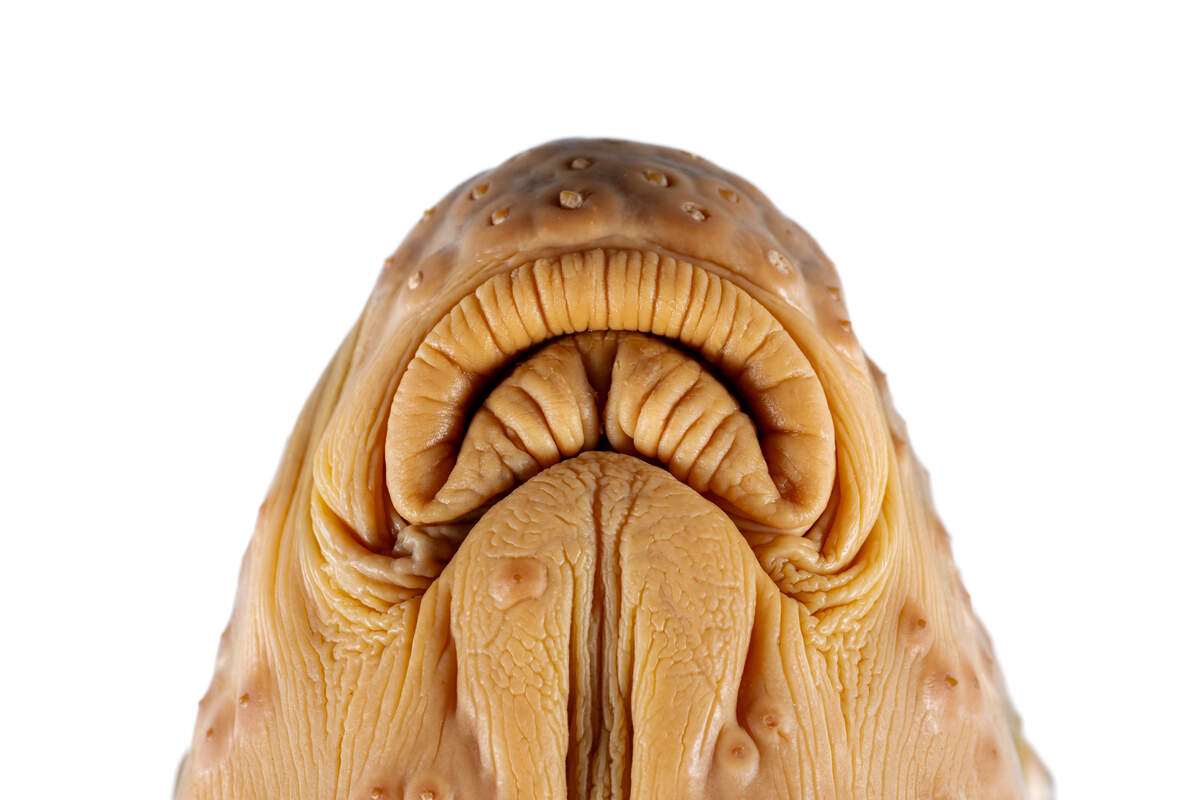
While the fish’s exact diet is unknown, other redhorses, known as suckers, use their unique mouths to vacuum and scrape food from the bottom of rivers. They consume insect larvae, crustaceans and mollusks and can grow up to 2 feet long.
“It’s a beautiful fish, and it has really great lips,” Hogue said.
The Carolina redhorse is now listed as a “state threatened” species, the second-highest classification of protection under the State Endangered Species Act. This listing means the fish is likely to become endangered in most or all of its range in the near future.
The long road to getting a name
Fish biologist Robert Jenkins, nicknamed “Dr. Redhorse” by his colleagues for his expertise on the group, first suspected in the early 1990s that the fish was something new — not simply a hybrid of two closely related species as he originally thought. He spent decades collecting data to prove it, but Jenkins died in 2023 before the Carolina redhorse was formally recognized.
But before his death, he had shared his decades of data with a colleague, who eventually connected with Hogue. She picked up the project with Bryn Tracy, a North Carolina fish biologist and co-author of the species description. They added the genetic work Jenkins’ data was missing — and finished what he’d started.
Tracy explained that it took so long for the fish to be named due to the increasingly difficult task of proving a new species is, well, new.
“Years ago, you could describe an animal just based on a few characteristics, like color or the number of scales,” Tracy said. “Now, you need to do morphological work. You need to do geographical work. You need to do genetics work and statistical work. It takes a lot of work to describe a new species of animal these days.”
Hogue and Tracy have continued to use some of Jenkins’ data to carry on his legacy. They have described five new species of fish in the last two years, three of which occur only or mostly in North Carolina.
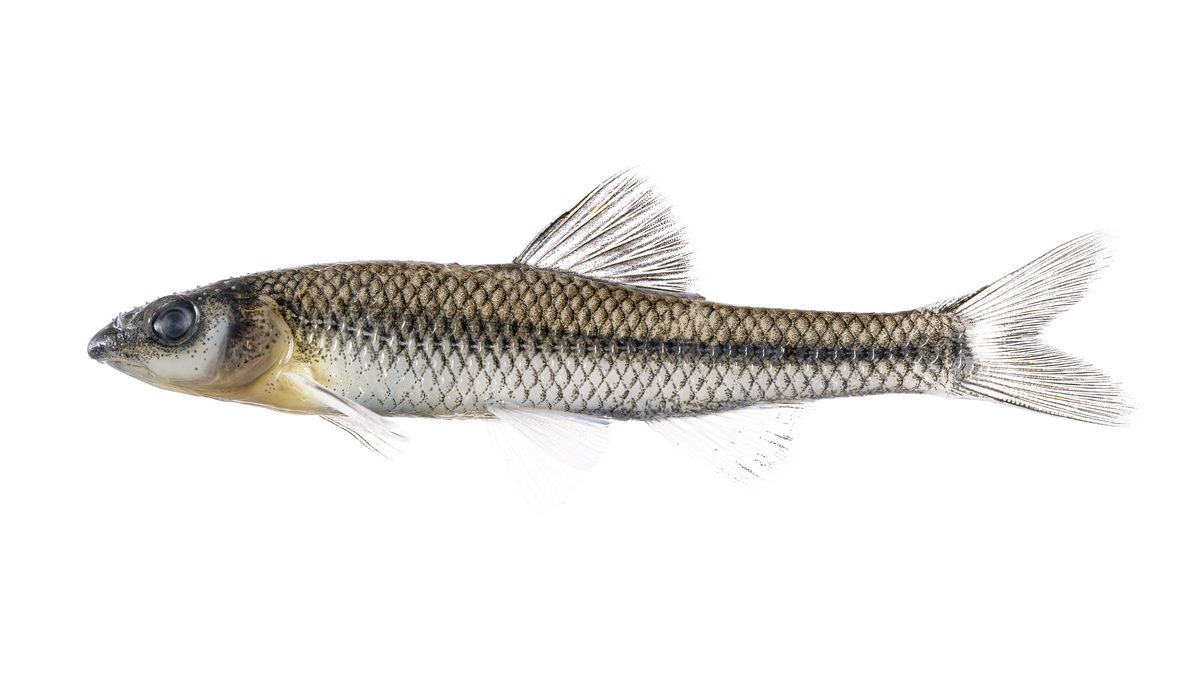
In 2024, the team described the Siouan thinlip chub, another species found mostly in North Carolina in the Yadkin, Lumber and Cape Fear river basins. Similar to the Carolina redhorse, the Siouan thinlip chub is now listed as a species of special concern and is currently being considered to move up to the threatened classification.
For Tracy, that protection through description is the point.
“It’s part of our natural heritage to protect what we have here,” Tracy said. “We’ve just done our little part of protecting what’s here in North Carolina, and hopefully it will stick around for the next 1,000 years.”
The need for funding
But the work is not without challenges. Funding a single graduate student to describe a species can run $60,000 to $100,000 a year, according to Tracy — money state wildlife agencies are reluctant to spend. Hogue shared how this creates a misalignment between funding and public perception.
“Even though the public and everyone is so excited when a new species is described, it’s not like there was ever any funding or backing to get to that point,” Hogue said. “We want to know what’s out there … but there’s nothing to help us get there, so that can be difficult.”
This can lead to descriptions occurring as side projects to regular research projects. Tracy, for example, has been volunteering to assist with these descriptions, even though he retired in 2017.
Still, Hogue says the reward for this type of work isn’t financial.
“I think it’s our passion that carries us through getting these things done,” Hogue said. “To me, it’s like I was a part of telling the story of this species, and that to me is incredible… not just the specimens that I’ve cared for, but the species itself.”