Where is Tropical Storm Elsa and when could it hit the Carolinas? The latest forecast
UPDATE: This story will not be updated after Tuesday. The most recent information on Tropical Storm Elsa’s path and forecast can be found here.
Tropical Storm Elsa, which was nearing hurricane strength Tuesday afternoon, is expected to weaken by the time it reaches the Carolinas later this week, but it could bring heavy rain, flooding and strong winds to some areas.
Elsa was located about 155 miles southwest of Tampa, Florida, as of 5 p.m. Tuesday. The storm was moving north at 10 mph with maximum sustained winds of 70 mph.
Tropical storm-force winds, which range from 39 mph to 73 mph, extend up to 70 miles from Elsa’s center.
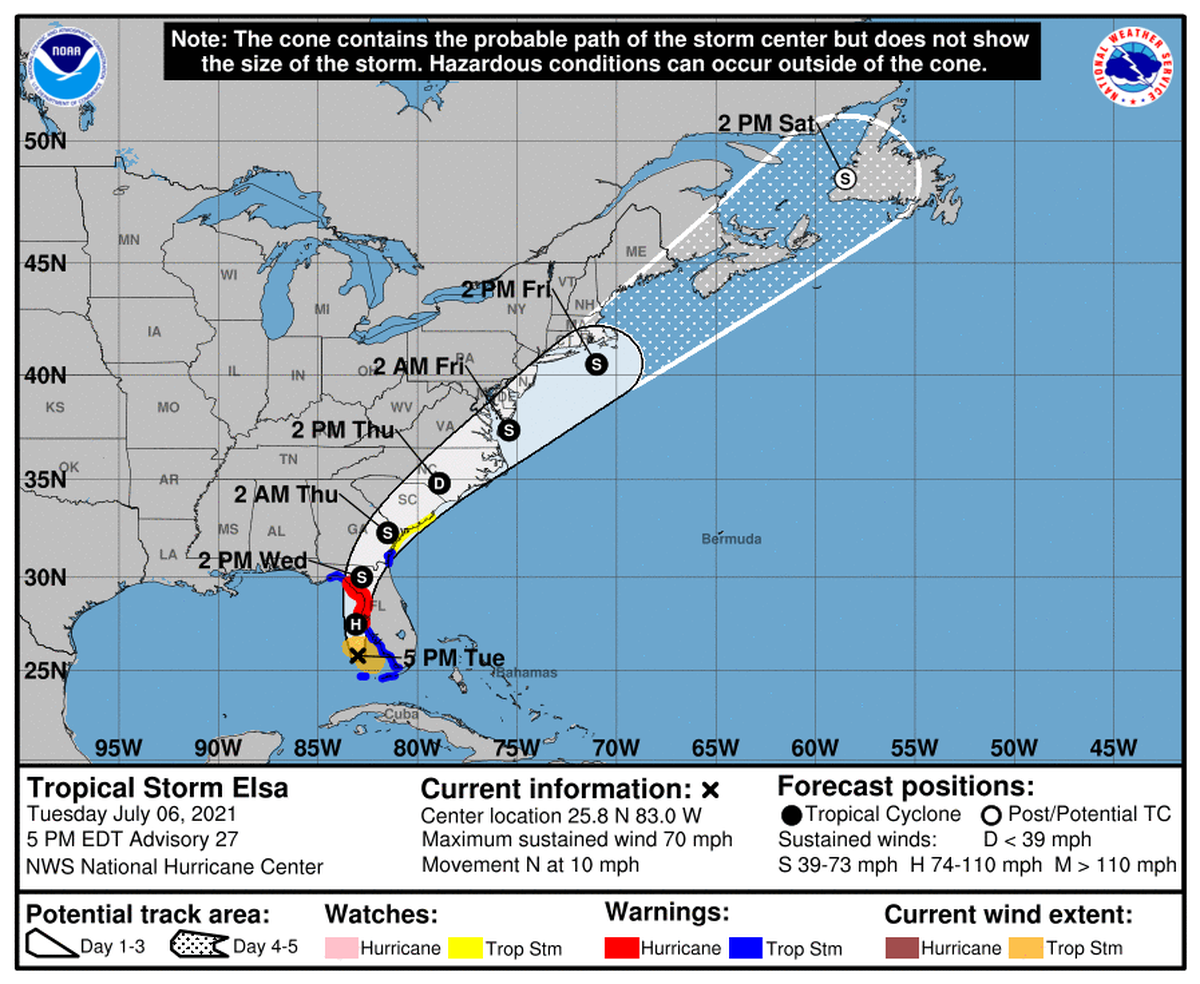
Parts of the Carolinas could feel impacts from Elsa — including tropical storm-force winds, heavy rain and flooding — late Wednesday and Thursday, according to forecasters.
The National Hurricane Center has issued a tropical storm watch for South Carolina from the mouth of the St. Mary’s River to South Santee River.
“A Tropical Storm Watch means that tropical storm conditions are possible within the watch area,” the NHC says.
The NHC says “interests elsewhere in the Carolinas” should monitor Elsa’s progress.
North Carolina Gov. Roy Cooper and state emergency management officials said Tuesday that residents in Eastern and Central North Carolina should “be prepared for significant rains and possible flooding.”
“Small changes in the forecast track of a tropical system can mean big changes in storm impacts and rainfall amounts,” state Emergency Management Director Mike Sprayberry said in a release. “That’s why close attention to the forecast for your area is important.”
N.C. Emergency Management says residents should have multiple ways to receive weather information, review their emergency plan, check their emergency supply kit, and have a “plan for elderly relatives and pets.”
Elsa’s winds are most likely to reach South Carolina by 8 p.m. Wednesday and North Carolina by Thursday morning, the forecast shows. But the storm’s path as of 5 p.m. shows it weakening to a tropical depression, which has maximum sustained winds of 38 mph or less, by 2 p.m. Thursday while it’s near the North Carolina-South Carolina border.
Eastern North Carolina and South Carolina have a 20% to 30% chance of getting tropical storm-force winds over the next three days, the forecast shows.
The storm could dump between 3 and 5 inches of rain on South Carolina’s Lowcountry, with up to 8 inches possible in some areas. Parts of coastal North Carolina could get between 1 and 3 inches of rain with up to 5 inches possible in some areas between Wednesday and Thursday night. The rain could lead to isolated flash and urban flooding.
The mouth of the St. Marys River to South Santee River could see between 1 and 2 feet of storm surge.
Tornadoes are possible in the Lowcountry on Wednesday, forecasters say, and the threat could move to “the eastern Carolinas” on Thursday.
The National Weather Service’s Wilmington office and Newport/Morehead office say — in addition to rain, flooding and gusty winds — dangerous surf conditions and strong rip currents along the coast are among the storm’s main threats to the area.
As of Tuesday afternoon, there’s a moderate risk of rip currents along the North and South Carolina coasts.
In Central North Carolina, Elsa could bring heavy rain and isolated tornadoes Wednesday night through Thursday, according to the NWS’s Raleigh office. The probability of tropical storm-force winds is low.
The NWS’s Greenville/Spartanburg office, which covers Western North Carolina and Upstate South Carolina, says the “heavy rainfall threat associated with Elsa is slowly increasing for the southeastern fringe” of its coverage area. The Columbia office says heavy rain will be the main threat in the eastern part of its coverage area.
Forecasters have said additional watches and warning could be necessary later as the storm continues on its path.
”On the forecast track, Elsa will move near or over portions of the west coast of Florida later today through tonight,” the NHC says. “Elsa is forecast to make landfall along the north Florida Gulf coast on Wednesday and then move across the southeastern United States through Thursday.”
Elsa was nearing hurricane strength as of 5 p.m. and is expected to become a hurricane before making landfall, forecasters says. But the storm is expected to weaken as it moves inland by late Wednesday.
This story was originally published July 6, 2021 at 9:05 AM.