Erin strengthens into season’s first hurricane. What it means for NC
AI-generated summary reviewed by our newsroom.
- Hurricane Erin reached 75 mph winds, becoming 2025’s first named hurricane.
- Forecasts show Erin avoiding East Coast landfall, but dangerous coastal conditions are possible.
- North Carolina beaches may see dangerous rip currents and erosion next week.
You’ll find our Saturday update on Hurricane Erin, now a Category 4 major storm, here.
Erin is officially the first hurricane of the 2025 season.
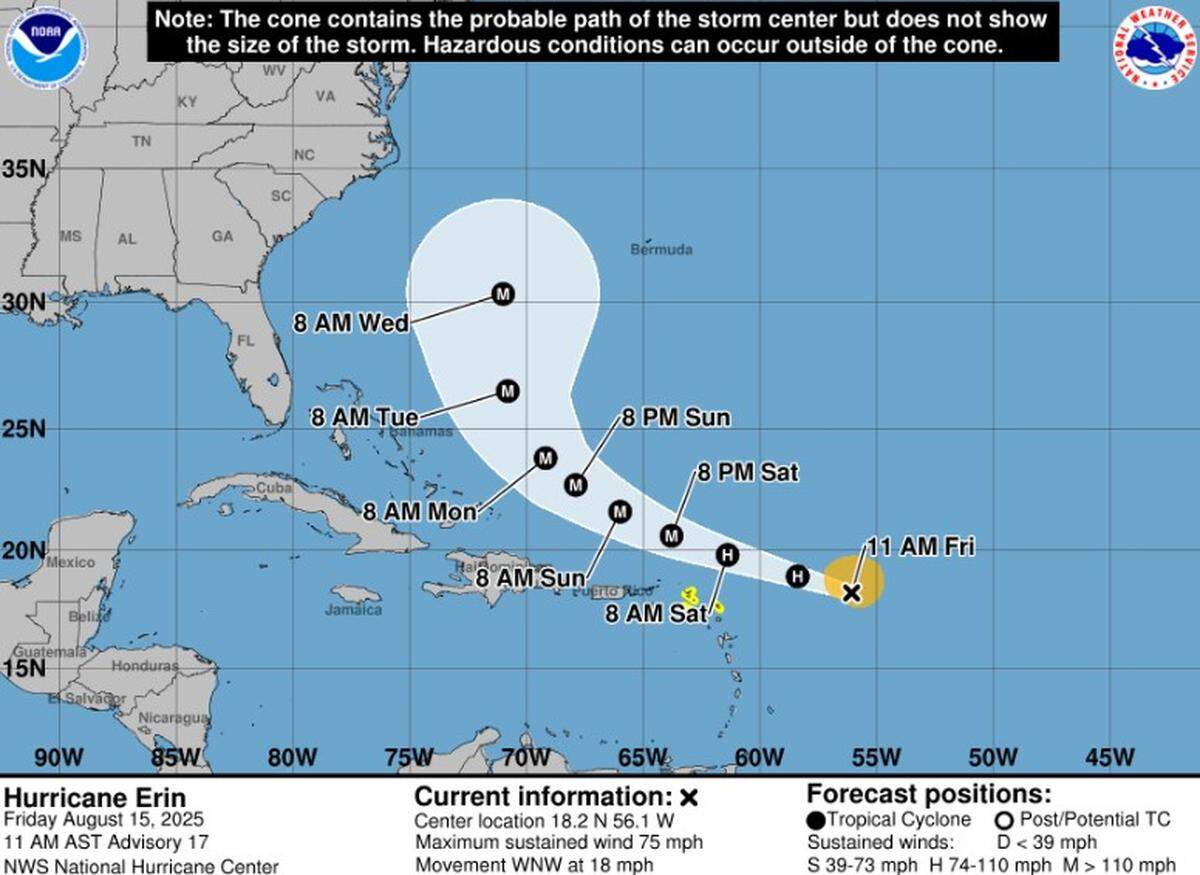
Maximum sustained winds of 75 mph were recorded Friday, Aug. 15, as the storm continues to move west-northwest near 18 mph. Wind speeds are expected to strengthen, and the hurricane will likely become a major hurricane over the weekend.
Where is Erin headed?
The hurricane is likely to move near or just north of the northern Leeward Islands on Saturday, Aug. 16, according to the National Hurricane Center.
Areas including the northern Leeward Islands, the Virgin Islands and Puerto Rico are expected to receive heavy rainfall from the storm’s outer bands Friday night into Sunday, Aug. 17. Rainfall totals of up to 4 inches, with isolated totals of 6 inches, are expected in those areas, and flash and urban flooding, landslides and mudslides are possible, according to the NHC.
Tropical storm watches are in effect for the northern Leeward Islands.
Will Erin hit NC or the East Coast?
According to the National Hurricane Center, the threat of direct impacts along the East Coast and in the Bahamas seems to be gradually decreasing.
The latest experimental cone forecast from the National Hurricane Center shows the center of the hurricane eventually turning northwestward and northward, so it doesn’t make direct landfall on the East Coast.
According to AccuWeather, the storm is forecast to remain hundreds of miles off the East Coast.
However, the storm could still cause dangerous coastal conditions along Atlantic beaches next week, including rip currents.
“Protruding coastal areas,” including the Outer Banks, have a higher risk of direct tropical storm or hurricane conditions, and roads close to the ocean may be inundated, according to AccuWeather.
The National Weather Service Forecast Office in Newport/Morehead City said in a social media post Friday that it is too early to know the storm’s exact track. However, forecasters expect “large, dangerous and life threatening waves” peaking Tuesday, Aug. 19 and Wednesday, Aug. 20. Beach erosion and coastal flooding — especially around high tide starting Monday, Aug. 18 and diminishing Thursday, Aug. 21 — is also likely.
This story was originally published August 15, 2025 at 12:59 PM.