Saturday 5 p.m. update: Erin continues as a Category 5. What that means for NC.
AI-generated summary reviewed by our newsroom.
- Erin intensified to a Category 5 hurricane with 160 mph winds on Saturday.
- Forecasters warned of rip currents, erosion and flooding along NC beaches by Aug. 19.
- While landfall is unlikely, Erin poses risks for the East Coast through Aug. 21.
For the latest forecast on Sunday, Aug. 17, see this story.
Hurricane Erin remained a Category 5 storm with sustained winds of 160 mph, the National Hurricane Center said in its 5 p.m. Saturday update.
Erin intensified rapidly, jumping from Category 3 to Cat 5 in the span of a few hours on Saturday. It is expected to remain a Category 5 until Monday, when some weakening is expected as its path shifts northward. Weather forecasters are urging people to prepare for the arrival of the first major hurricane of the season.
Tracking Erin’s progress
As of Saturday evening, Erin was about 175 miles northeast of San Juan, Puerto Rico.
A tropical storm watch was in effect for several Caribbean islands, and the National Hurricane Center warned that Erin could bring heavy rainfall to places including the Virgin Islands and Puerto Rico through Sunday evening.
The rain could lead to isolated and locally considerable flash and urban flooding, landslides or mudslides, according to the National Hurricane Center.
Forecasters expected Erin to continue moving toward the west-northwest near 17 mph throughout the weekend. Its center was expected to move north of the northern Leeward Islands, the Virgin Islands and Puerto Rico over the weekend, the National Hurricane Center said.
Will Erin hit NC or the East Coast?
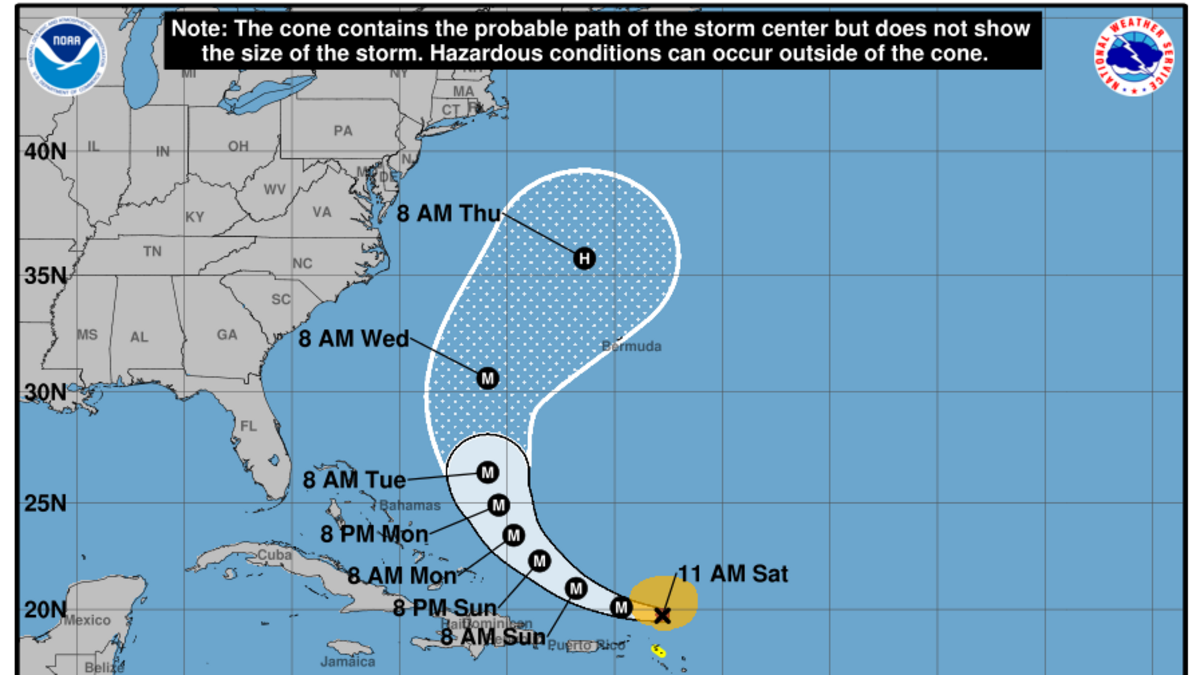
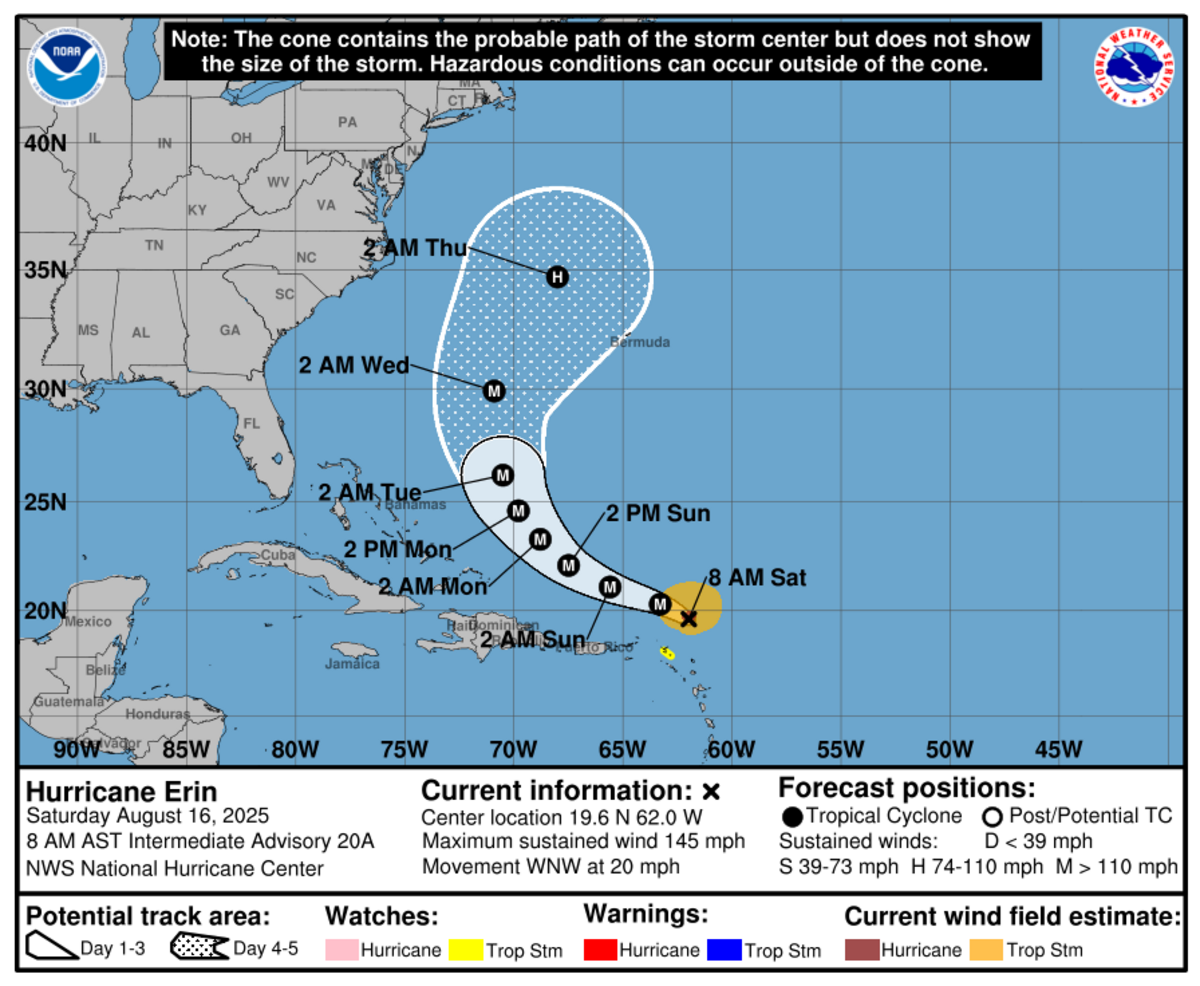
The latest experimental cone forecast from the National Hurricane Center doesn’t show Erin making direct landfall on the East Coast. But weather forecasters are warning the storm will still impact the North Carolina coast.
Mike Brennan, director of the National Hurricane Center, said the storm will pass between Bermuda and the Outer Banks of North Carolina between Wednesday and Thursday. He said the North Carolina coast will experience dangerous rip currents starting Tuesday.
“Be mindful of dangerous beach conditions,” Brennan said during a Saturday morning update on Erin.
In a Saturday morning post before Erin was upgraded to a Category 5, the National Weather Service Forecast Office in Newport/Morehead said eastern North Carolina will begin feeling the impact as early as Tuesday with peaking happening Wednesday/Thursday.
“Coastal flooding and ocean overwash likely for portions of HWY 12, the National Weather Service said Saturday morning on a post on X, previously called Twitter “Powerful rip currents, dangerous surf zone conditions, and beach erosion expected.” Erin would be the first major hurricane of the 2025 Atlantic hurricane season.
This story was originally published August 16, 2025 at 10:48 AM.