Wednesday: Hurricane Erin’s impact on NC expected to worsen. Latest forecast
AI-generated summary reviewed by our newsroom.
- Hurricane Erin causes flooding and storm surge along North Carolina coastlines.
- Evacuation orders and state of emergency declared in advance of peak impact.
- Storm surge may render NC-12 and other coastal roads impassable this week.
Update: Find our latest story and see photos of the damage here.
Coastal flooding, storm surge and overwash has already started at the North Carolina coast ahead of Hurricane Erin, and the storm’s effects are expected to worsen.
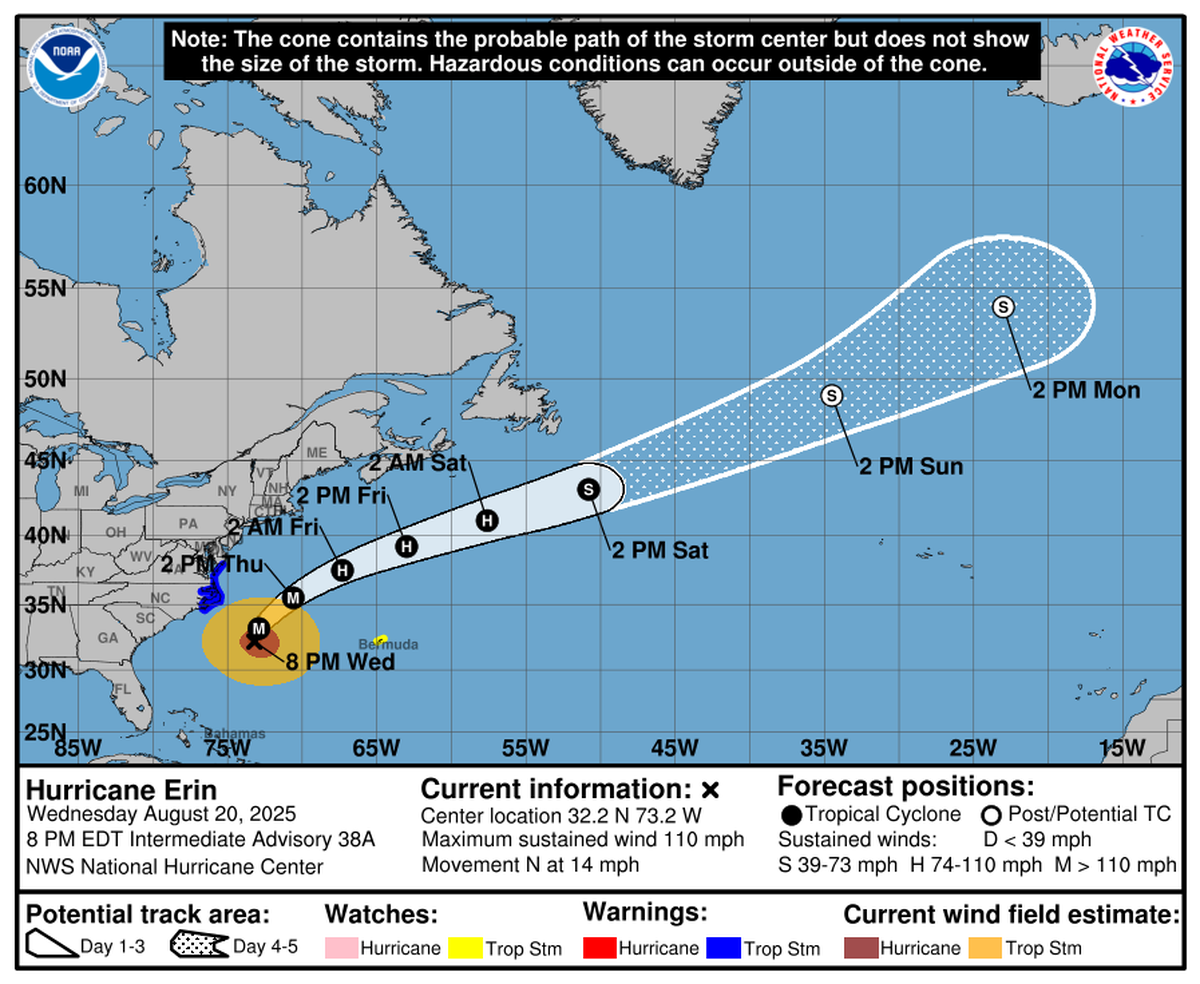
As of 8 p.m., Wednesday, Aug. 20, Erin was about 245 miles south-southeast of Cape Hatteras and about 490 miles west of Bermuda, according to the National Hurricane Center. The storm had maximum sustained winds of 110 mph.
It was moving north-northwest around 14 mph Wednesday evening, but meteorologists expected it to turn north and north-northeast throughout into Thursday night, according to the National Hurricane Center. Then, it is expected to move faster toward the northeast and east-northeast Thursday, Aug. 21 and Friday, Aug. 22.
A storm surge warning is in effect for Cape Lookout to Duck.
A tropical storm warning is in effect for Beaufort Inlet, North Carolina to Chincoteague, Virginia, including Pamlico and Albemarle sounds.
On Wednesday evening, the North Carolina Department of Transportation said N.C. 12 would close from Oregon Inlet to Hatteras Village at 6:30 p.m. as conditions were too unsafe for driving. Images on the NCDOT Facebook page showed water had flooded the main thoroughfare connecting the chain of islands.
Overwashed areas include the area north of Hatteras Village, Buxton and Rodanthe, according to a news release.
Erin — which has intensified and weakened over the past several days — may again strengthen. But meteorologists expect it to begin weakening by Friday, while remaining a hurricane into the weekend.
State of emergency declared for NC
On Tuesday, Aug. 19 afternoon, Gov. Josh Stein declared a statewide state of emergency in anticipation of the storm.
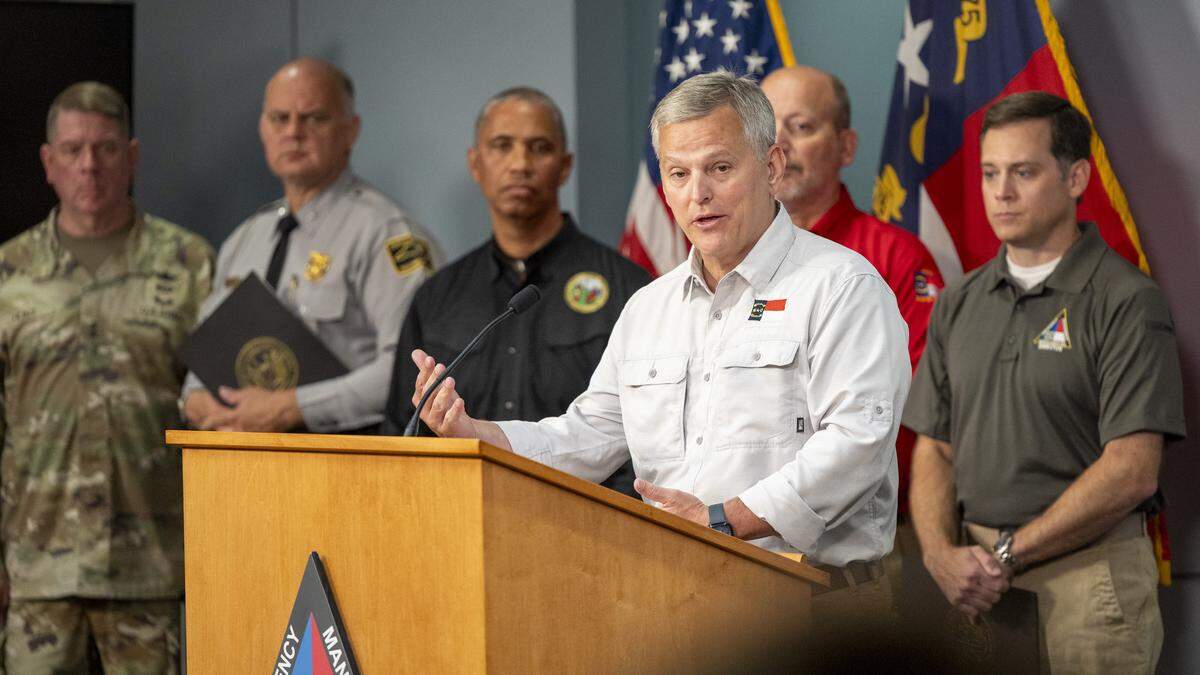
“The storm remains dangerous and is already impacting lots of people here in North Carolina,” Stein said at a press conference Wednesday. “Folks on the coast need to take care.”
Local officials also declared states of emergency in Currituck, Dare and Hyde counties, prompting evacuations.
Stein urged anyone who is on Ocracoke or Hatteras islands to evacuate and said the State Operated Disaster Shelter is open to families and pets at 113 Wilcox St. in Warrenton.
Three swift-water rescue teams and 200 North Carolina National Guard troops have been stationed along the coast, Stein said at the press conference. There are also Chinook helicopters from Georgia on standby, ready to deliver food and water if needed.
Three search and rescue task forces from Buncombe County, the Charlotte Fire Department and the Greensboro Fire Department have been deployed, N.C. Director of Emergency Management Will Ray said at the press conference. They have water rescue, structural collapse and wide-area search capabilities.
State emergency officials have been in contact with the Federal Emergency Management Agency, Ray said, but are not anticipating that significant federal resources will be needed in response to the storm, at this point.
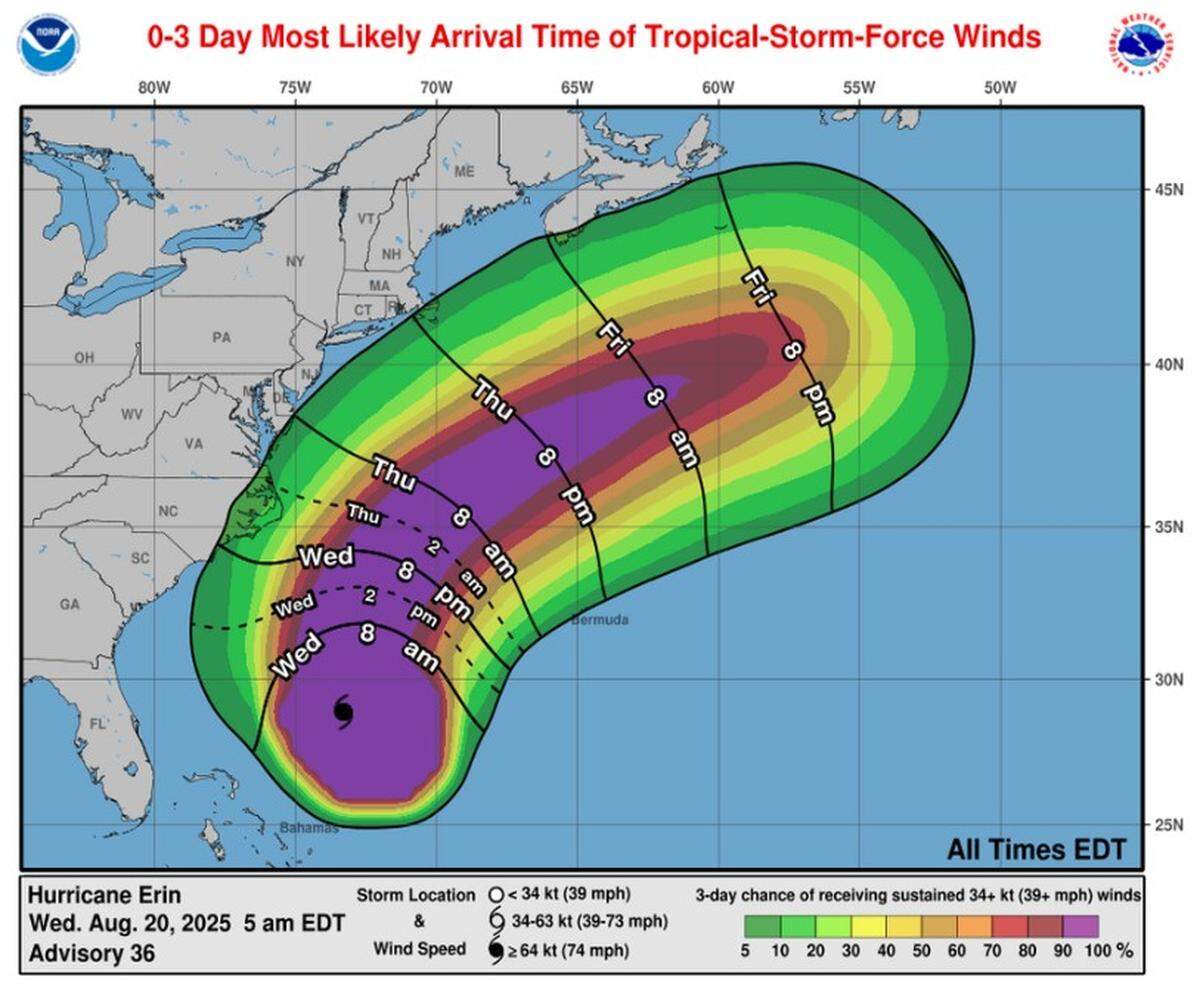
Along the North Carolina coast, storm surge and tropical storm warnings remain in effect as of Wednesday. Tropical storm-force winds are are possible from Wednesday evening until Thursday morning, according to the National Weather Service Forecast Office in Newport/Morehead City.
While Erin is expected to remain offshore, tropical storm-force winds could extend outward up to 265 miles, affecting coastal areas.
Life-threatening rip currents, beach erosion and dangerous surf are also concerns.
What is storm surge?
Meteorologists at the National Weather Service Forecast Office in Newport/Morehead City are expecting 3 feet or greater of inundation above typically dry ground along the ocean side of the Outer Banks, prompting the storm surge warning.
Storm surge is an abnormal rise in water level caused by a storm, above the predicted astronomical tide, according to the National Oceanic and Atmospheric Administration. The term is often used interchangeably with storm tide, which refers to water level rise because of the combination of storm surge and the astronomical tide.
This inundation could cause roads, including N.C. 12, to become impassable and/or inaccessible through late in the week, as several feet of water covers roads.
According to the Morehead City National Weather Service Forecast Office, inundation and ocean overwash has already started and will peak late Wednesday into Thursday, diminishing slowly late in the week.
Areas on the sound side of the Outer Banks should expect the highest water levels Wednesday night into Thursday.
This story was originally published August 20, 2025 at 9:17 AM.