The Triangle ice storm didn’t come. TV meteorologists still got hate
AI-generated summary reviewed by our newsroom.
- Forecasts for ice accumulations during last weekend’s storm weren’t accurate.
- Many people thanked meteorologists, but others became frustrated and angry.
- TV meteorologists have experience and education, while social media forecasters may not.
About a week ago, meteorologists at the Triangle’s local television stations were warning viewers of a significant winter storm, one that could bring enough ice accumulation to cause widespread power outages and hazardous travel conditions.
The weekend progressed, and precipitation fell across central North Carolina. But it came more as sleet and less as freezing rain. While black ice remained a concern for several mornings and nights, power outages were isolated.
Many on social media thanked meteorologists for their work before, during and after the storm. But other people seemed upset that the forecasts weren’t manifested, that the impacts weren’t as significant as meteorologists warned.
“Cant predict whats happening in 12 hours yet folks like yall tell us what gonna happen to the world 50 years from now...do better or reimburse me and the linemen for our time and money prepping for the inaccuracies,” one person commented on a Facebook post by WRAL’s Chris Michaels.
“When can we admit that all forecasters were horrible?” another wrote on a post by CBS 17’s Wes Hohenstein.
Hearing mixed reviews from viewers and other people after a weather event isn’t unusual, meteorologists who spoke with The News & Observer said.
“We’ve gotten some pretty thick skin over the years as meteorologists,” said Hohenstein, the chief meteorologist at CBS 17.
But recently, the feedback has been different.
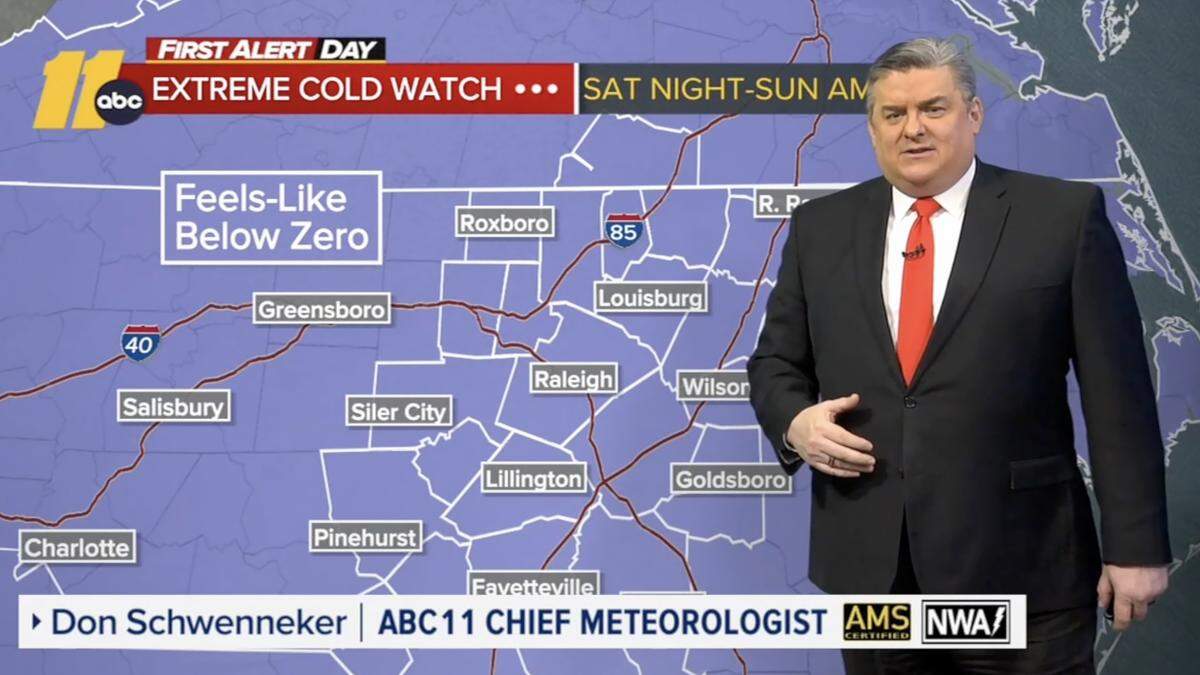
Don “Big Weather” Schwenneker, the chief meteorologist at ABC11, was hearing from people after last weekend’s storm “blaming” him because they didn’t see a foot of snow — an amount Schwenneker never had in his forecasts.
“This past storm was the worst example I’ve seen, because there’s so many more non-qualified people just giving a forecast online, that it all kind of gets lumped together,” he said.
Just days ago Schwenneker saw, in around 15 minutes, 53 people on TikTok giving inaccurate forecasts. None of them were meteorologists. And the reason people do this, Schwenneker said, is for engagement — views — and, consequently, money.
“I think people need to realize that when they’re seeing someone in their feed, whether it’s TikTok, Instagram, whatever, they could be putting out a terrible forecast just so you’ll watch,” Schwenneker said.
The quantity of bad forecasts led Schwenneker to post a “rant” on Facebook, highlighting his qualifications and those of other meteorologists.
And he wasn’t the only one. Michaels, a WRAL meteorologist, also took to social media to address the criticism, in the form of one of his letters to “Dearest Mother.”
“Most villagers express kindness and understanding toward the delicacies of such a prognostication. A small minority choose to unfurl inner anger onto our predictions,” Michaels wrote. “Nevermind that, Mother.”
Why forecasts aren’t always accurate
Michaels has a degree in meteorology from N.C. State and has worked as a meteorologist for more than a decade. Schwenneker has been a meteorologist for 30 years and holds the Certified Broadcast Meteorologist seal from the American Meteorological Society and a Seal of Approval from the National Weather Association. Hohenstein, who has been a meteorologist for nearly 30 years, including 20 in central North Carolina, has a degree in meteorology and a Seal of Approval from the American Meteorological Society.
The minutes-long forecasts viewers see on TV take hours to produce. Meteorologists look at a variety of sources including data from weather balloons, computer models and climatology. They also rely on their own experience.
“We know what happens a lot. We know what happens most times,” Hohenstein said. “We know what to watch out for that could ruin our forecast.”
Still, forecasts aren’t always 100% accurate.
Ahead of last weekend, for example, Schwenneker predicted ice accumulation totals of 0.5 inches to 0.75 inches, but noted that more sleet would drive down the ice accumulation totals. The Triangle didn’t get that much ice because more sleet than originally expected fell.
“We do a 10-day forecast on TV every day — so that’s 10 high temperatures, 10 low temperatures, 10 precipitation chances,” Hohenstein said. “And to have all of that be 100% correct for our little part of this planet that’s spinning on its axis, 70% water and rotating around a giant ball of fire called the sun, it’s hard to do. We’ve gotten really good at it over the years, but it’s still not perfect.”
Snow coming to the Triangle this weekend
.JPG "RAL_013026-SNOW-PREP-KLM-01 (1).JPG")
Within the next 24 hours, snow will have started falling across central North Carolina, meteorologists say.
Forecasters continue to fine-tune their expectations for snowfall totals throughout the weekend.
Schwenneker is predicting something else: a repeat of the feedback received after last weekend.
“Some people will get 3 inches, and some people will get 12 inches,” Schwenneker said Thursday. “And the people who get three will say, ‘You guys were totally wrong.’ And the people who get 12 will say, ‘I thought we were supposed to get 16.’ So it’s all part of the job.”
This story was originally published January 30, 2026 at 12:45 PM.