Fire danger warning issued in Raleigh area. Here’s what that means
AI-generated summary reviewed by our newsroom.
- Forest Service asks residents in the Triangle to avoid outdoor burning.
- Dry fuels, gusts of 20–30 mph and dry humidity raise fire risk.
- Residents should check burn bans, keep fires small and have water and tools nearby.
Much of central North Carolina, including the Triangle, has an increased risk of fire danger.
The North Carolina Forest Service is asking residents to avoid outdoor burning or take extreme caution burning with increased fire danger in the Triangle, including in Wake, Durham and Orange counties.
Fire danger is the environmental condition that cause fires to ignite and spread.
“Fire danger is high due to dry vegetative fuels coupled with hot, dry and breezy conditions,” according to the Forest Service. “With poor moisture recovery overnight, increased fire danger could continue over several days. Dry grasses, dead leaves and other vegetative debris could easily ignite and spread quickly.”
The National Weather Service estimates the increased fire danger will be from 3-10 p.m. Monday with the combination of dry grass and vegetation, wind gusts reaching 20 to 30 miles per hour and dry humidity.
Durham County issued a countywide burn ban as of 6 a.m. Monday until further notice, “due to dry conditions and increased fire danger,” according to a news release.
How to prevent fires
There were 6,845 reported wildlifes totaling more than 31,000 acres in North Carolina in 2025, state data shows. The leading cause of wildfires in North Carolina is “careless debris burning,” according to the North Carolina Forest Service. To prevent wildfires, people should:
- Check for any burn bans or fire restrictions. There is no statewide burn ban as of March 23.
- Never burn on dry, windy days.
- Keep burn pits small, and fires should never be left unattended.
- It’s illegal to burn anything other than natural vegetation, and trash must be taken to a waste station.
- If burning, keep a water hose, bucket, steel rake, shovel and phone nearby.
- Never use flammable liquids like gas to speed up burning.
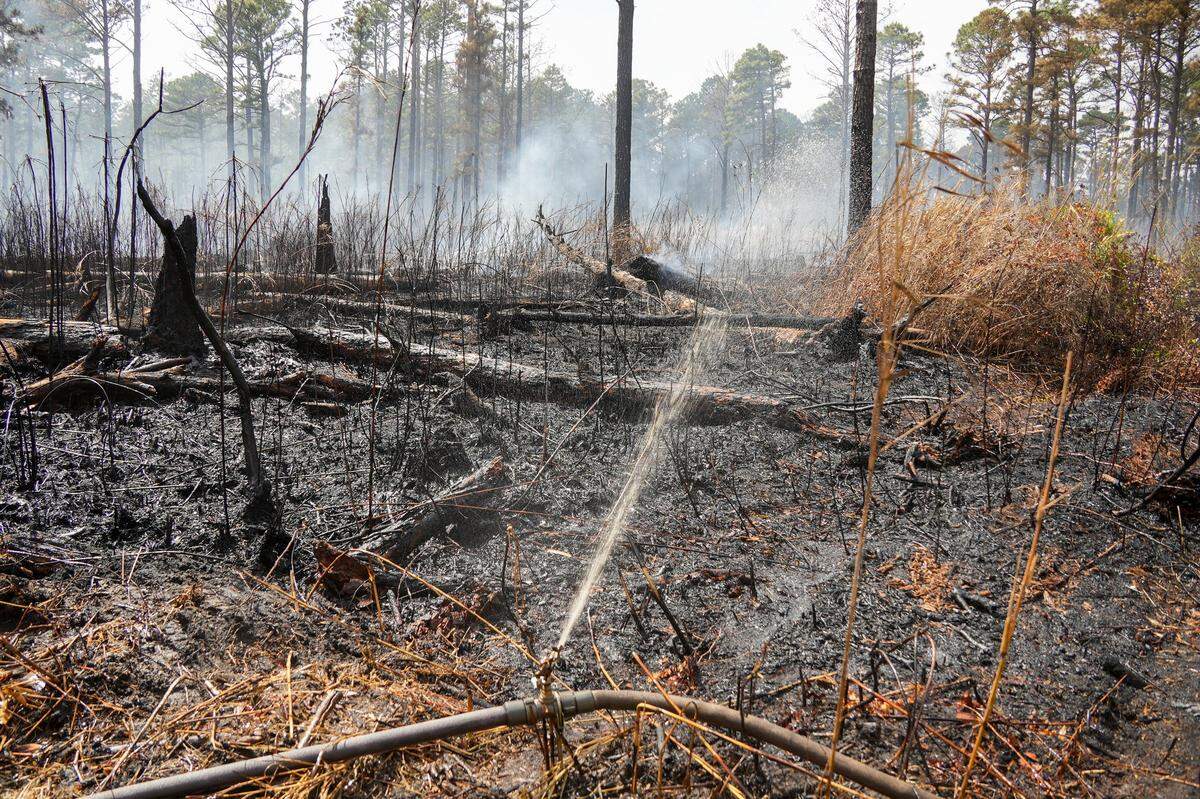
“Most of us are careful with fire,” according to the NC Forest Service. “We build fires in the right places, at the right time. We keep a fire at the proper size and put it out before leaving it. Some of us don’t, which can result in catastrophic wildfires. Wildfires can do terrible damage. With North Carolina’s growing population and wildland urban interface, wildfire risk also grows. You are the best defense against wildfire.
All of North Carolina is under a drought with most of the state, including the Triangle, under a severe drought.
This story was originally published March 23, 2026 at 10:41 AM.