Is a super El Niño hitting NC getting more likely? What that means for weather
AI-generated summary reviewed by our newsroom.
- Climate Prediction Center gives an 82% chance El Niño will form by July.
- El Niño tends to bring wetter winters to North Carolina, based on state records.
- An earlier, stronger El Niño can strengthen upper-level winds that may hamper storms.
El Niño, the climate pattern that usually brings wetter winters to North Carolina, is arriving much faster than usual and with the potential to affect this year’s hurricane season.
There’s an 82% chance of El Niño emerging by July and continuing through winter 2027, according to a Thursday, May 14, update from the National Weather Service’s Climate Prediction Center.
“El Niños are typically pretty slow to develop,” said Corey Davis, Assistant State Climatologist at the North Carolina State Climate Office. “Sometimes we can be going into the fall, and we’re still waiting for this sea surface temperature to hit that El Niño threshold. So the fact that it’s almost there before we even get into the summer like that, that’s pretty meaningful.”
Some forecasters are already calling this a rare ‘super’ El Niño that could smatter records.
“This developing El Niño has the potential to become one of the strongest in decades and could rival some of the most intense events observed in modern records,” said Paul Pastelok, Accuweather Lead Long-Range Expert, in a news release.
Here’s what you need to know about El Niño and its potential effects on North Carolina.
What is El Niño?
Trade winds — the strong winds that helped sailors navigate the world’s oceans — blow across the Pacific Ocean from South America towards Asia, bringing with it warmer water that’s replaced by colder, deeper ocean water.
Those strong winds weaken during an El Niño. Warm water pushes toward the Americas, and the cold water isn’t replaced off the coast.
“When you look out across the Pacific Ocean, every two to three years, we tend to see the water shift from being warmer than normal to cooler than normal,” Davis said. “And when you have a very large body of water that is consistently warmer or cooler than normal, that starts to have impacts on large scale weather patterns.”
.JPG "RAL_050726-RAIN-FEATURE-KLM-01 (1).JPG")
What are the likely effects of El Niño in North Carolina?
The effect of this El Niño likely won’t be felt until later this year and into 2027.
El Niños tend to bring wetter winters to the Carolinas, and drier and warmer air across the northern parts of the United States.
Three past North Carolina El Niño winters — in 1997-1998, 2009-2010 and 2015-2016 — rank among the state’s top ten wettest on record, according to the North Carolina State Climate Office.
What is a ‘super’ El Niño?
The origins of the term ‘super’ El Niño likely has more to do with algorithms than science.
“These are headline writers being very creative because you get terms like ‘super’ El Niño,” Davis said. “I’ve also seen a Jurassic El Niño and a Godzilla El Niño. There is no science behind any of those terms, but they’re very catchy, and they’re very attention grabbing.”
The Climate Prediction Center forecasts the strength probabilities of El Niño as “weak,” “moderate,” “strong” and “very strong.” El Niño officially begins when a key portion of the Pacific Ocean near the equator is 0.5 degrees Celsius warmer than normal.
“While confidence in the occurrence of El Niño has increased since last month, there is still substantial uncertainty in the peak strength of El Niño,” according to this week’s Climate Prediction Center’s update.
That data shows a 37% chance of a very strong El Niño in November, December and January timeframe. El Niño reaches the “very strong” category when it’s 2 degrees Celsius warmer than normal.
“Stronger events do not always mean bigger weather and climate impacts,” according to the Climate Prediction Center. “Stronger events can make it more likely that certain impacts could occur.”
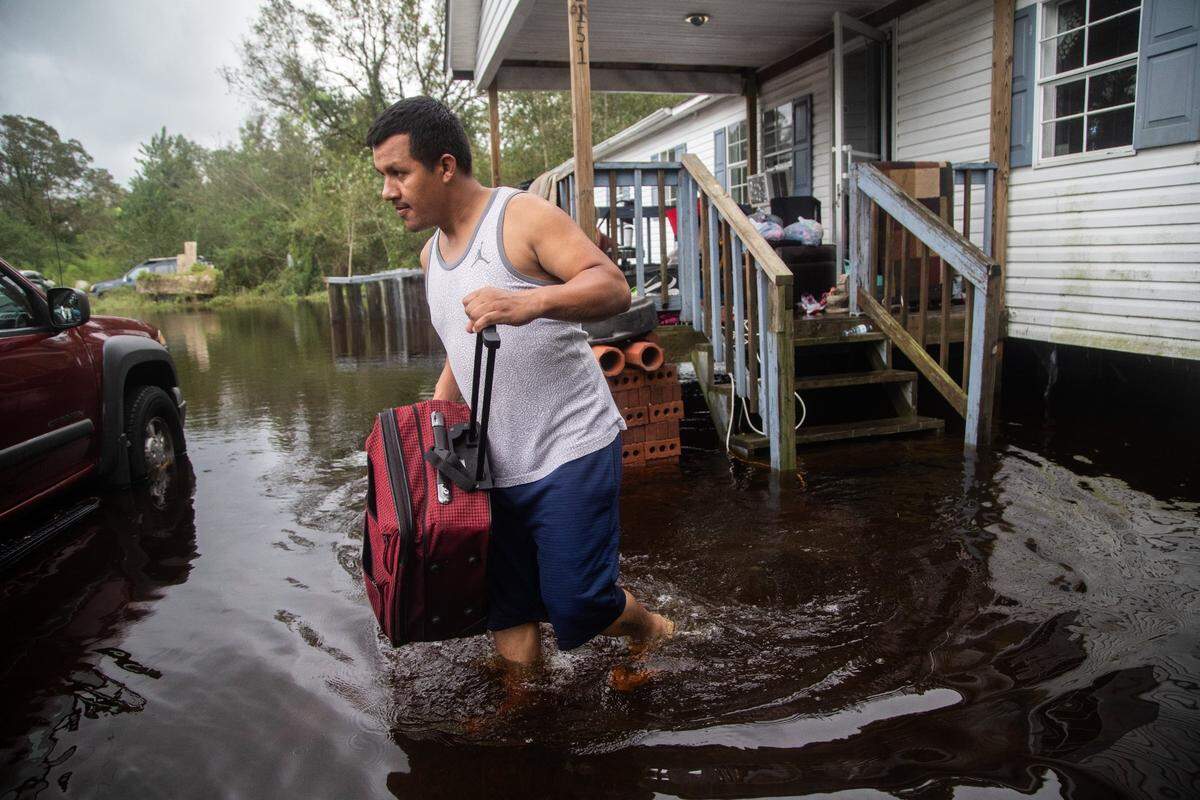
How could El Niño effect NC’s hurricane season?
Think about a house of cards, and how easily it can topple down with a quick gust.
A stronger and earlier El Niño brings more warm water, strengthening the jetstream, or air currents, moving toward the Atlantic Ocean.
“These upper level winds blow right across the tropical Atlantic, the same environment where tropical storms and hurricanes are formed,” Davis said. “As we get closer to the peak of hurricane season, those strong winds may actually hamper some of the tropical activity.”
But an earlier El Niño, with its warming water, could lead to earlier storms during the hurricane season, which runs June 1 through November 1.
“Knowing that the water is already fairly warm out there, it’s possible we could see more early season activity and, historically, when we see tropical storms forming in June, July and even early August, the coast of North Carolina is a pretty common spot for those types of systems to form because that’s where the warmest water is.”
Some early hurricane forecasts are predicting average-to-below-average seasons this year, through the National Weather Service will release its report next week.
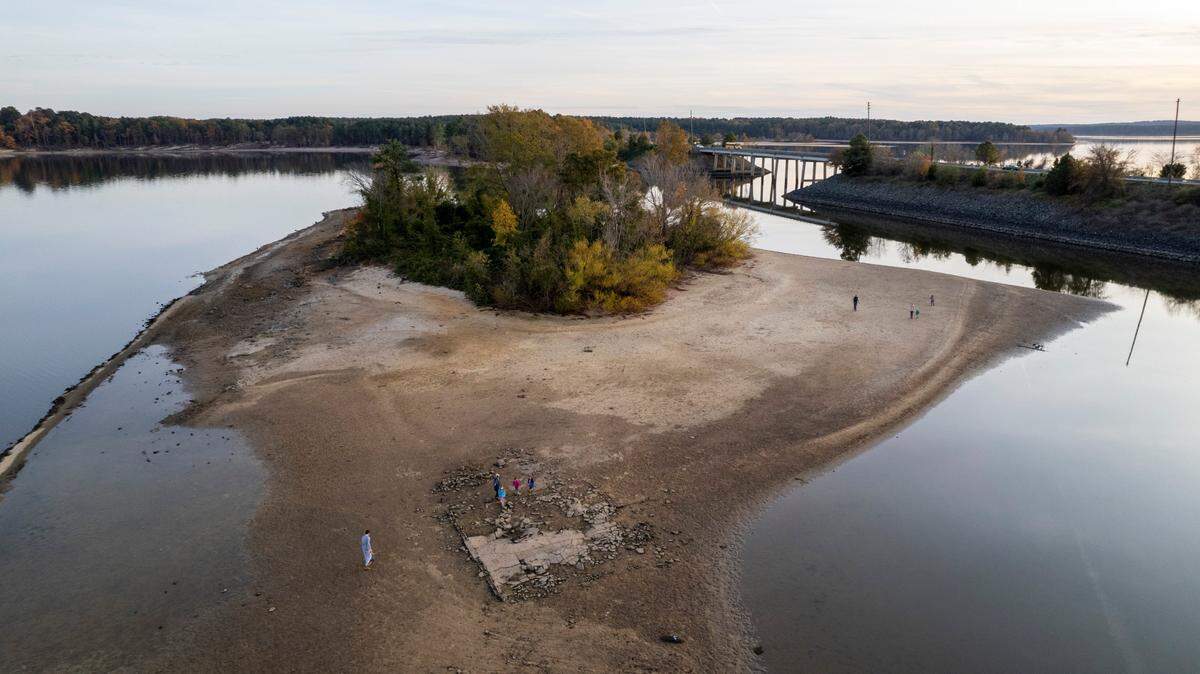
How could El Niño effect NC’s drought?
If this year’s hurricane season is below average with fewer or weaker storms, an El Niño could offset the usual amount of rain.
“We don’t like to wish for a hurricane,” Davis said. “But we can sort of have our fingers crossed for a decent tropical storm in the next couple of months (for the state’s drought).”
About 95% of the state is in extreme drought, with some recent soaking rain enough to get rid of the worst drought ratings near Charlotte. But several areas including in the Triangle, Triad and mountains are still facing significant rainfall shortages with some cities implementing water restrictions.
“We’re counting on this El Niño to eventually bring us some wetter weather, some better rainfall chances, but it may take until the end of the year once we get into the cooler season,” Davis said.
How is climate change impacting El Niño in NC?
El Niños used to mean North Carolina would get the cold and wet stuff during the winter months.
Now, it’s mostly the wet stuff.
“For folks who are used to associating El Niño with snow, that’s one of the adjustments that we’re having to learn with a warming climate,” Davis said. “With the sort of warm air that can come in from a strong El Nino pattern, snow is far from a guarantee. We can have a very wet winter and not see a flake of snow this year.”
Five of the seven El Niño events prior to 1990 were cooler than the 20th-century average, while the five events after were warmer, according to state data. That includes the winter of 2015-16, one of the last strong El Niño events in the state.
Rain was near constant with the state getting three to four inches of precipitation a week in December 2015, the wettest December on record.