
It’s time for a change of strategy in NC’s endless battle against litter
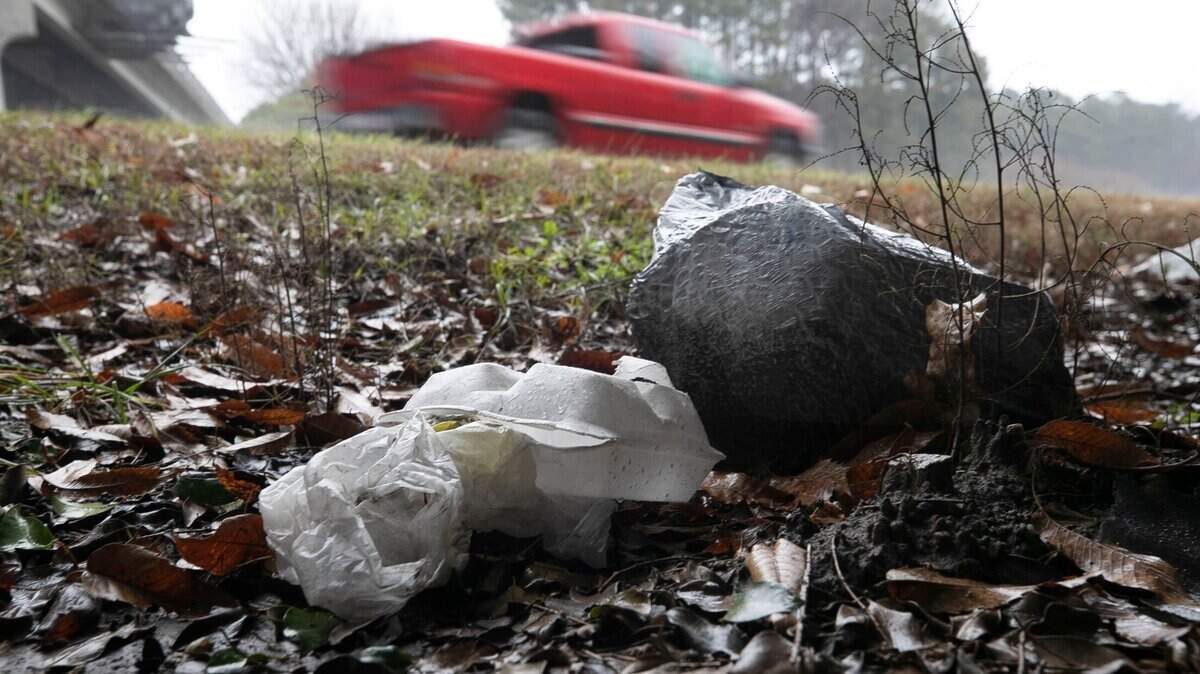
A few weeks ago, after seeing a flurry of letters to the editor on the subject, I wrote about North Carolina’s growing problem of roadside trash.
That column brought another round of letters and email.
While there’s a discouraging number of careless people who toss trash in the public or along the state’s roads, there is a heartening number of caring people who pick it up. People like Linda Sanders of Chapel Hill. When she and her husband, Brian, take their daily walk they carry grip-and-grab sticks. Since last April they’ve filled 219 bags
“Hey, if you’re out walking, why not have a dual purpose and pick up trash?” she said.
Sanders’ East Chapel Hill Rotary Club is also getting involved with a Green Team initiative. In one weekend outing members filled 35 33-gallon bags with litter.
NCDOT has heard plenty of complaints about rising litter. It has restored the budget cut it had made in roadside maintenance funding and says the worst conditions should improve.
Meanwhile, this week, state House Majority Leader John Bell (R-Wayne) introduced the Highway Cleanup Act. The proposed law would increase penalties for littering, support anti-littering education and provide funds for deputies who want to pick up litter to earn overtime pay. (The use of inmates for litter collection ended a few years ago after being deemed too expensive and inefficient. NCDOT now uses contractors.)
“Like many North Carolinians, I am extremely frustrated and upset with the amount of trash and litter building up on the side of our roads,” Bell said in a press release. “As I travel and talk to people across the state, everyone agrees that something needs to be done to address the problem.”
Michael Murdoch of Newport, near Morehead City, welcomes the renewed attention to litter. A retired parks director, he regularly gets 10 to 20 people together to pick up litter along roads and parks. He has been doing it since 2012, but feels it’s a losing battle.
“If you just drive, you’ll see things flying out. I had to dodge a chair the other day,” he said. “It’s the construction industry, the trash hauling industry. It’s everybody. Why should I pick up somebody’s else’s stuff. I guess because I’m a sap or something.”
Murdoch isn’t just miffed by what’s being thrown out. He’s also bothered by what’s not being given out – tickets for littering. He obtained state statistics that show a big drop in citations and convictions over the last decade. In 2011, there were 4,417 charges and 1,943 convictions. In 2020, the numbers fell to 2,726 charges and 807 convictions.
Murdoch is baffled by how in a state of 10.5 million people, a state where contractors and volunteers gather countless bags of litter, only 807 people were actually punished for littering last year. ”I haven’t found anyone who can figure out why this has happened other than people don’t think it’s a priority,” he said.
Enforcement of littering laws is split between a range of local and state police agencies and it can be hard to catch litterers in the act. But in the end, not much is done. Over the past three years, the State Highway Patrol has averaged about 1,100 charges a year for littering and the failure to secure truck loads.
For all the trash he has picked up, Murdoch thinks the effort is pointless without more emphasis on enforcement and pressure on companies whose disposable products often end up as litter. He is especially worried about plastic litter, which isn’t only unsightly but dangerous as it breaks down into micro-plastics that are consumed by people and wildlife.
“Why are we not holding people responsible?” he said. “We are not making any progress. We are going back. Let’s not keep doing what we’re doing. Let’s do something different.”