
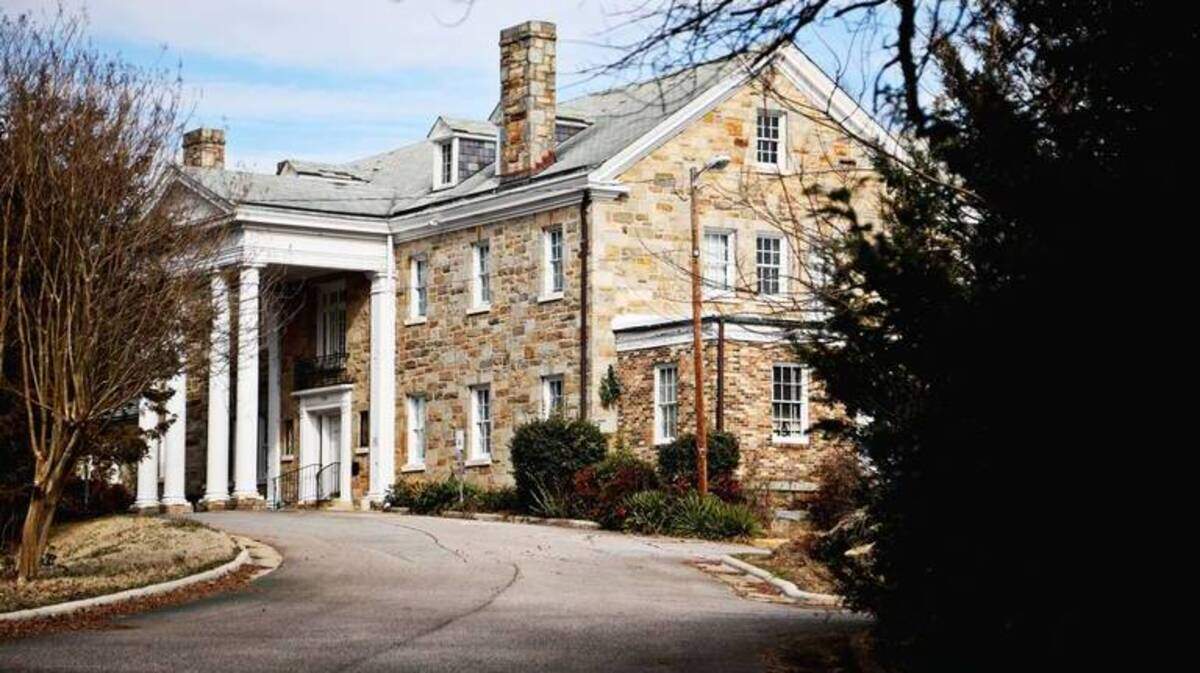
Historic Wakestone tells a complex story, but only if it survives. Don’t demolish it.
Welcome to NC Voices, where leaders, readers and experts from across North Carolina can speak on issues affecting our communities. Send submissions of 300 words or fewer to opinion@newsobserver.com.
Don’t demolish Wakestone
Raleigh just failed miserably as a city that cares about its historic buildings.
Wakestone, the 1920 home of Josephus Daniels, is now slated for demolition, ostensibly because of his role in the 1898 Wilmington Massacre as publisher of the News & Observer.
Actually, in a cynical exploitation of the nation’s discussion about racial justice, a developer will now destroy the house and four acres of historic landscape and build 14 expensive new houses.
Gobs of money will be made behind the pretense of caring about racial justice. Don’t expect any affordable houses here.
Since 1976, Wakestone has been one of Raleigh’s three National Historic Landmarks, denoting national significance. It’s been a Raleigh landmark since 1990 and in a National Register historic district since 2002. Its landscape was determined to have statewide significance in 2013 to prevent its destruction.
No National Historic Landmark has ever been demolished in North Carolina.
You’d think that all those designations would matter. They didn’t.
The application to delist the property as a Raleigh landmark was written by the land planner for the developer, not a historian nor preservation expert. It painted an ugly picture of Daniels, implying that anyone seeking to preserve the house was racist.
But it really wasn’t about history. It was about lifting the restrictions on developing the site. It was about making money.
Josephus Daniels was the most prominent individual ever to call Raleigh home. Yes, he was a segregationist and fanned the flames for the Democratic Party in Wilmington in 1898. We shouldn’t honor Daniels with a statue in a public square or a school named for him.
But there is much more to learn from this house. Preserving buildings is not about honoring individuals; it’s about recognizing where history happened.
Historic preservation tangibly tells history’s complex stories, but only if the buildings survive.
Myrick Howard
President, Preservation North Carolina
NC’s Recovery Rebate Act
Every child is filled with tremendous promise and we have a shared obligation to foster their potential. That means shoring up the ways we support families.
North Carolina’s proposed Recovery Rebate Act is an easy and cost effective policy option that will reduce financial pressure on N.C. families and prevent child abuse and neglect.
North Carolina spends over $2 billion each year on the downstream consequences of child abuse and neglect.
Injuries and other harm associated with child maltreatment mean we must identify cost effective prevention strategies, like generous and refundable tax credits.
Nearly 1 million N.C. families would benefit from a Recovery Rebate, and nearly 1.2 million children. The rebate would give qualifying working families in North Carolina an extra $500 annually to buy groceries or pay rent.
When parents thrive, children thrive. Children benefiting from additional income from the Recovery Rebate are more likely to do better in school and to see their employment and earnings prospects improve over their lifetime.
Refundable tax credits like the Recovery Rebate are also associated with an 11% decrease in foster care entries compared to states without the same type of support for working families. This would mean that approximately 1,150 fewer children could be diverted from entering foster care each year.
We can keep the heaviest loads from weighing families down if we act now to invest in the Recovery Rebate for our children.
In an era of intensive political polarization, there is something for legislators of both major parties to like about the Recovery Rebate Act. There’s no reason why N.C. legislators can’t work together to support this “no-brainer” of a policy to support the state’s families with children.
Dr. Mathieu Despard
Associate Professor, UNC Greensboro Department of Social Work
Melea Rose-Waters,
Policy director, Prevent Child Abuse NC
BEHIND THE STORY
MOREHow do I get a letter published?
The Raleigh News & Observer publishes letters to the editor on Tuesday, Wednesday, Friday and Sunday most weeks. Letters must be 200 words or less, and they will be edited for brevity, clarity, civility, grammar and accuracy. Please submit to forum@newsobserver.com
What are you seeking when you choose letters?
We’re seeking a variety of viewpoints from a diverse group of writers.
What must I include?
You must include your first and last name, address, email, and phone number. We never print anonymous letters. If you’d like for us to consider publishing your photo, please include one.
How often can I have a letter published?
Every 30 days. But you can write as often as you’d like!
This story was originally published May 18, 2021 at 1:13 PM.