
Raleigh’s Ligon House is worth saving. Here’s why.
As the Raleigh real estate market continues its unprecedented climb, the social, cultural and architectural casualties are mounting — most notably in Raleigh’s historically Black neighborhoods.
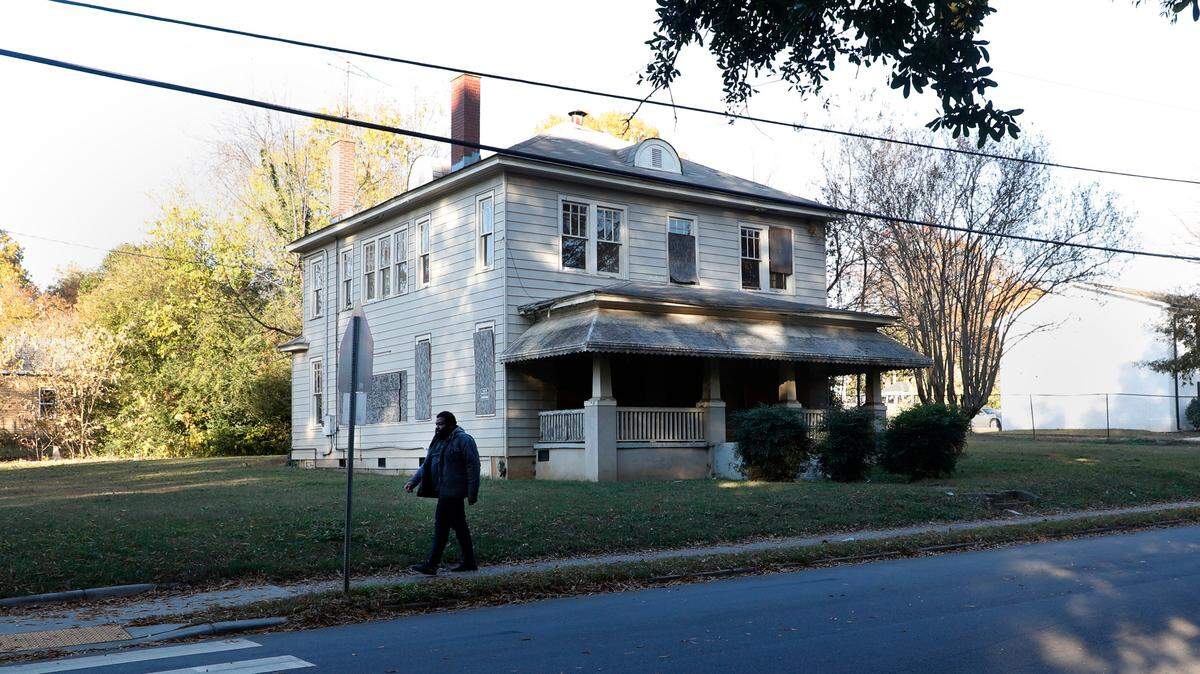
The Rev. John W. Ligon House at 573 E. Lenoir St. could be the next victim. Located in the historic East Raleigh-South Park neighborhood, the property was listed for sale last week with an asking price of $525,000. After standing vacant for over a decade, the roof has failed and the windows are broken and boarded.
The listing description makes no mention of charming nooks, stainless steel appliances or granite countertops. Instead, it spells out “teardown” without actually saying it — “...great opportunity for investors. Many new homes in this area. Very close to downtown Raleigh. Property is being sold for land value only.”
The National Register inventory describes the house as, “3-bay hipped-roof house with original 6-over-1 double-hung sash windows; attached 1-story porch with hipped roof, Craftsman-style supports...matchstick balustrade, eyebrow attic dormers; aluminum siding.”
Admittedly, that rambling description would excite only the most ardent architecture enthusiast. Although handsome, 573 E. Lenoir. wouldn’t make any landmark rosters for its high style. Instead, it’s notable for its association with the Ligon family, particularly Rev. John W. Ligon, a prominent Black educator, businessman and pastor in Raleigh. In 1953 the newly opened Ligon High School was named in his honor.
In a 1953 N&O article published at the time of the school’s opening Ligon is described as a “dynamic teacher and a good disciplinarian, holding the respect alike of pupils, parents and teachers.” A graduate of Shaw University, Ligon went on to serve as interim principal at Washington School, then principal of Garfield School from 1900-1919.
The East Raleigh-South Park neighborhood was placed on the National Register of Historic Places in 1990. This largely honorary designation has done little to quell the most recent barrage of teardowns and subsequent gentrification.
My Saturday morning ritual of browsing real estate listings has become akin to slowly passing a gnarly car wreck on I-40 — part of me wanting to assess the damage, the other part wincing at the loss, hurt and waste.
Long-time residents of historically Black neighborhoods are being pushed out ever faster due to high property taxes and pressure from developers. Homeplaces owned over generations are razed and replaced with towering amalgamations of half-a-dozen architectural styles.
The Raleigh Historic Development Commission landmarks properties with requisite special significance, be it architectural, cultural, historical or even pre-historical. With that honor comes a 50% property tax deferral.
We humans have a peculiar superpower — anything we choose to assign meaning to immediately possesses meaning. We have a choice. Either shake the giant Etch-a-Sketch of Raleigh and denounce or forget the people and events that brought all of us to this very moment, or learn about and analyze our past while exalting people like Ligon who used his life to improve society. Using his former house as a vehicle for that reverence is a good start.
Realistically, we cannot save every landmark or old house. Among many things, Raleigh needs density and affordable housing — two things that sometimes come at odds with preservation efforts. But we also need these cultural waymarkers, lest we lose our way.