
NC Republicans want the U.S. Supreme Court to change democracy as we know it
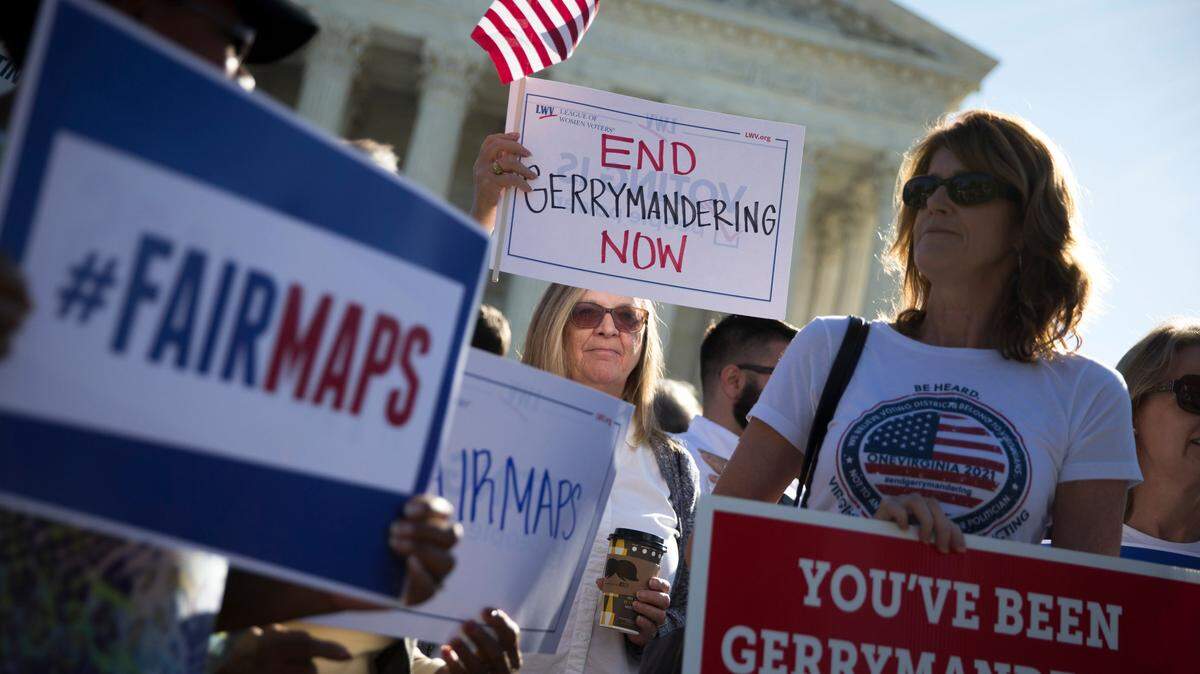
North Carolina’s redistricting process held no shortage of chaos this year as state courts twice struck down electoral maps drawn by the legislature and, ultimately, imposed their own set of congressional districts.
In the end, though, justice prevailed, and voters were spared yet another egregious partisan gerrymander.
Now, state lawmakers want to make sure that never happens again.
Republican legislators announced last week they’re asking the U.S. Supreme Court to review whether state courts violated the U.S. Constitution when they struck down and redrew congressional maps earlier this year.
Their argument is based on a fringe legal theory known as the “independent state legislature doctrine,” which has been popular with conservatives nationwide. At its core is the idea that state legislatures have the ultimate authority in regulating federal elections, and neither state courts nor the executive branch have any power to intervene.
“Activist judges and allied plaintiffs have proved time and time again that they believe state courts have the ultimate say over congressional maps, no matter what the U.S. Constitution says,” Senate leader Phil Berger said in a release Thursday. “We must continue this fight to restore the primacy of the legislature and put an end to these efforts to undermine its constitutional duty.”
Past Supreme Courts have rejected this line of thinking as recently as 2019, when the Supreme Court ruled in Rucho v. Common Cause that battles over partisan gerrymandering can and should play out in state courts. This Supreme Court, however, may grant the GOP its wish.
Earlier this month, the Supreme Court denied the GOP’s appeal to decide the case before the 2022 midterms. But several conservative justices signaled they would be open to addressing the issue at a later date. Lawmakers need four of the nine justices to vote to take up the case, and it appears they may have that support already.
North Carolina Republicans are hardly the first to endorse this doctrine — similar battles are being fought in Pennsylvania and Wisconsin — and a Supreme Court ruling on this issue would have national consequences. If the court rules in their favor, it would radically change the way elections are administered across the country and risk tainting every aspect of the electoral process with the poisons of partisanship.
State legislatures, regardless of which party is in the majority, would be able to unilaterally regulate the “times, places and manner” of federal elections, which could mean that governors can’t exercise their veto power on election laws and courts can’t overturn them. Worse, some fear that such an expansion of legislative power could potentially open the door for lawmakers to simply throw out election results they don’t like.
Such a process can hardly be considered democratic, as it is devoid of even the slightest semblance of accountability or oversight. It gives one branch of government absolute power, shielding it from the notion of checks and balances completely — which is even more problematic in cases where the legislature is elected through its own gerrymandering.
The possibility that the Supreme Court could allow legislative authority over elections to go unchecked should be alarming to everyone, regardless of political party. Republicans may control the state legislature now, but if Democrats win a majority at some point in the future, they, too, could abuse that power.
North Carolinians already can imagine what our elections might look like if not for checks and balances — and it isn’t pretty. Over the years, the courts have foiled the worst attempts by Republicans to disenfranchise voters, such as restricted access to early voting, a voter ID law that targeted Black voters with “almost surgical precision” and numerous racial and partisan gerrymanders.
Republicans have spent years attempting to dismantle democracy in our state. Now, with their most recent congressional maps thwarted, they want absolute control over elections. The Supreme Court should reject such demands.
BEHIND THE STORY
MOREWhat is the Editorial Board?
The Charlotte Observer and Raleigh News & Observer editorial boards combined in 2019 to provide fuller and more diverse North Carolina opinion content to our readers. The editorial board operates independently from the newsrooms in Charlotte and Raleigh and does not influence the work of the reporting and editing staffs. The combined board is led by N.C. Opinion Editor Peter St. Onge, who is joined in Raleigh by deputy Opinion editor Ned Barnett and in Charlotte by deputy Opinion editor Paige Masten. Board members also include Observer editor Rana Cash and News & Observer editor Nicole Stockdale. For questions about the board or our editorials, email pstonge@charlotteobserver.com.
This story was originally published March 23, 2022 at 9:02 AM with the headline "NC Republicans want the U.S. Supreme Court to change democracy as we know it."