
Is citizen input creating barriers to new housing in Raleigh? The city must decide.
The writer is a real estate attorney who specializes in land use.
Small “d” democrats see citizen engagement as a good unto itself. But the current housing crisis has revealed a fundamental problem with our approach to citizen engagement.
In “Fixer-Upper: How to Repair America’s Broken Housing Systems,” Jenny Schuetz of the Brookings Institution writes about the irony of “blue” or progressive cities that emphasize citizen engagement to advance equitable goals. Many of these communities have experienced catastrophic outcomes in housing. People experiencing homelessness crowd into tent cities. Housing costs are stratospheric. Residents profess concern for the less fortunate while going BANANAs (Build Absolutely Nothing Anywhere Near Anything) at public hearings. These cities serve mainly as enclaves for the affluent whose engagement has pushed development to other communities, often economically fragile ones.

Many of the laws requiring citizen engagement arose in the aftermath of public projects in the 1960s that ripped apart vulnerable communities to make way for highway systems serving far-flung suburbs. It makes sense that citizens should have a voice on projects with public expenditures having broad impacts. Engagement on individual development projects is another matter.
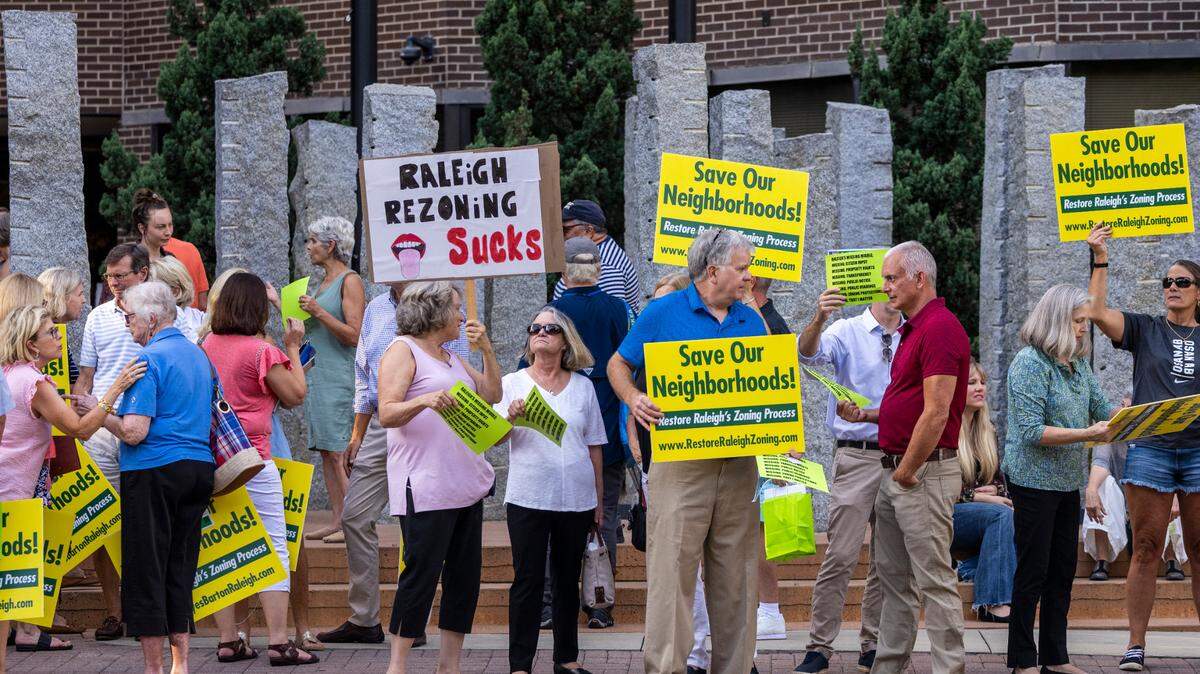
The Raleigh City Council garnered significant attention in 2020 when it defunded the longstanding Citizen Advisory Councils, which often consisted of self-selected, extremely engaged residents. Development projects drew the largest crowds at meetings. In place of CACs, City Council passed rules that amplified the engagement of residents next to proposed developments by requiring multiple meetings and additional avenues for contacting residents. Inevitably, these laws and local practices elevate the voices of a few — usually older, more affluent homeowners — over those of the many who benefit from a healthy housing market.
As Raleigh considers its next wave of reforms to address the housing crisis, it should consider these steps:
First, make sure the city’s long-range Comprehensive Plan sets out an ambitious vision for housing abundance and affordability. It should raise the bar for accommodating growth in areas with existing infrastructure such as downtown, North Hills, Crabtree, Brier Creek, Triangle Town Center, and along new bus rapid transit corridors. Policies around housing affordability should ensure developer requirements link to sufficient public subsidy to achieve the desired result. Otherwise, those policies will depress housing production.
Second, utilize city-initiated rezoning or “remapping” of broad areas to bring existing zoning closer to the Comprehensive Plan. Currently, we achieve the plan’s vision through the rezoning of one property at a time. Oftentimes, developers must fight local opposition even when following the vision set forth in the Comprehensive Plan. This approach encourages developers to build projects allowed “by right” rather than projects that meet the city’s higher aspirations.
Third, build on important regulatory reforms that implement policy changes citywide. The City Council has made it easier to build the accessory dwelling units (ADUs) or “granny flats” as well as diverse types and denser housing such as duplexes, townhomes and small apartment buildings on residential lots. Allowing co-housing and single room occupancy housing in high demand areas can provide housing options within reach to the lowest income earners at risk of homelessness.
Raleigh remains relatively affordable compared to its national peers, but we have seen rapid escalation in housing costs due to years of under-building and a voracious demand for more space in the aftermath of the pandemic. As we look to the future, Raleigh must ask why do we engage and who do we engage? Are we appeasing the powerful and setting up barriers to new housing, or are we engaging citizens on policy decisions that put the interests of all ahead of the few?
The answer to these questions will determine whether Raleigh avoids the path taken by many other cities mired in a housing crisis.