Biden is pardoning some marijuana convictions. North Carolina should follow his lead.
On Thursday, President Joe Biden announced that he would be pardoning some federal convictions for possession of marijuana, making a leap toward more progressive drug law in the United States.
“Sending people to prison for possessing marijuana has upended too many lives and incarcerated people for conduct that many states no longer prohibit,” Biden said in a statement.
Pardoning federal-level offenses only goes so far. In his announcement, Biden also called on governors across the country to follow his lead and pardon those with similar marijuana convictions in state courts. North Carolina Governor Roy Cooper should take Biden’s lead and follow suit.
The White House estimates that there are only 6,500 people who have been previously convicted under this criteria, as well as a few thousand in Washington D.C. who will also benefit from this announcement. By comparison, North Carolina had 40,000 misdemeanor marijuana possession charges in 2019 alone, per court documents.
In July, a poll from Spectrum News and SurveyUSA found that 72% of North Carolinians support legalizing marijuana for medical purposes, and 57% believe it should be legal recreationally. There have been attempts to legalize medical marijuana as recently as this summer, but the qualifying ailments were limited and the bill hasn’t seen any movement since passing in the state Senate.
The governor’s own Task Force for Racial Equity in Criminal Justice recommended decriminalizing marijuana as a way to address inequities in policing. Attorney General Josh Stein led the task force and has indicated that he would also like to see the drug decriminalized.
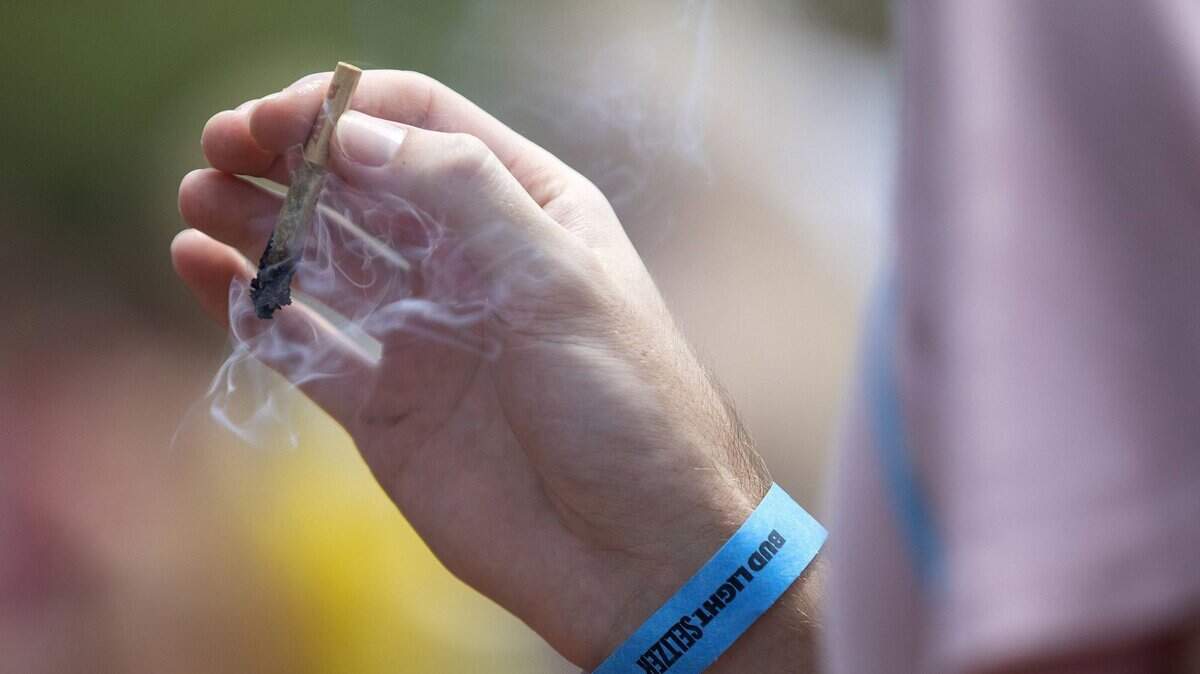
While “simple marijuana possession” at the federal level does not specify weight, North Carolina considers possession of any amount under 1.5 ounces a misdemeanor. For visual context, that’s the equivalent of about 42 joints, according to numbers from Insider. Possession of less than half an ounce results in a lighter misdemeanor charge.
Both Cooper and Stein have said they would like to see Biden’s initiative taken up in the state, but are still looking into the legality of such a measure. Cooper also noted the similarity between his task force’s recommendations and Biden’s action, but said that decriminalization would require the approval of the General Assembly — which, again, hasn’t even passed the strictest medical marijuana bill they could come up with.
Pardoning people would not keep future charges from being used, but it would mitigate the racial disparities we see in our court system. While all races use marijuana at a similar rate, the charges disproportionately affect people who aren’t white. Of the people convicted in North Carolina for possessing less than half an ounce of weed, 61% were nonwhite.
The arguments against pardons or decriminalization generally amount to the perceived dangers of marijuana, and the fear of encouraging use. But neither of these actions would legalize selling, growing or possessing marijuana, and the negative effects of marijuana are no worse than those caused by alcohol. Marijuana offers an alternative to opioids as a way to combat chronic pain, something that may affect as many as 115 million people across the country. While a THC overdose won’t kill you on its own, opioid overdoses killed nine North Carolinians a day in 2020.
Decriminalizing marijuana would likely be popular in North Carolina, given the number of people who support medicinal and even recreational use. Pardoning those who were caught with a small amount would be a great first step to changing the way the state approaches marijuana, and would hopefully lead to even bigger action down the road. Cooper and Stein are ready to act; hopefully the rest of North Carolina’s state leaders will do the same.