
Don’t let an NC millionaire, or anyone else, develop the tip of Topsail Island

Now is no time to build a planned 37-acre development on the pristine south end of Topsail Island.
Fundamentally this is not the time for a large new development on any of the 405 American barrier islands.
Climate change is leading to more intense hurricanes that are bigger, stronger, slower-moving, wetter and intensify faster. These are traits we saw in Florida’s devastating Hurricane Ian earlier this year.
Moreover, sea level is rising at an accelerating rate. This will increase both storm damage and erosion rates, requiring federal funding to save any coastal development — new or old — through beach nourishment.
According to NOAA, South Topsail — and much of the Outer Banks — will be completely underwater at high tide with a 5-foot rise in sea level, something we can expect later this century as we continue on our current pathway of high carbon emissions.
In the coming decades sea level rise will wreak havoc on coastal communities worldwide, forcing hundreds of millions to relocate to higher ground.
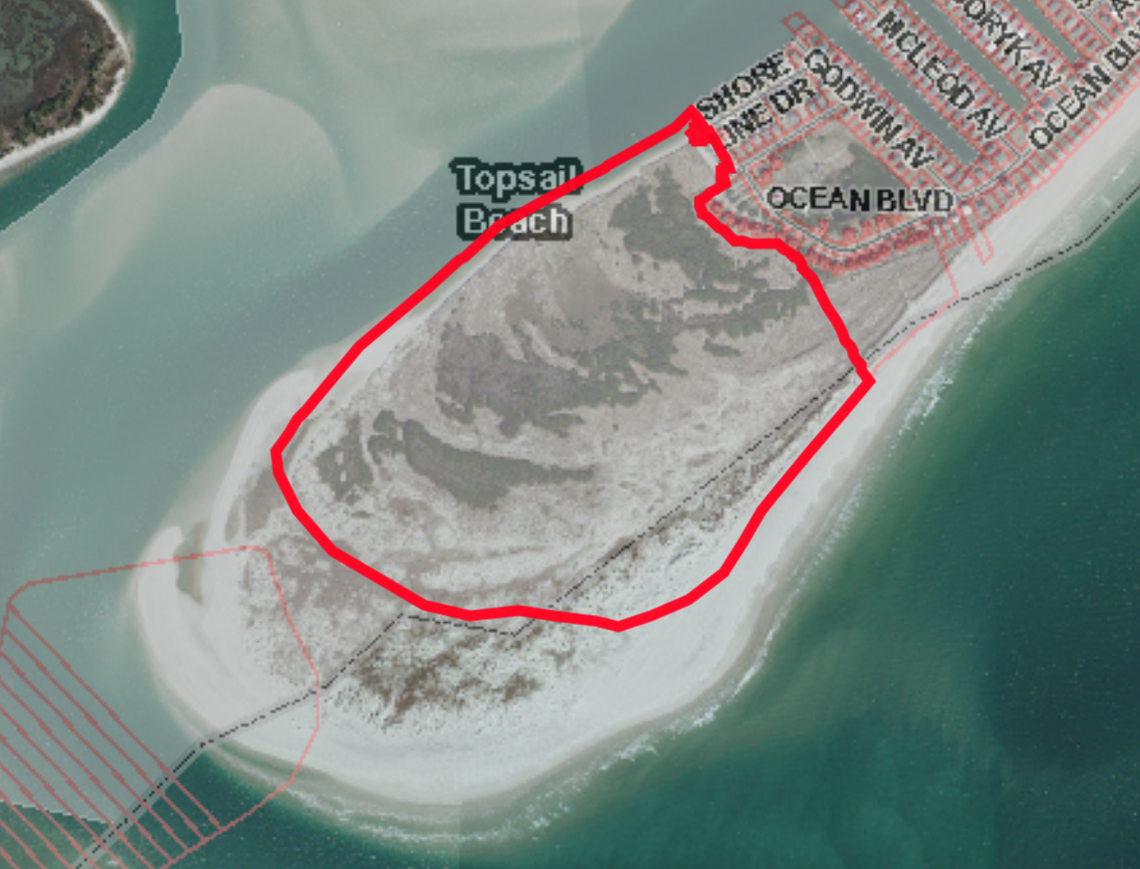
Todd Olson, the multimillionaire CEO of software tech giant Pendo in Raleigh, wants to build a family compound on Topsail Island’s southernmost tip. He’s under contract to buy “The Point” — about 150 acres of pristine coastline known mostly as a wildlife refuge. Olsen says roughly 110 acres will be conserved, but he’s seeking a zoning change for 37 acres. His early plans call for eight single-family dwellings, access roads, swimming pools, decking, gazebos, beach pavilion, and a sound-side cottage with pier and nine boat lifts.
Does it make sense to construct houses on a low-lying barrier island in an age of rapidly rising seas?
The southern tip of Topsail is a small but important natural treasure. Uncluttered by the usual beach development, it is easily accessible for residents, students, tourists, fishers, and anyone else wishing to experience the beauty and wonder of a barrier island ecosystem.
And we need to remind ourselves that humans are not the only creatures that call a barrier island their home. People choose to live on barrier islands. Plants and animals have to live there.
Hurricane Ian destroyed the beach communities near Fort Meyers, unleashing a mad rush to buy Florida beach properties now available at bargain prices. This is unwise.
Instead of building on a coast at risk of inundation by rising seas and storms, why not follow the example of Babcock Ranch, a solar-powered, eco-community located on high ground a few miles inland from Florida’s shoreline.
In Babcock Ranch, about 25 miles northeast of Fort Myers, the 2,000 houses there were built to withstand a major hurricane and as a result suffered little damage from Ian’s wrath, even as the storm’s eye passed directly overhead.
We need to rethink where and how we construct our coastal communities.
In an age of unchecked climate change, rising seas, and powerful hurricanes, it makes better sense to build on the mainland near the coast (like Babcock Ranch), accessible to the beach, but not on it.
The southern tip of Topsail may be beautiful, but why build in such a risky place?
This story was originally published November 14, 2022 at 5:30 AM with the headline "Don’t let an NC millionaire, or anyone else, develop the tip of Topsail Island."