
“Are you ready for this?”: Raleigh mayor survives but will lead a new City Council
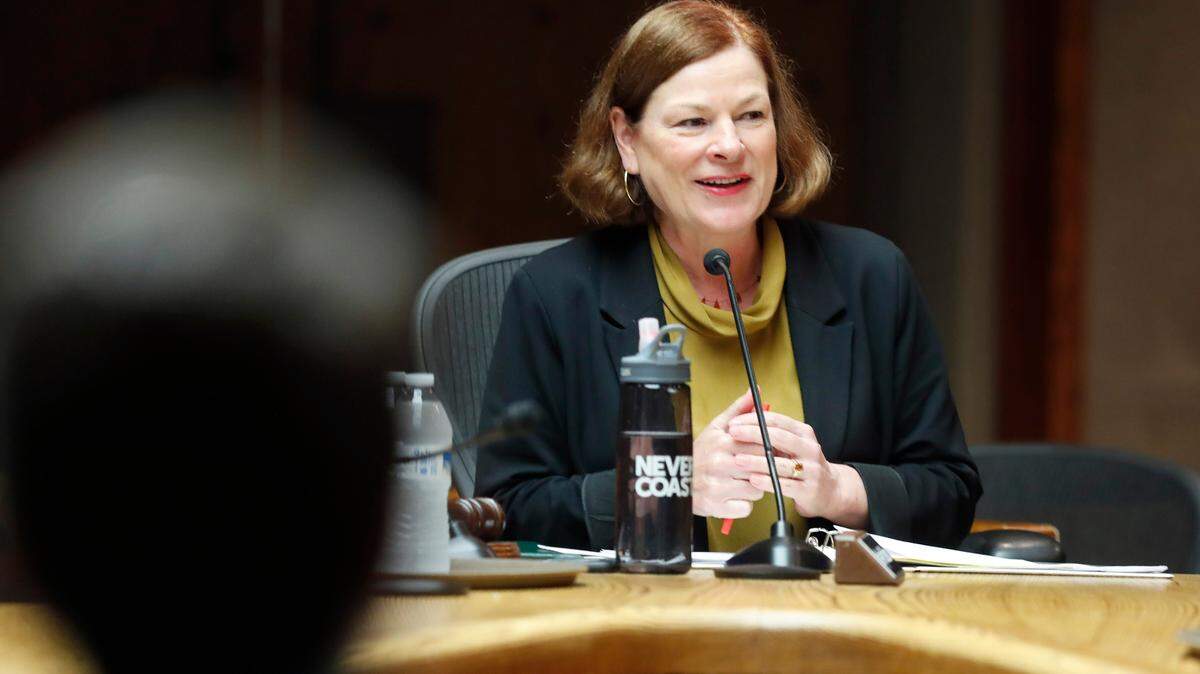
One surprise in Tuesday’s Raleigh City Council elections was how close a relatively unknown and greatly underfunded challenger came to denying Mayor Mary-Ann Baldwin’s reelection.
Terrance Ruth, an assistant professor at N.C. State, making his first bid for city office, received 40 percent of the vote to Baldwin’s 46 percent. A third challenger, DaQuanta Copeland, received 10 percent, with write-ins accounting for the rest. One Raleigh City Council incumbent, David Knight, lost, and all four of the incumbents who were reelected received less than 50 percent of the vote. Unlike prior years, this year’s election did not require runoffs if no candidate exceeded 50 percent.
Tim Niles, treasurer of Livable Raleigh, one of the groups that sought to defeat Baldwin and other council incumbents, said in a statement that results show how “voters want change, don’t like undue developer influence, and want more transparency.”
That may be part of the message, but it’s not all of what happened. The Wake County Democratic Party made endorsements in the nonpartisan city elections. Among those it endorsed were Ruth, Christina Jones, who defeated Knight, and the three candidates who won open seats, Mary Black-Branch, Megan Patton and Jane Harrison.
In council races where candidates have no party affiliation and most voters know little about them, the Democratic Party’s nod can make a big difference. That, at least, is Baldwin’s reading of the results. As she sees it, it wasn’t a message from voters frustrated by the pace and type of development. It was the county Democratic Party intruding into a nonpartisan election to unseat a mayor who is herself a Democrat.
“When you look at who won, it was definitely those endorsed by the Democratic Party. So we knew that would be a factor,” she told me.
Baldwin’s view is one reasonable explanation for why Ruth received as many votes as he did, but it also shows that she has let herself get on the wrong side of activist groups and her own party’s officers.
The mayor will now preside over a City Council with members more focused on the impact of denser development on neighborhoods and more committed to protecting the environment.
The new council is exceptional in its makeup and – if infighting doesn’t stymie it – could be exceptional in its performance. The new members bring an impressive mix of expertise and civic involvement. They will give the council a broader and deeper view of where the city is and where it should go.
By its demographics, the incoming council will be historic. It will be the youngest council (five members under 40), the council with the most women (six of eight members), and the most diverse council, with two openly gay members (incumbents Stormie Forte and Jonathan Melton) and three Black members (Forte, Black-Branch and incumbent Corey Branch).
The City Council will have plenty of work in one of the nation’s fastest growing cities. Projects include expanding affordable housing, developing the area around the PNC Arena, overseeing the emergence of the Downtown South commercial-residential development, untangling traffic headaches around the North Hills development and finding a way to revitalize downtown’s Fayetteville Street, which lost businesses and downtown workers during the pandemic.
Baldwin, 66, will guide the young new members on the mechanics of governing, but she also expects to learn from them.
“I really want to understand what they want to achieve and then help them reach their goals,” she said.
The new members represent many in the city who felt they didn’t have a say after the council eliminated Citizen Advisory Councils and COVID curtailed public hearings. Now they have it.
In meetings with the new members, Baldwin said, “That’s the one question I’m asking them all: ‘Are you ready for this? There’s going to be a lot coming at us and we’re going to have a lot of decisions to make.’ ”
Correction: An earlier version of this column said an endorsement by the Wake County Democratic Party in a nonpartisan election was unprecedented. The party has previously made endorsements in nonpartisan elections.
This story was originally published November 13, 2022 at 4:30 AM.