
Before she exits, Roy Cooper’s quiet chief of staff has something to say about his success | Opinion
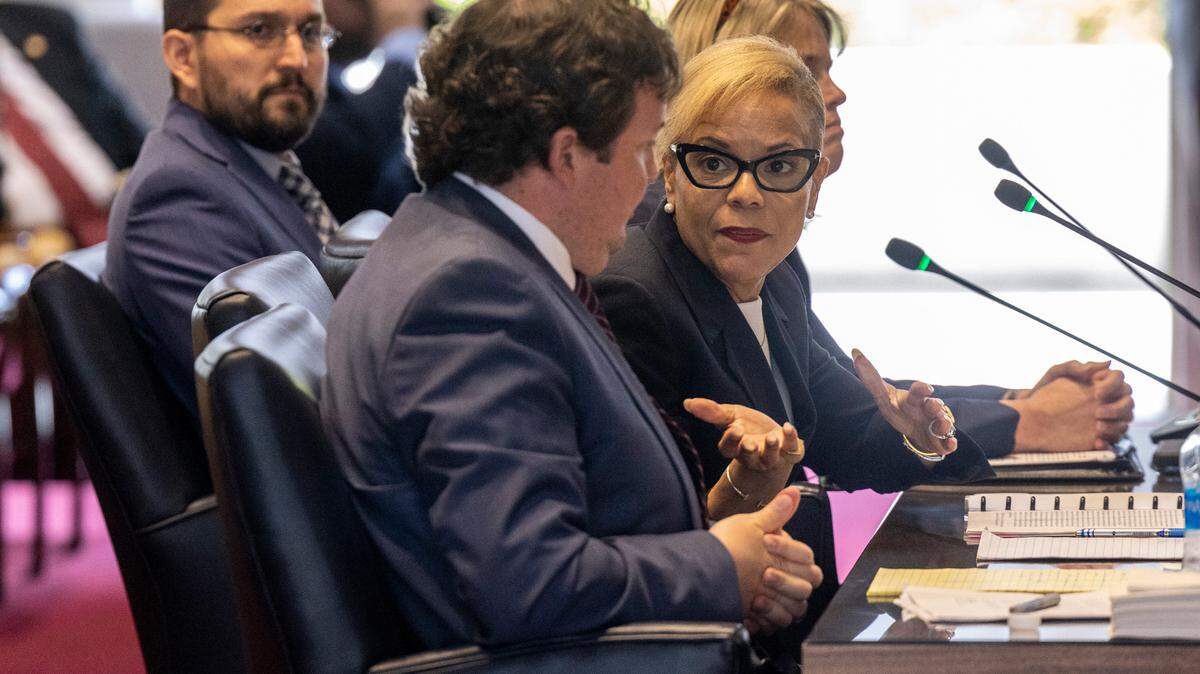
Gov. Roy Cooper, limited by law to two terms, will leave office to applause after eight years of legislative battles, a pandemic, hurricanes, the state’s economic success and his long-sought expansion of Medicaid.
But Kristi Jones, his chief of staff and a key manager throughout the ups and downs of Cooper’s time in office, will leave quietly this month for a job in the private sector.
That’s just how Jones wants it. She has what Louis Brownlow, an adviser to FDR, said presidential staffers should have – high competence and “a passion for anonymity.”
“I’m not a well-known figure and I’m not supposed to be. People didn’t vote for me. People put their trust in Roy Cooper and my job was to help him accomplish those goals that he promised people he would,” she told me this week. “I love it when people don’t know me.”
While few North Carolinians know Jones, she knows a lot about North Carolina, especially its government and its governor.
A native of Wilson County, Jones, 57, is a graduate of N.C. Central University and the UNC Law School. In addition to serving as the governor’s chief of staff, she was Cooper’s political adviser and chief of staff during his four terms as attorney general.
Managing a governor’s staff isn’t just a job for Jones. It’s a life. Most days, she gets up at 4:30 a.m., starts work early and never really leaves the job. “I am available 24/7, 365 days a year,” she said. This week her job included coordinating the state’s response to Tropical Storm Debby.
Don’t look to Jones to talk about the behind-the-scenes struggles and intrigues she has witnessed while working for Cooper. She values confidentiality as much as anonymity.
What Jones will gladly talk about is how well she gets along with the governor. Their only disputes are about Duke (her team) and UNC (Cooper’s).
“We never disagree. I always felt comfortable giving him my opinion, my perspective from the seat I sit in,” she said. “It’s just been a wonderful experience — otherwise I wouldn’t have stayed for 25 years.”
Cooper is equally effusive about Jones. In a statement, he said, “Her hard work and genuine care for people have helped us navigate challenging times with a positive, can-do spirit. She is one of the very best people I have ever known.”
While Cooper and Jones are in sync, they’ve both had to work through conflicts with a Republican-controlled legislature that has overridden dozens of Cooper’s vetoes.
The Republican resistance has angered Jones, but she said Cooper taught her to focus on the issue, not the opponent.
“One of the greatest lessons I’ll take away from him is to take personality out of the way of politics,” she said. “When I wanted to just be frustrated and mad and throw in the towel, the governor was like, ‘You can’t give up, you’ve got to go back.’ From that I’ve learned and had some very good and meaningful relationships with folks from both sides of the aisle.”
The only instance in which Jones made herself part of the story occurred when she revealed this year that she had given a kidney to a stranger. She didn’t discuss her donation publicly for 13 years, but spoke about it to the media when a friend needed a kidney. She hopes her story will encourage others to become donors.
“When I gave the kidney, I started the process with somebody I knew, we didn’t match,” she said. “Somebody still needs a kidney, you just give it. That’s what my parents taught me, to give.”
Now Jones is moving on. She will be vice president for public affairs and sustainability at NiSource, an Indiana-based natural gas and electric utility company.
But she may not be done with working for Cooper. The governor may run for U.S. Senate in 2026.
Asked if she would come back, Jones referred to the response gymnast Simone Biles gave when asked if she will compete in the 2028 Summer Olympics at age 31. “Simone Biles said this morning, ‘Never say never.’ So I’ll say never say never.”
This story was originally published August 8, 2024 at 11:50 AM.